Organic Cotton Linen Set for Daily Cooking: Honest Review
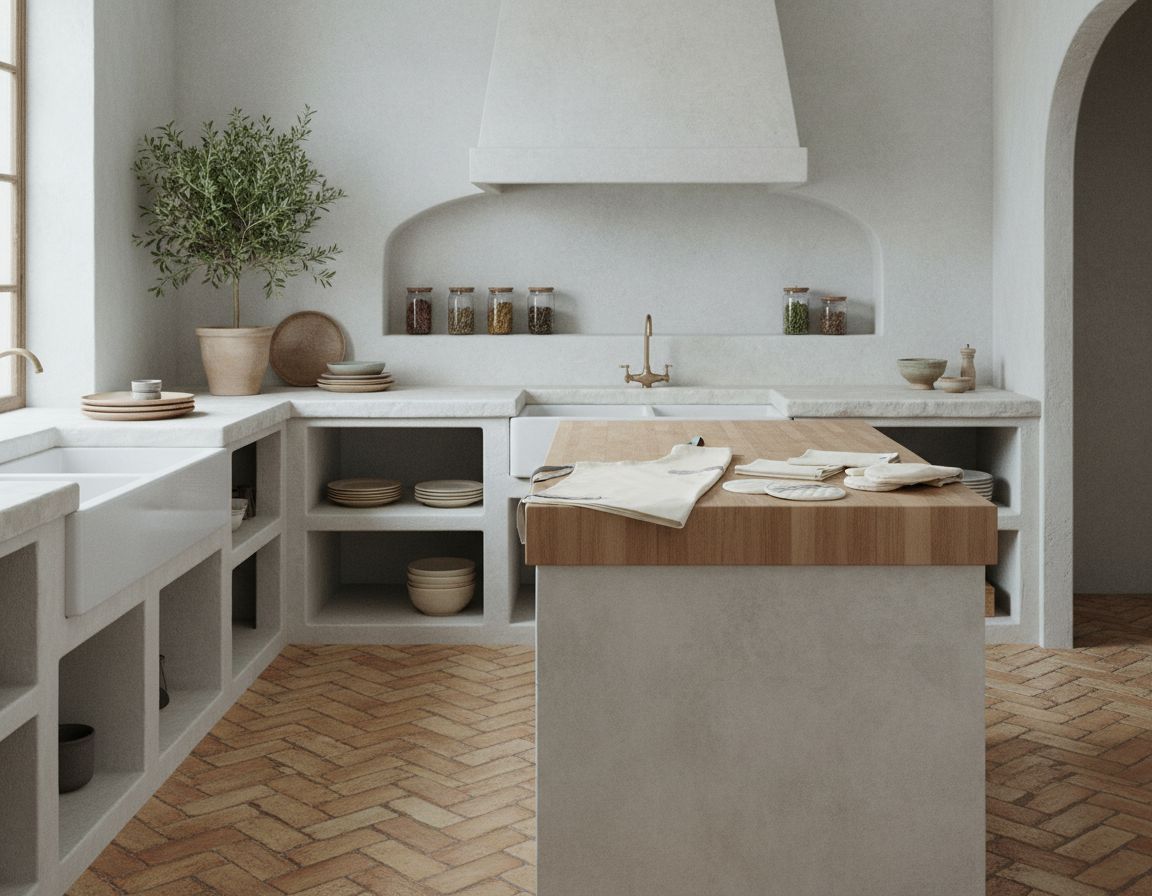
Caraway’s organic cotton linen set landed on my counter on a rainy Tuesday, and by Thursday I’d already burned through every excuse I had for holding onto my stained, threadbare kitchen textiles.
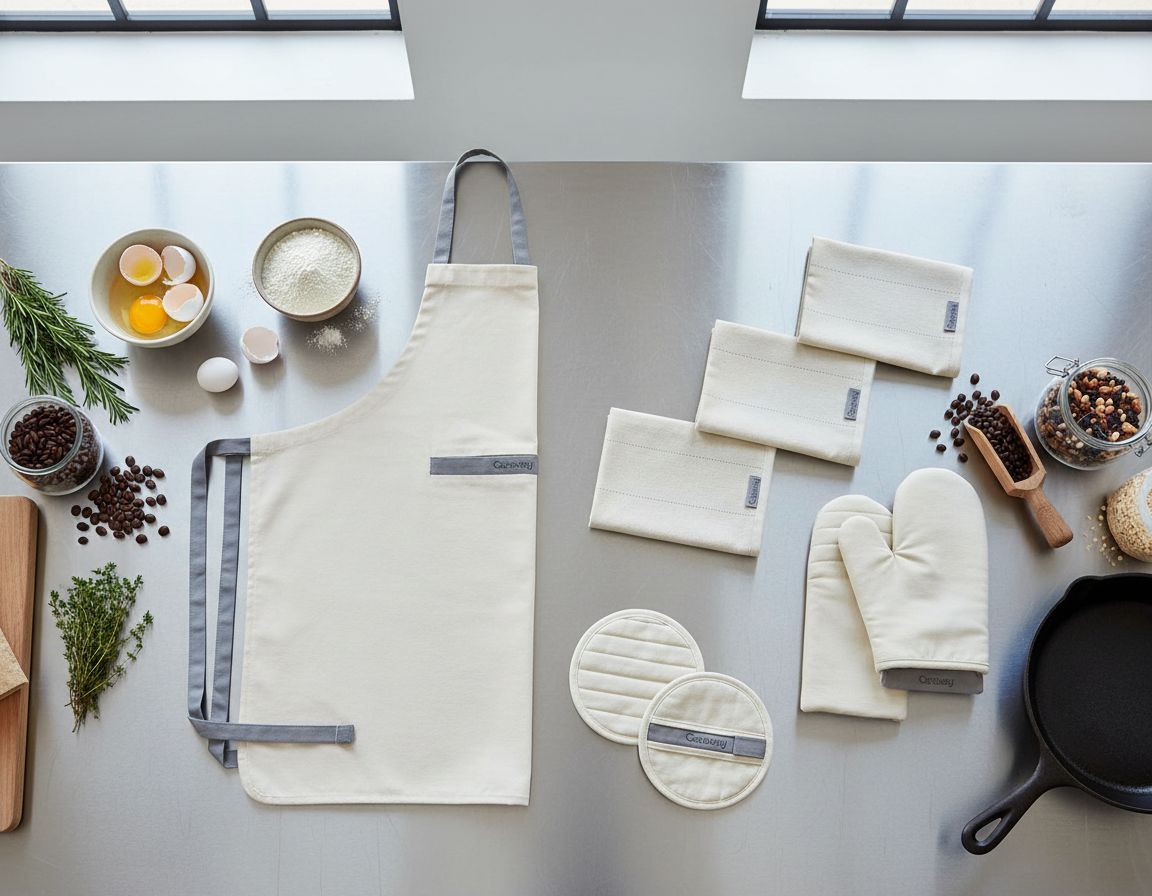
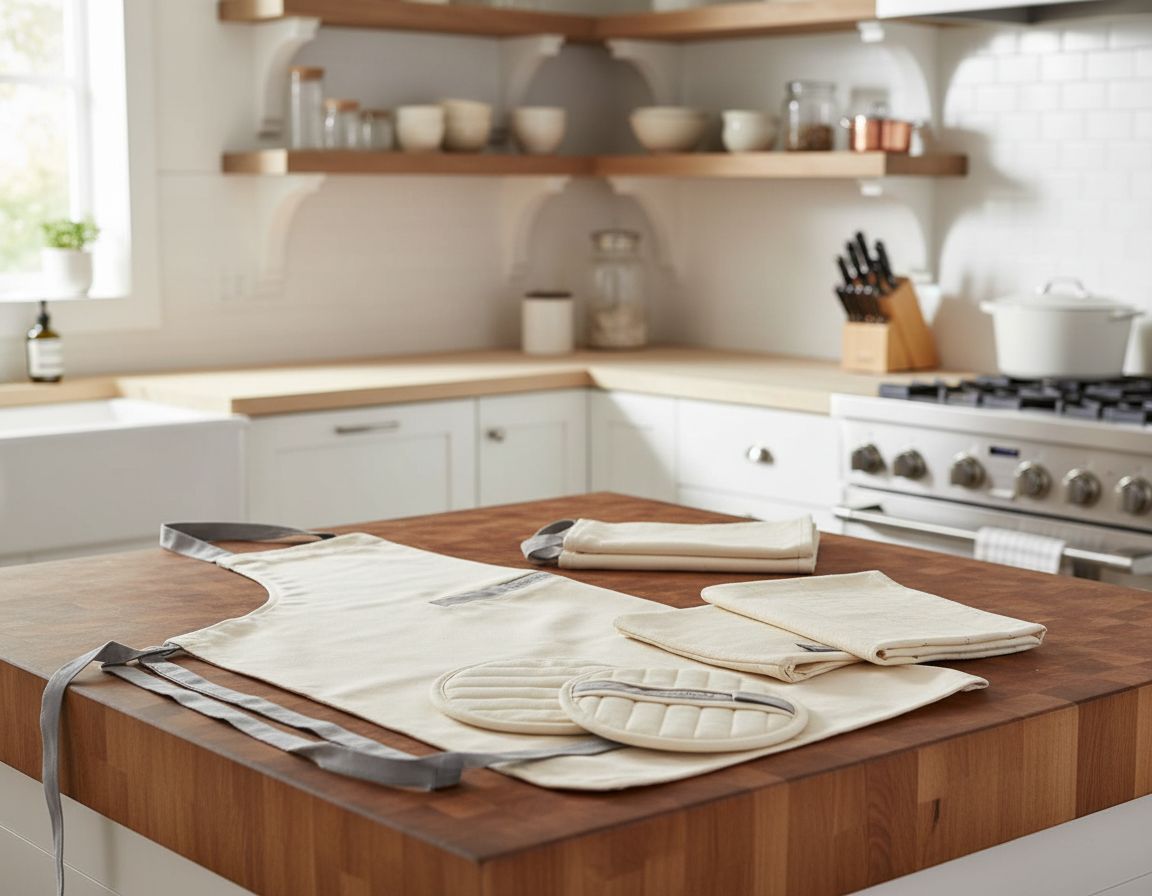
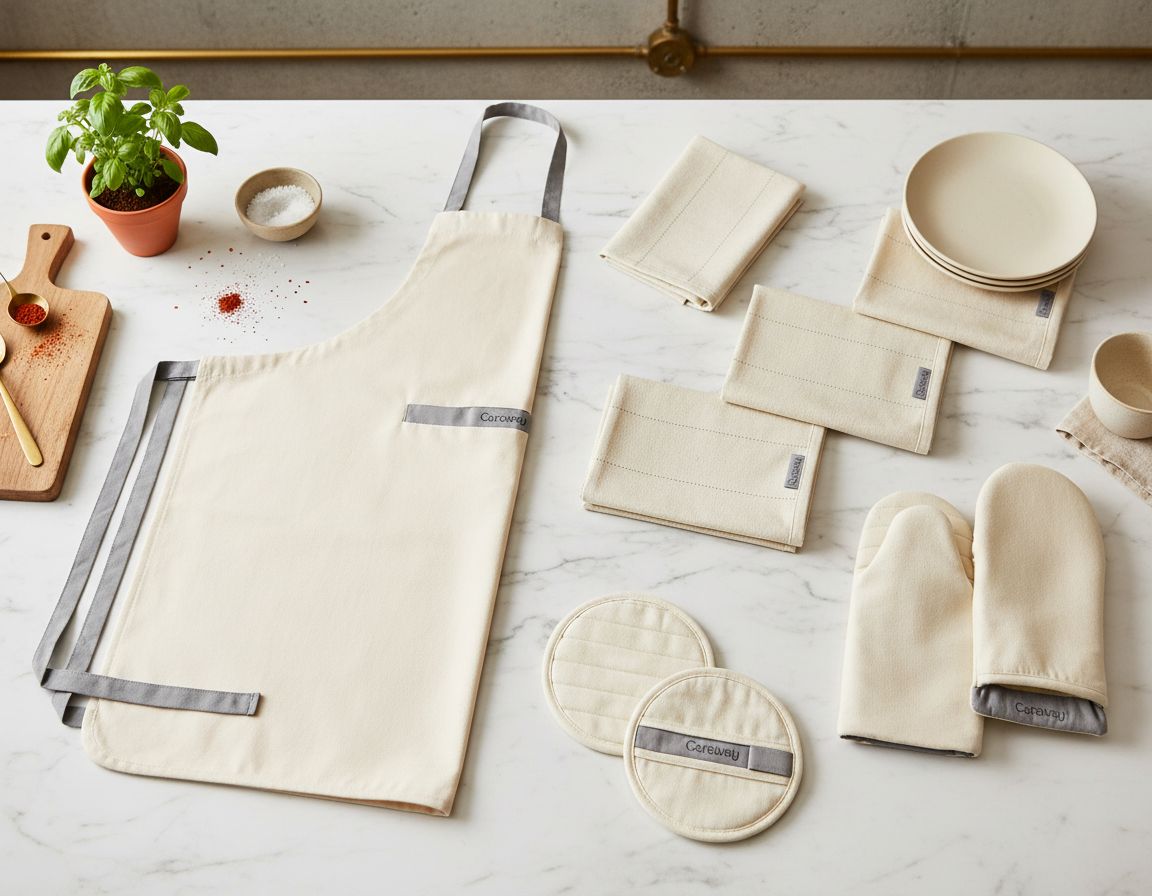
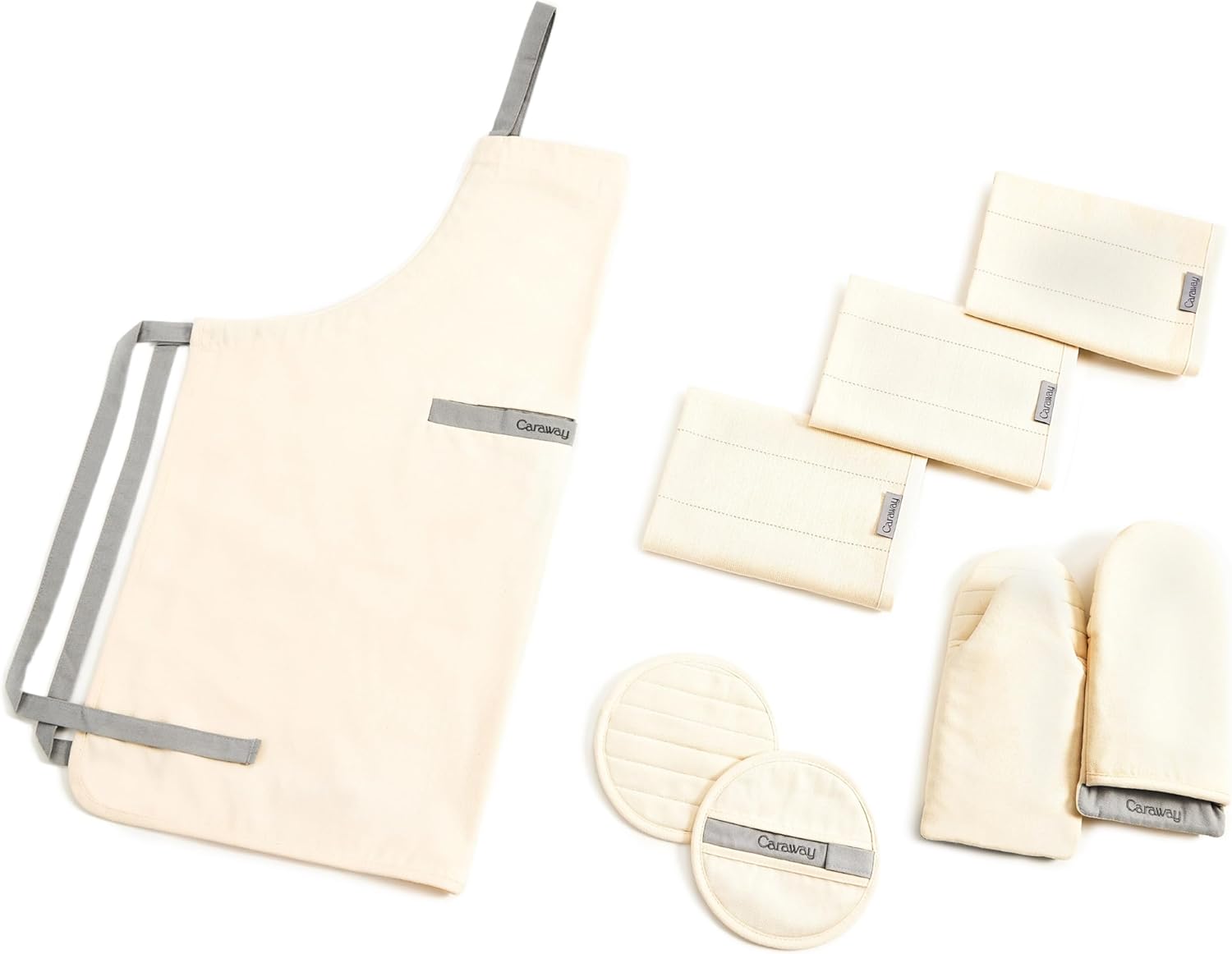
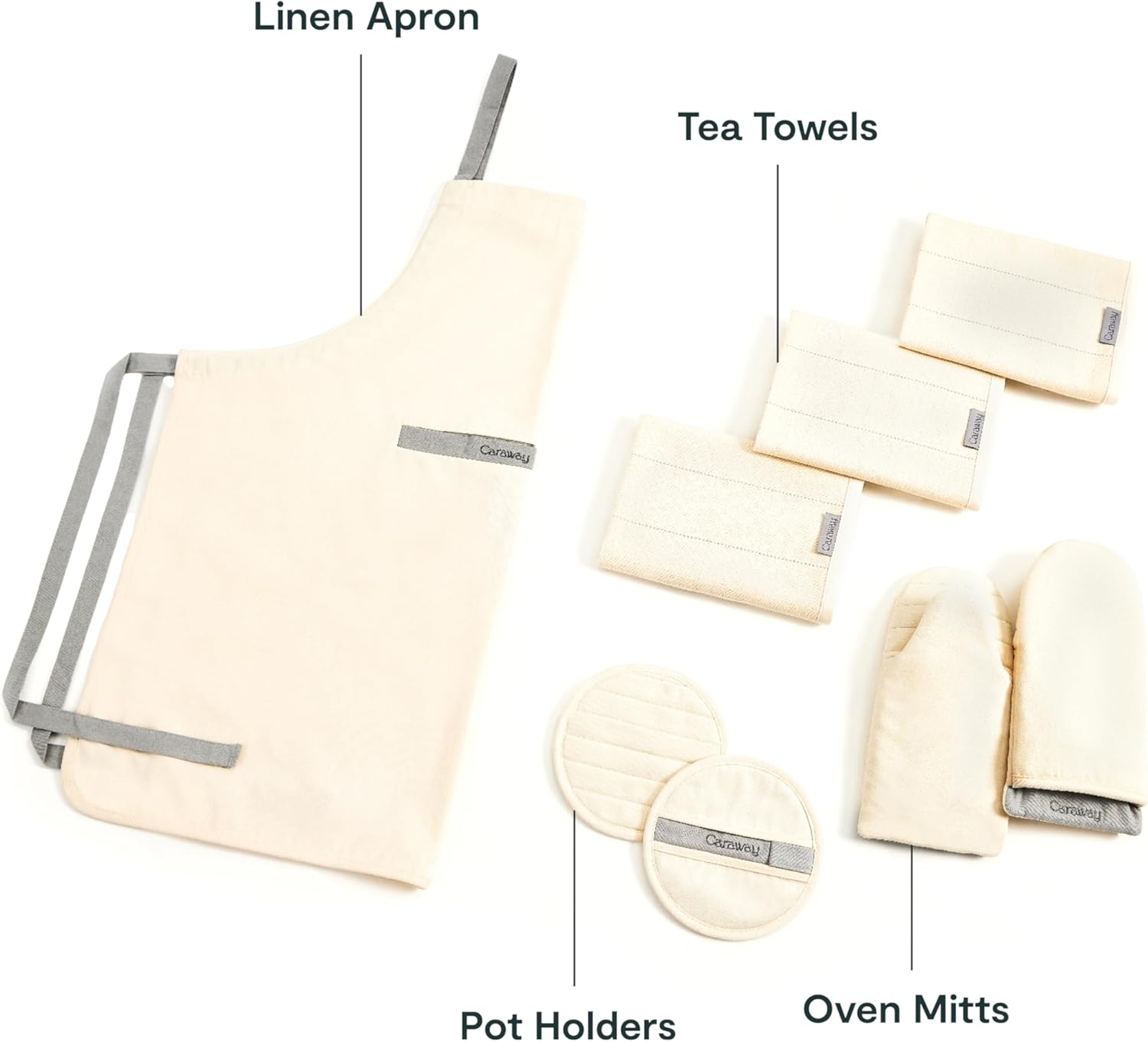
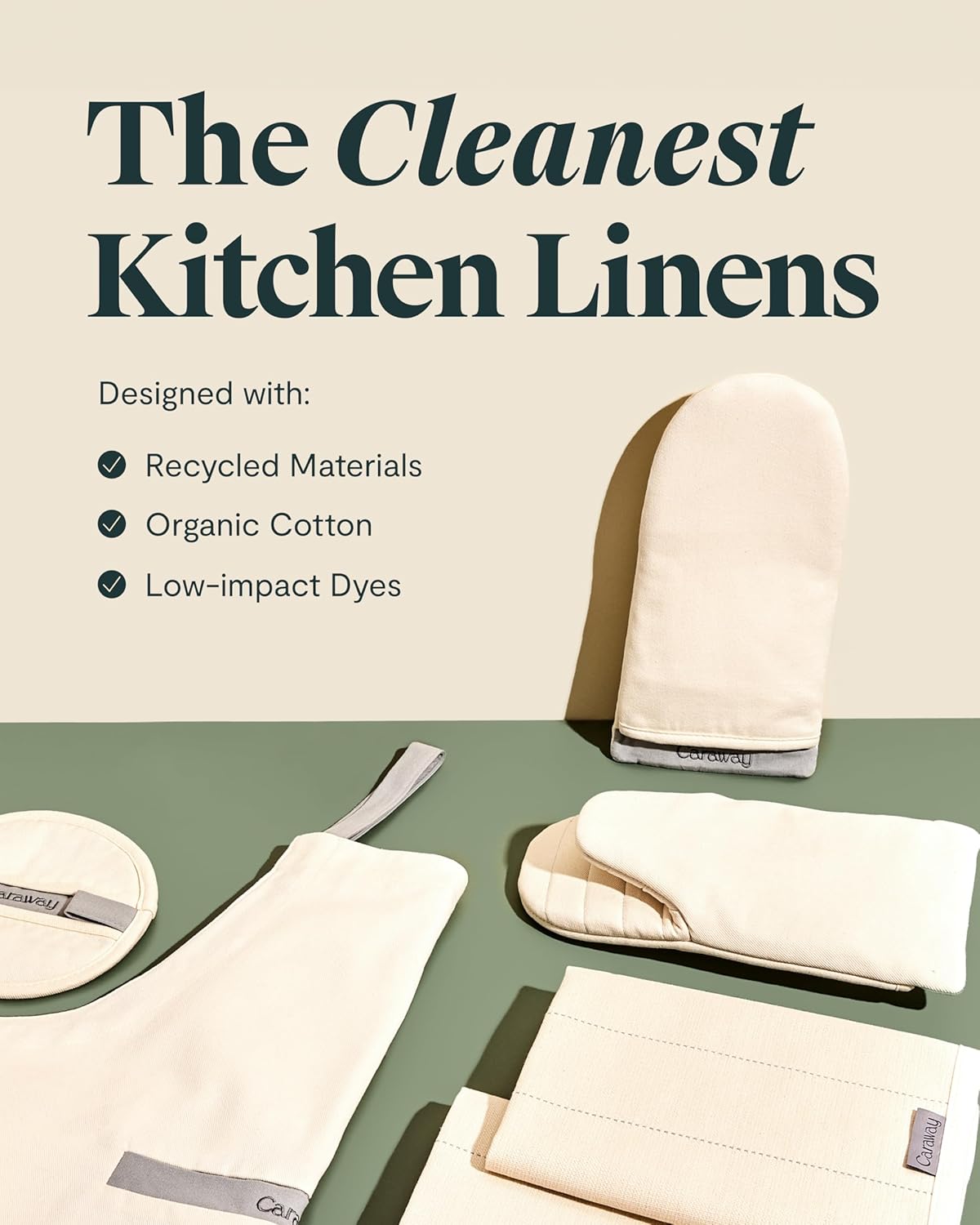
There is a particular kind of kitchen shame that only other home cooks understand: the moment a dinner guest reaches for your dish towel and you have to say, quietly, “not that one.” Mine was a faded navy rag that had lived through three apartments, a pandemic sourdough phase, and one particularly catastrophic beet incident. I’d been meaning to replace it for roughly two years. Then the Caraway Linen Set arrived, cream-colored and folded with the kind of precision that makes you feel like you’ve been doing everything wrong. It’s an apron, two pot holders, two oven mitts, and a pair of tea towels, all made from 100% organic cotton, and the whole thing smells faintly of something clean and new in a way that made me want to actually cook something worthy of it. I did.
The First Time I Used It
I pulled everything out on a Wednesday night and immediately put on the apron because that felt right. The ties are long enough to actually wrap and knot at the front, which is how I prefer it, and the fabric has a subtle woven texture, not the stiff canvas feel of a restaurant apron, but something softer and more lived-in even before it’s been washed. I was making a tomato braise, lots of olive oil and spattering, and by the end of the night the apron had earned its first real test.
The stain came out completely in the wash, which sounds like a low bar, but if you’ve ever run a linen piece through a hot cycle and watched it emerge looking worse than when it went in, you understand why that matters. These kitchen linens were ready for round two without ceremony.
How It Actually Performs
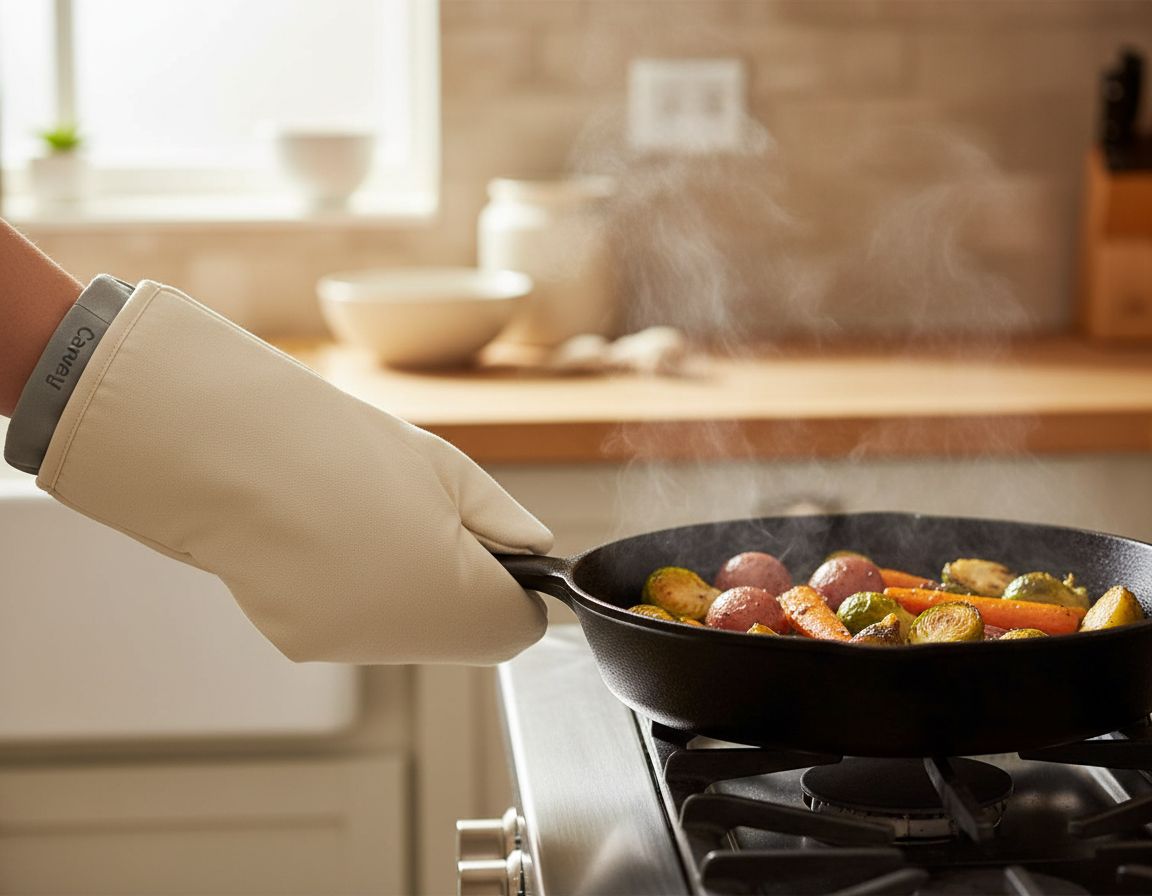
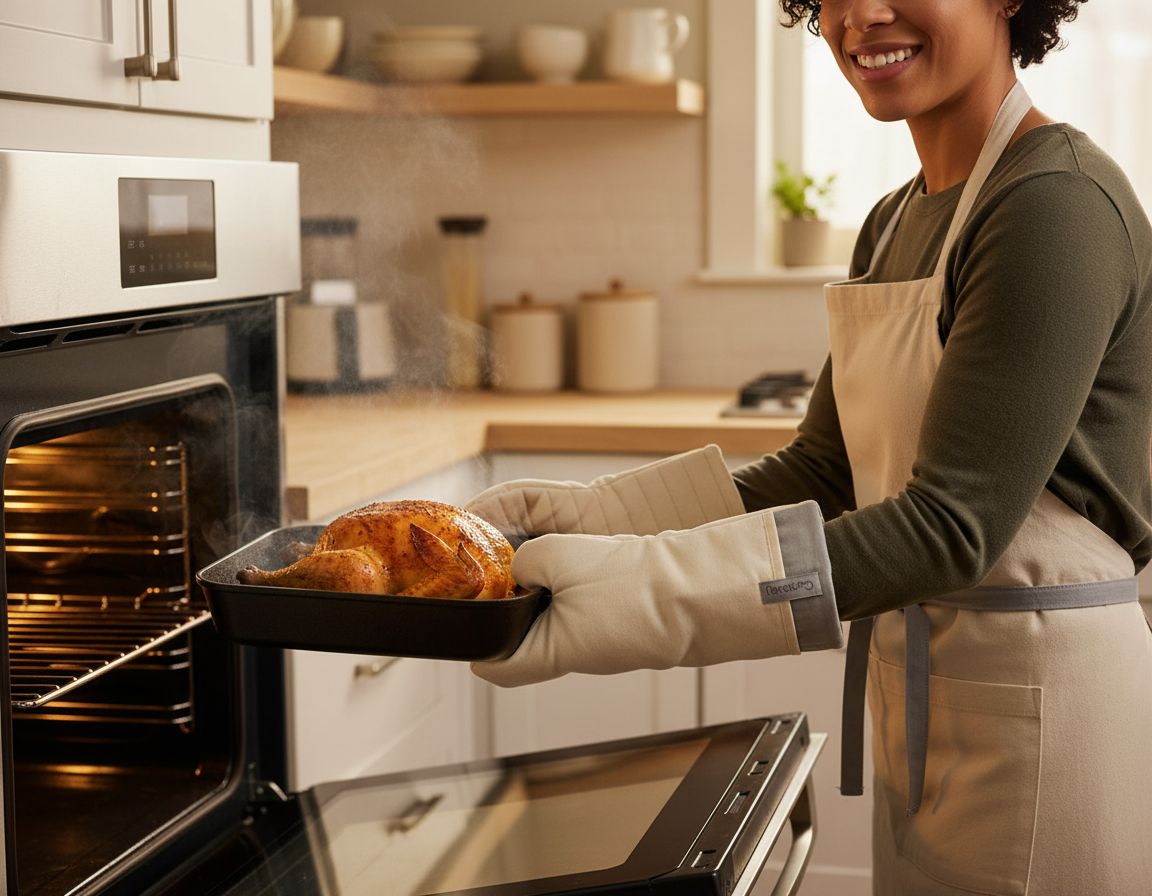
The oven mitts are where I had the most skepticism. Organic cotton sounds beautiful in theory, but heat protection is non-negotiable when you’re pulling a Dutch oven from a 450-degree oven. After several weeks of regular use, including a long braise and two rounds of holiday cookies, I can say the mitts hold up solidly for typical home-cooking tasks. They’re not rated for professional kitchen conditions, and I wouldn’t use them to reach into a blazing wood-fired oven, but for everyday stovetop and oven work they provide consistent, reliable insulation without feeling clunky.
“The best kitchen textile set is the one you actually reach for, and this one earns that instinct fast.”
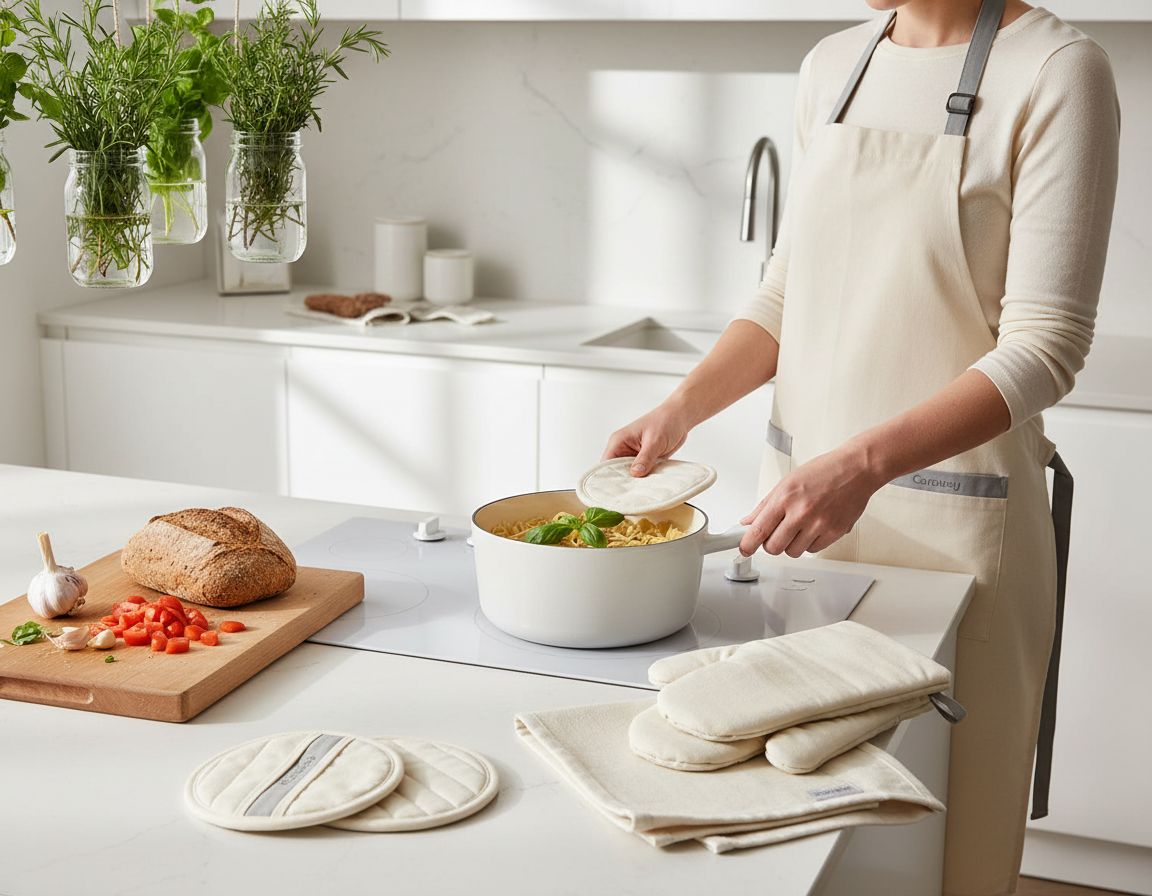
The pot holders are thicker than they look in photos, which I mean as a genuine compliment. They lay flat on a trivet without curling, and the double-layer construction handles cast iron without transferring heat to your palm. One honest note: the cream color does pick up stains more visibly than a darker textile would. If you cook with turmeric or deep red sauces regularly, you’ll be washing these more often than you might a charcoal or navy set. That’s worth knowing going in. For more on how kitchen textile materials perform under real heat, the Serious Eats equipment deep dives are a solid reference point for calibrating your expectations.
What I Actually Cooked With It
Use 1: Friday Night Sheet-Pan Roast
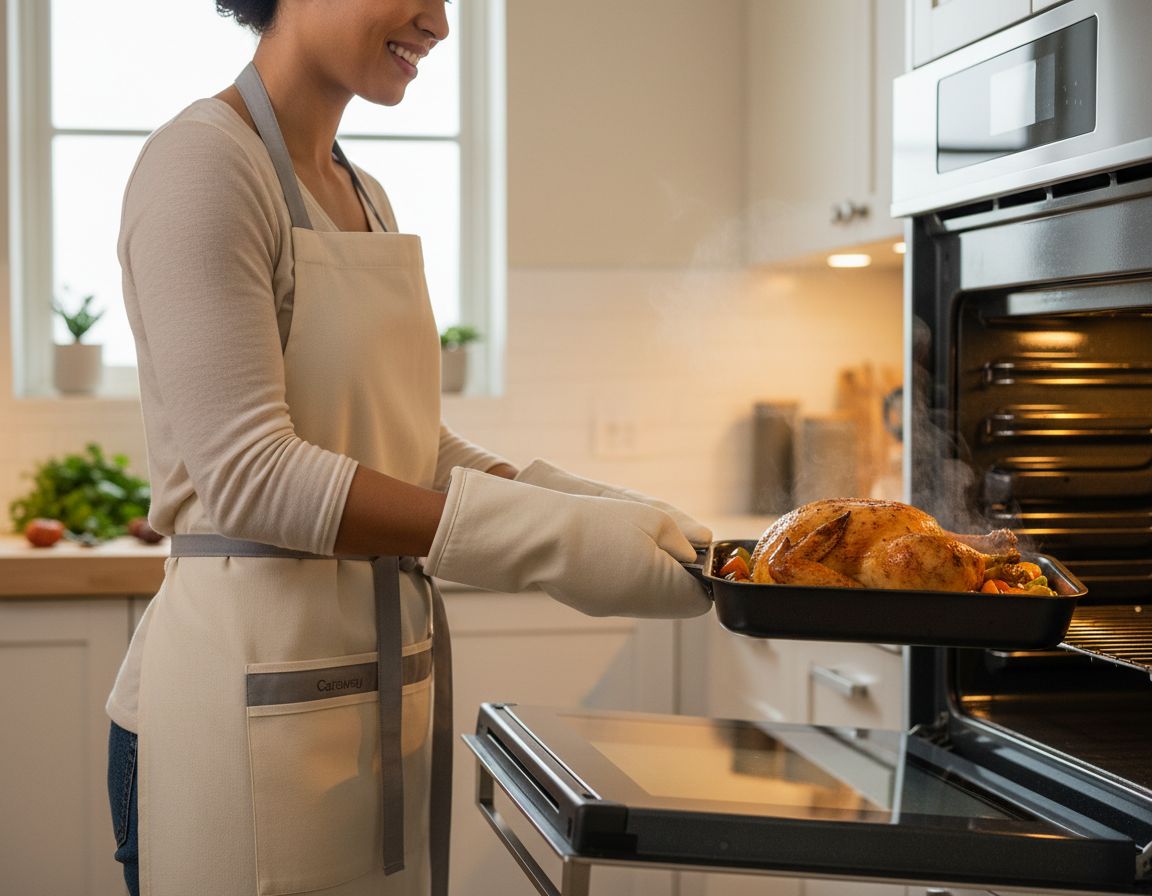
Sheet-pan dinners are my default on weeks when I can’t find the energy to build something from scratch. I had chicken thighs, a pile of root vegetables, and enough olive oil to embarrass myself. The oven mitts grabbed the pan at both ends cleanly, and because they extend partway up the forearm, I didn’t get that little scorch of heat I usually feel when the oven rack catches my wrist. The tea towels were on hand for wiping the pan’s edge before it hit the table, which is one of those small moves that makes dinner feel slightly more composed than it actually was.
Use 2: Sunday Morning Pancake Stack
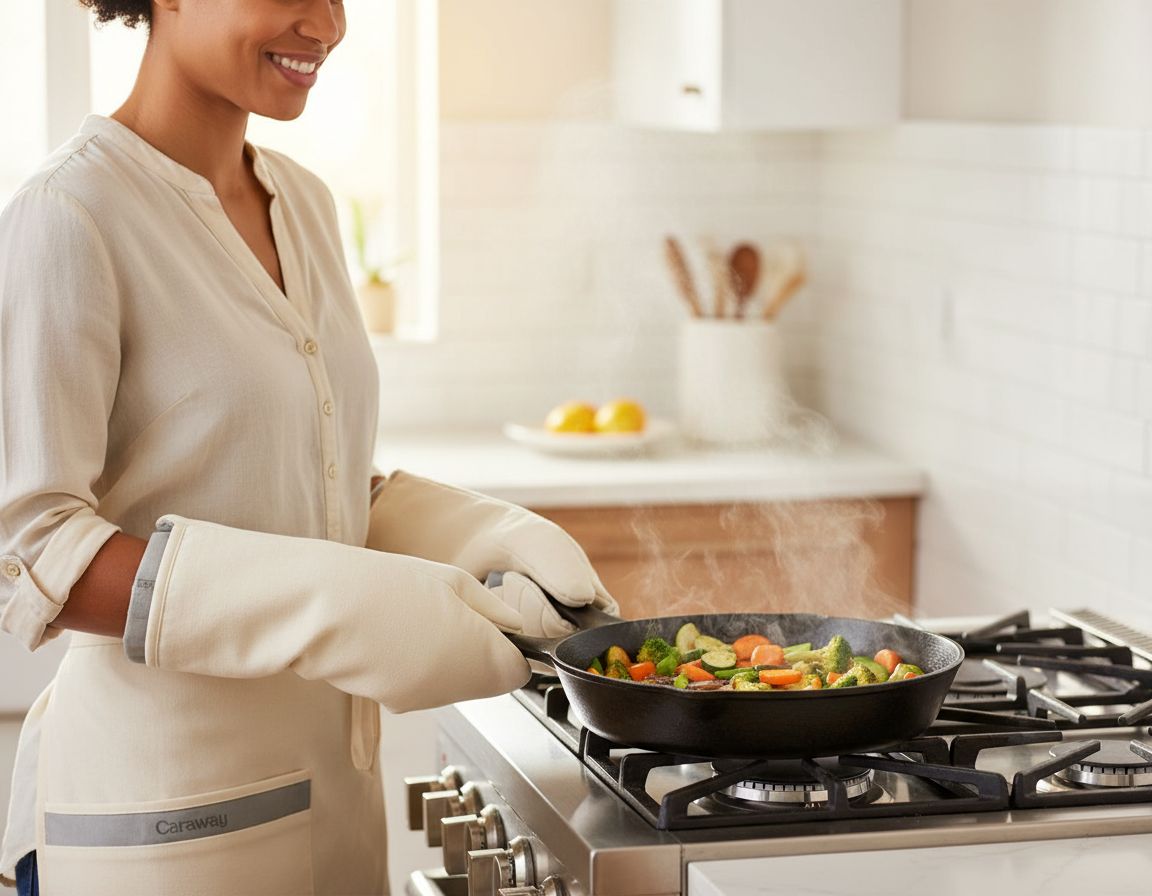
This is where the apron got its real workout. Pancake batter has a particular talent for landing on anything worn within a three-foot radius of the stovetop, and I made a full double batch for a slow Sunday with friends. The apron’s chest coverage is wider than most, which meant my actual shirt survived the morning in good shape. I also used the tea towels to blot the griddle between batches, something I’d normally do with paper towels. They handled it without complaint and washed clean afterward.
Use 3: Holiday Cookie Assembly Line
This is the scenario where the full set earns its place. I had four different cookie batches going across two afternoons, which means constant oven rotation, hot baking sheets stacking up on the counter, and powdered sugar making a soft catastrophe of everything nearby. The pot holders doubled as trivets for the hot sheets, the mitts pulled the pans without fumbling, and the apron kept the sugar situation contained to something manageable. By the end of day two, I’d washed the whole set once and everything came back looking essentially like new. That kind of reliable washability across heavy use is what separates a good textile set from an aspirational one that lives folded in a drawer.
What Other People Are Saying
One reviewer described the fabric as “so practical, stronger when wet so it stands up to scrubbing,” which tracks exactly with my own experience pulling these towels through greasy cleanup at the end of a long cooking day. The overall rating sits at 4.0 stars across 41 reviews, which is a considered number, not euphoric, but consistent with a product that delivers on its core promise while occasionally stumbling on fulfillment logistics.
The most notable friction in the reviews involves shipping and order accuracy rather than the product itself, which is worth factoring in if you’re ordering as a gift or on a timeline. Speaking of which, if you’re looking for something to pair this with, our kitchen gift ideas guide has a few good companion picks.
Who Should Skip It
If you cook primarily in an industrial or high-heat professional context, the insulation in these mitts is built for a home kitchen, not a restaurant line. That’s not a criticism, it’s just a use-case mismatch. Cooks who need maximum fire-resistant protection should look at silicone or aramid-lined options instead. Similarly, if your kitchen aesthetic runs dark and moody, the cream colorway will feel like a constant battle with visibility, especially if you cook with colorful spices, wine reductions, or anything beet-adjacent. And if you are someone who never hand-washes anything and wants a truly zero-effort textile, know that while these are machine washable, they do best with a little care: cold or warm water, skip the bleach, hang or tumble dry on low.
What It Replaces in My Kitchen
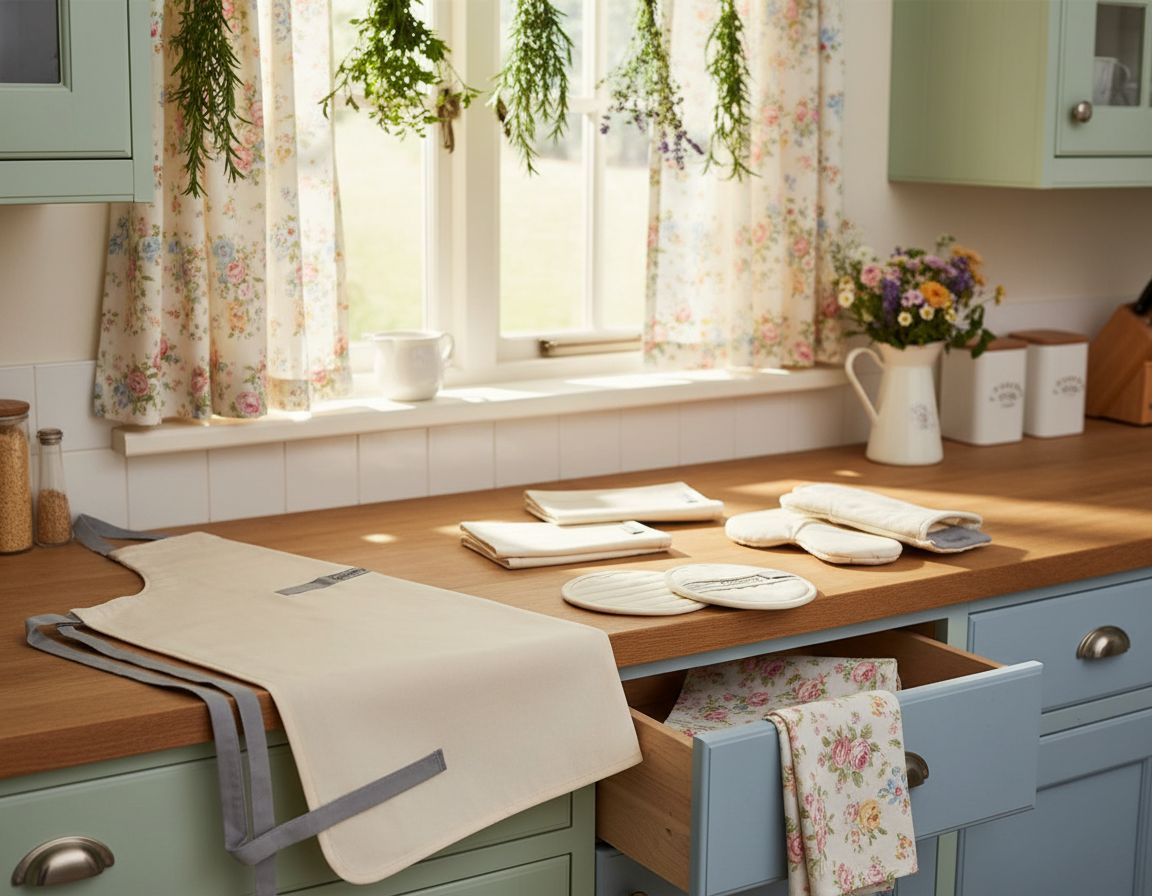
For me, it replaced a truly embarrassing collection of mismatched pieces, a too-small pot holder from a cookware promotion, a stiff canvas apron I’d owned since a cooking class years ago, and that navy towel I mentioned at the top. None of them were working together visually, and none of them were working particularly hard functionally either. Having a matched set that actually performs turns out to be one of those small shifts that makes cooking feel more deliberate, even on a random weeknight when you’re just reheating soup. If you’re building out your kitchen textile situation from scratch, see our broader everyday kitchen linens picks for context on what else is worth considering alongside this set.
I’d also point anyone interested in complementary cookware toward our everyday cookware set reviews and our nonstick pan recommendations, because the best kitchen textiles are only as useful as the pans they’re protecting you from. And if you want a broader picture of where this fits among everyday cooking tools we recommend, that archive is worth a browse.
FAQ
How well do the oven mitts protect against high heat?
They’re rated for standard home-oven use, handling temps you’d encounter in everyday baking and roasting. For tasks requiring extended contact with very high heat, silicone or professional-grade mitts would offer more margin.
How do you wash and care for the set?
Machine wash on cold or warm, without bleach, and either hang dry or tumble on low heat. The organic cotton holds its shape and color well when you follow those basics, and avoids the shrinkage that comes from hot-cycle washing.
Are these safe for all stovetop types, including induction?
Yes, kitchen textiles are stove-agnostic. The set works the same whether your kitchen runs on gas, electric, or induction, since the mitts and holders are just protecting you from heat transfer, not interacting with the burner itself.
Does the build quality match Caraway’s reputation?
Caraway has built its brand on considered materials and consistent finish quality, and this set reads the same way. The stitching is tight, the cotton has real substance to it, and after repeated washing nothing has frayed or faded in my testing. For what you’re paying, the construction feels honest and durable rather than decorative.
What’s the warranty situation if something wears out?
Caraway generally stands behind its products with customer support for manufacturing defects, though textile wear from regular use falls outside most warranty coverage. Check directly with Caraway at the time of purchase for current terms, as policies can shift.
The Verdict
Three months on, the Caraway Linen Set lives on a hook near my stove and gets used almost every day. The apron goes on for anything that spatters, the mitts come out for every oven pull, and the tea towels have replaced my paper towel habit for most drying and wiping tasks. None of that sounds dramatic, and it isn’t. But the consistency of reaching for something that actually does the job without frustration adds up quietly over time. This is a Caraway linen set review that lands in a familiar place: the product is well-made, well-considered, and genuinely useful for anyone who cooks regularly and wants their kitchen to look and function like a coherent, intentional space rather than a collection of hand-me-downs.
For the cook who hosts, bakes often, or simply wants to stop apologizing for the dish towel, this set is a strong answer. You can explore our full editor’s kitchen recommendations for where it fits in a broader toolkit, or cross-reference against what Wirecutter’s kitchen editors prioritize in the textile category. The America’s Test Kitchen equipment team is also worth consulting if you want a technical complement to the hands-on perspective here. And for broader culinary context on how tools shape cooking habits, Food and Wine’s cooking techniques coverage frames it well. The value reads above what you’d expect from a kitchen textile set at this price point, and that’s the clearest thing I can say about it.
Buy it if you cook seriously, wash it often, and want your kitchen tools to work as hard as you do.
Every Angle
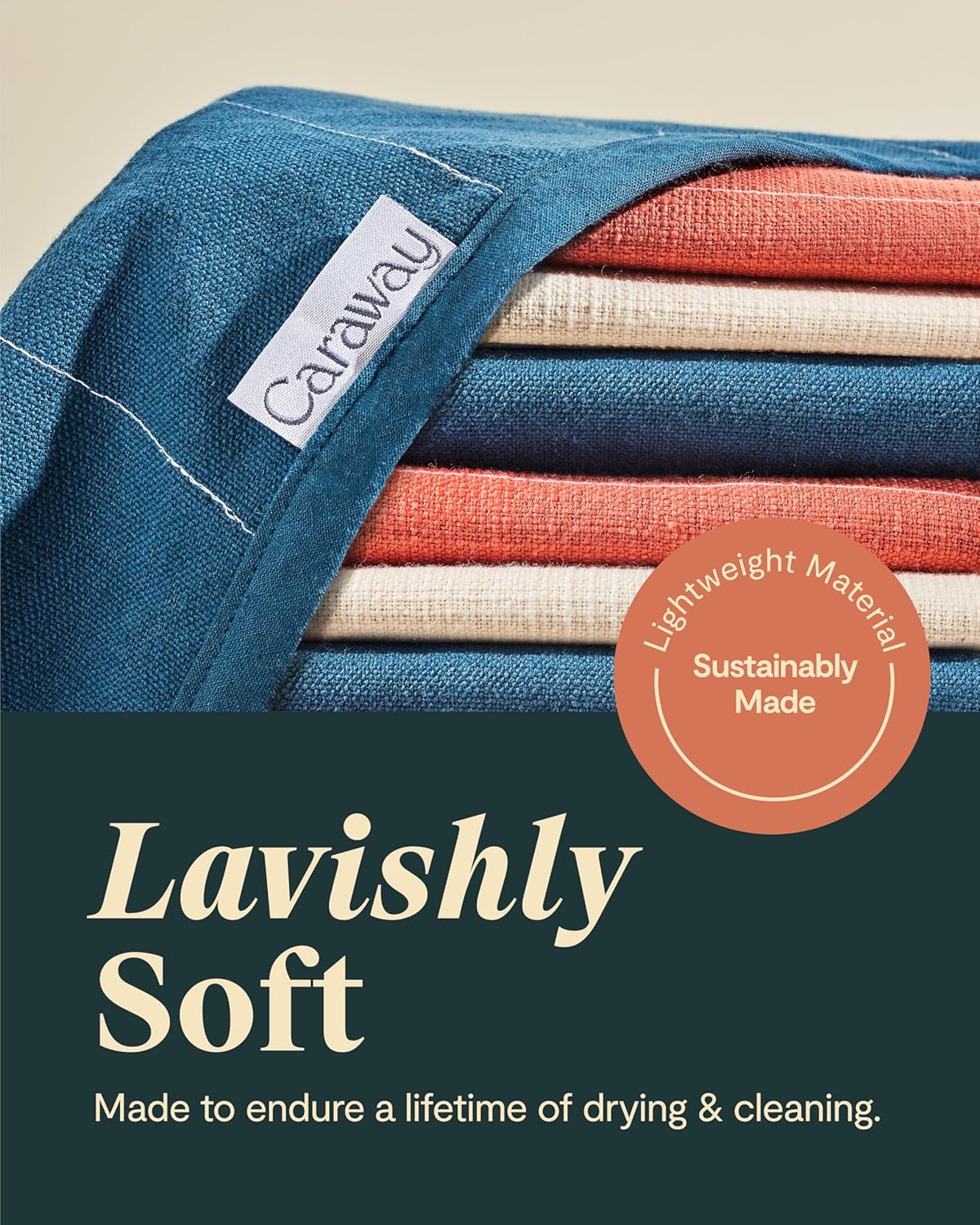
The product as photographed for Amazon — front, side, back, detail.
As an Amazon Associate I earn from qualifying purchases.