Gooseneck Electric Kettle for Pour Over: Honest Review
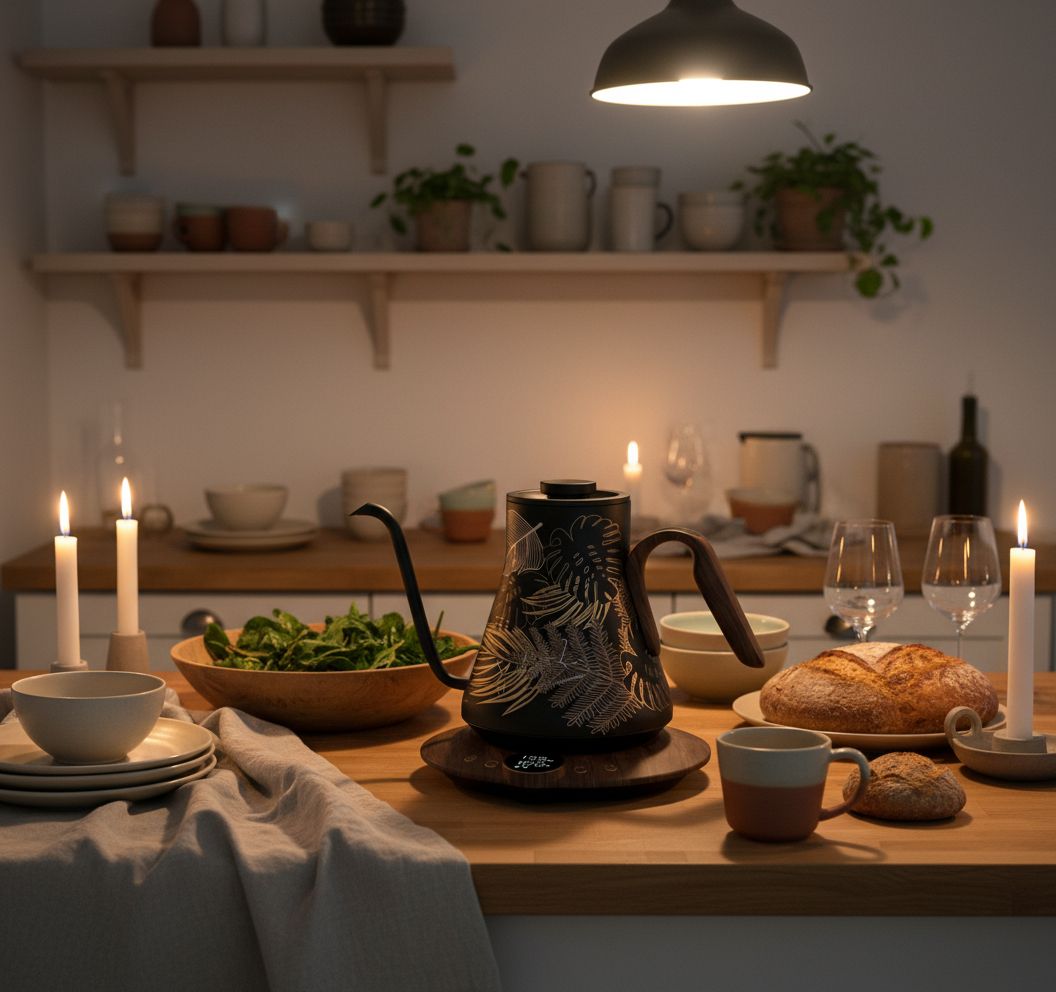
The INTASTING Gooseneck Electric Kettle turned my pour-over routine from a guessing game into something that actually tastes like the coffee deserves.
It starts, as most good mornings do, with the sound of water. Not a rolling boil, not a microwave beep, but the specific, quiet hiss of water climbing toward a temperature you chose on purpose. I’d been making pour-over coffee for years before I admitted that my old plug-in kettle was sabotaging me, sending near-boiling water over grounds that needed something closer to 200 degrees Fahrenheit, scorching the bloom, flattening the flavor. The INTASTING Gooseneck Electric Kettle landed on my counter on a Thursday, and by Saturday morning I was pulling shots of light-roast Ethiopian that tasted like someone had finally turned the brightness up. The kind of morning cup that makes you stand at the window a little longer than you need to.
The First Time I Used It
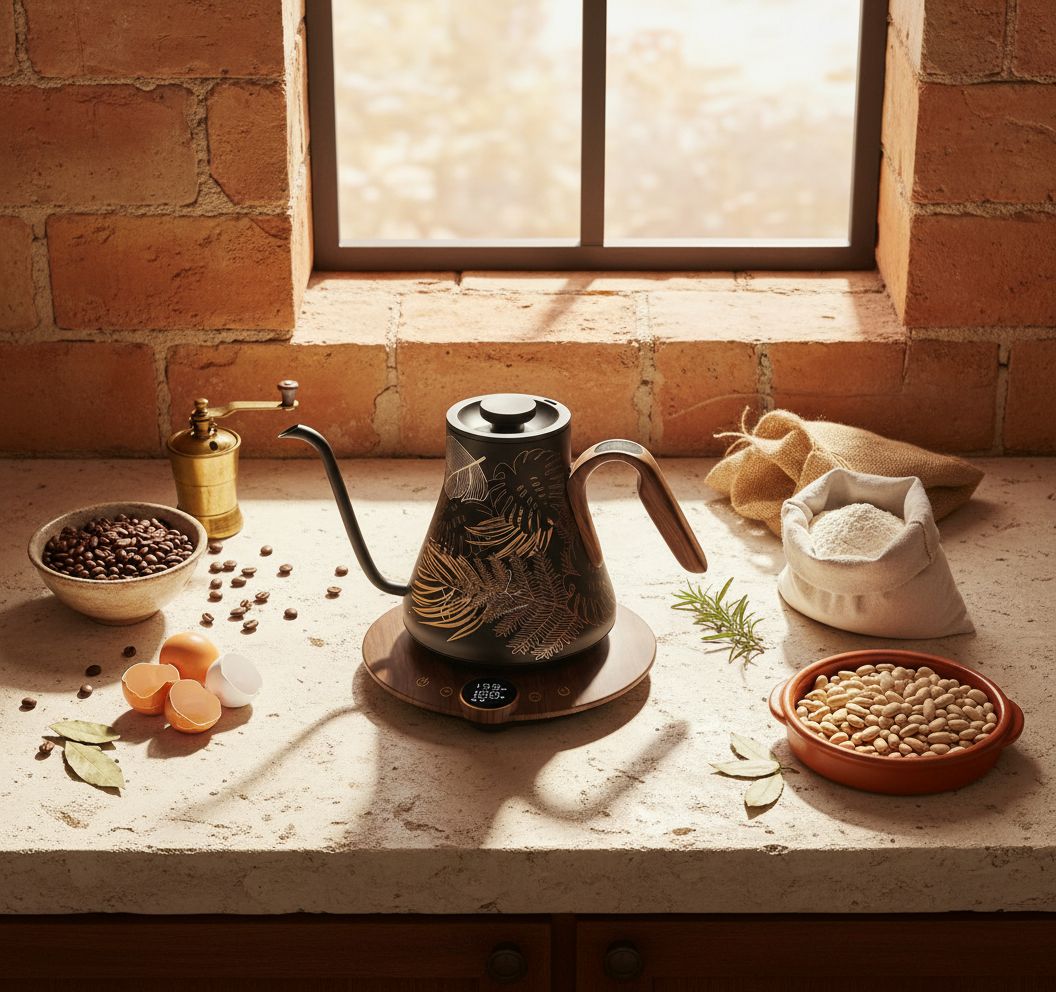
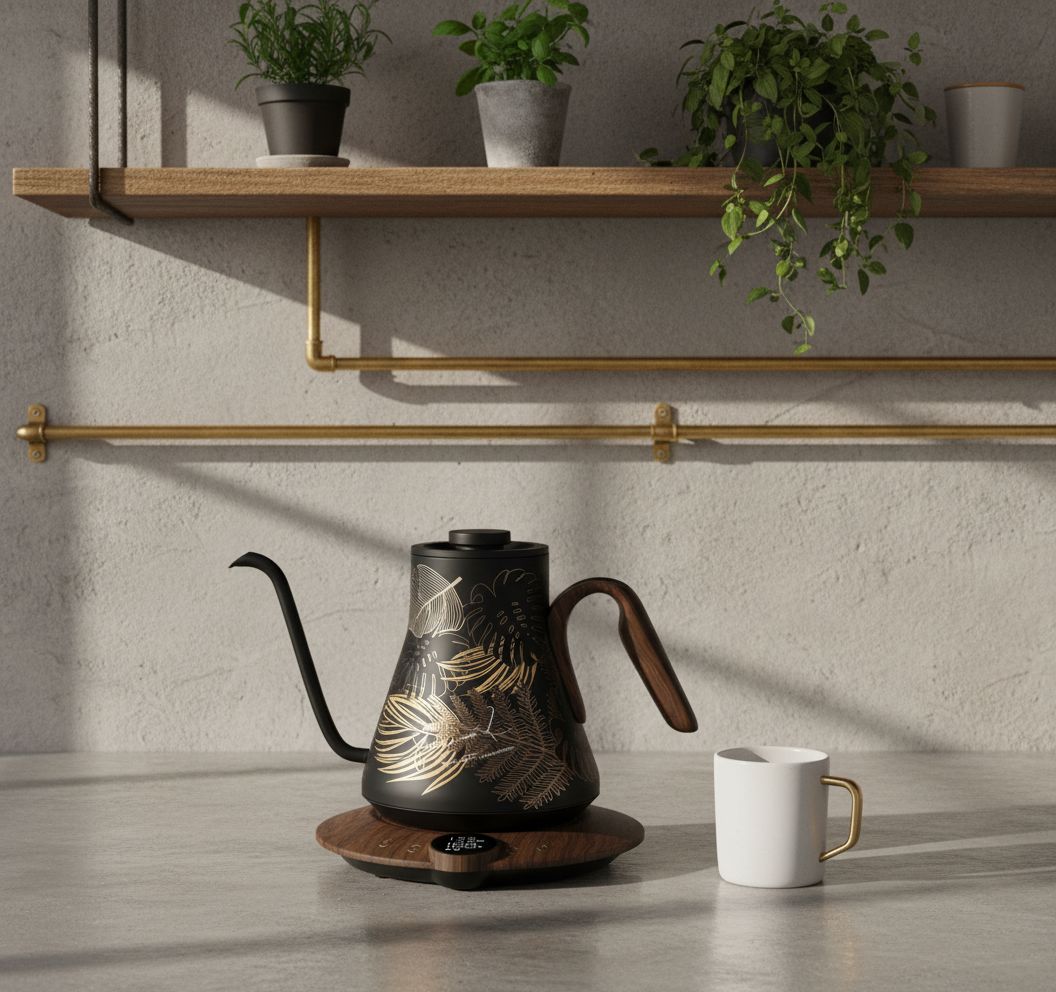
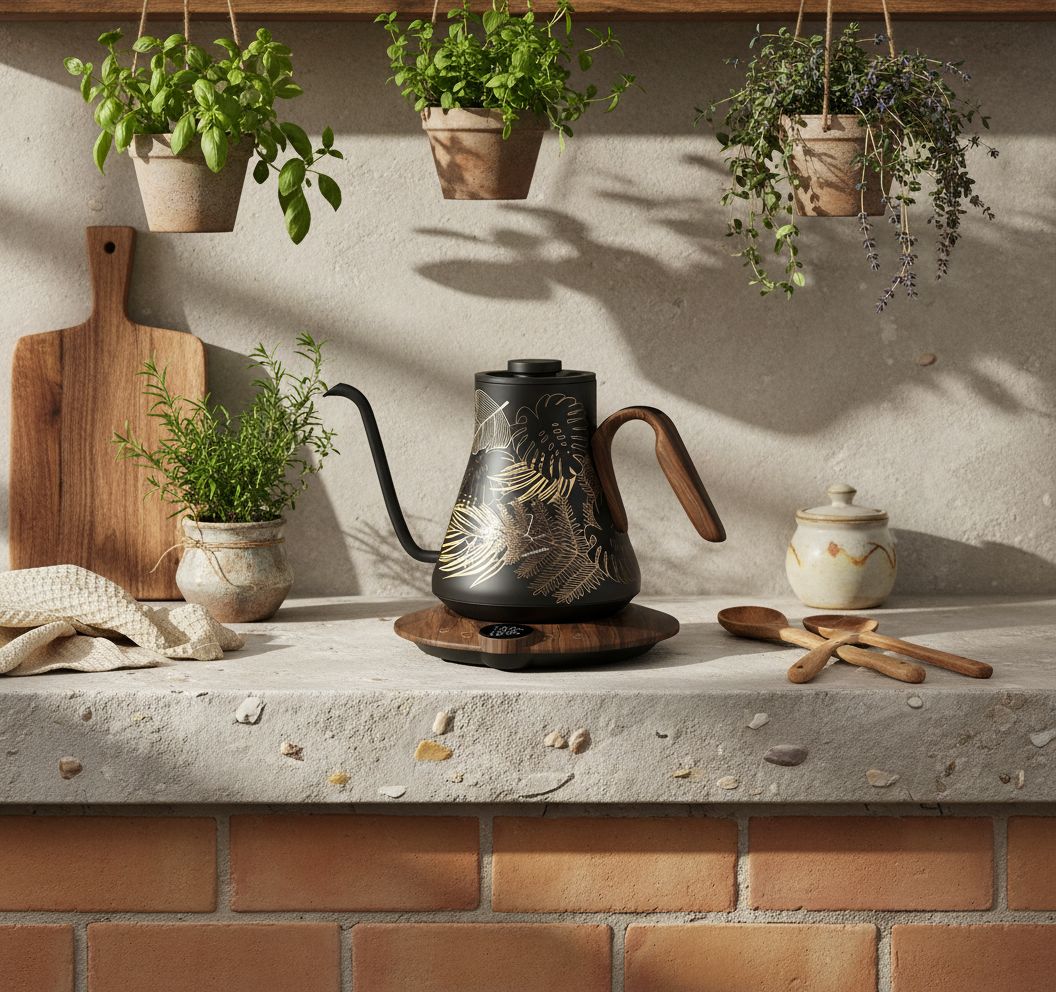
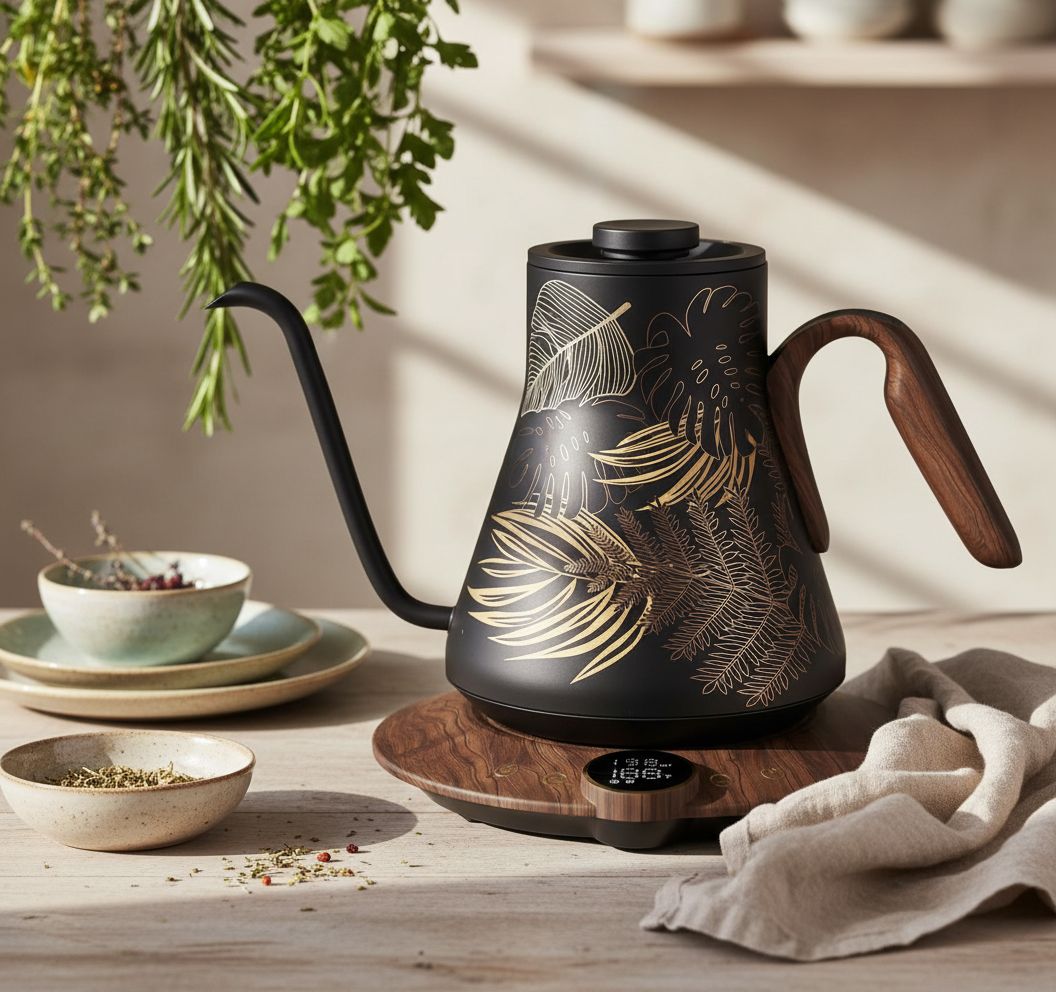
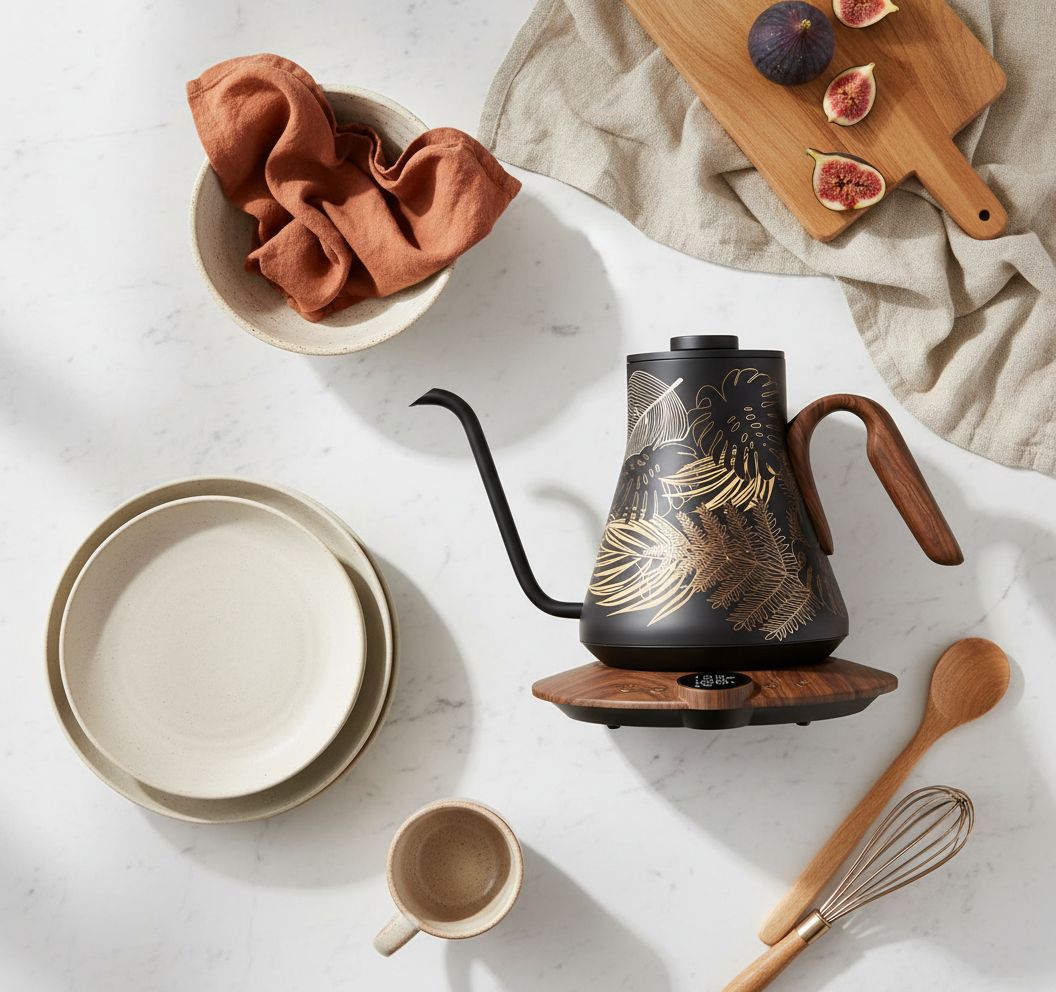
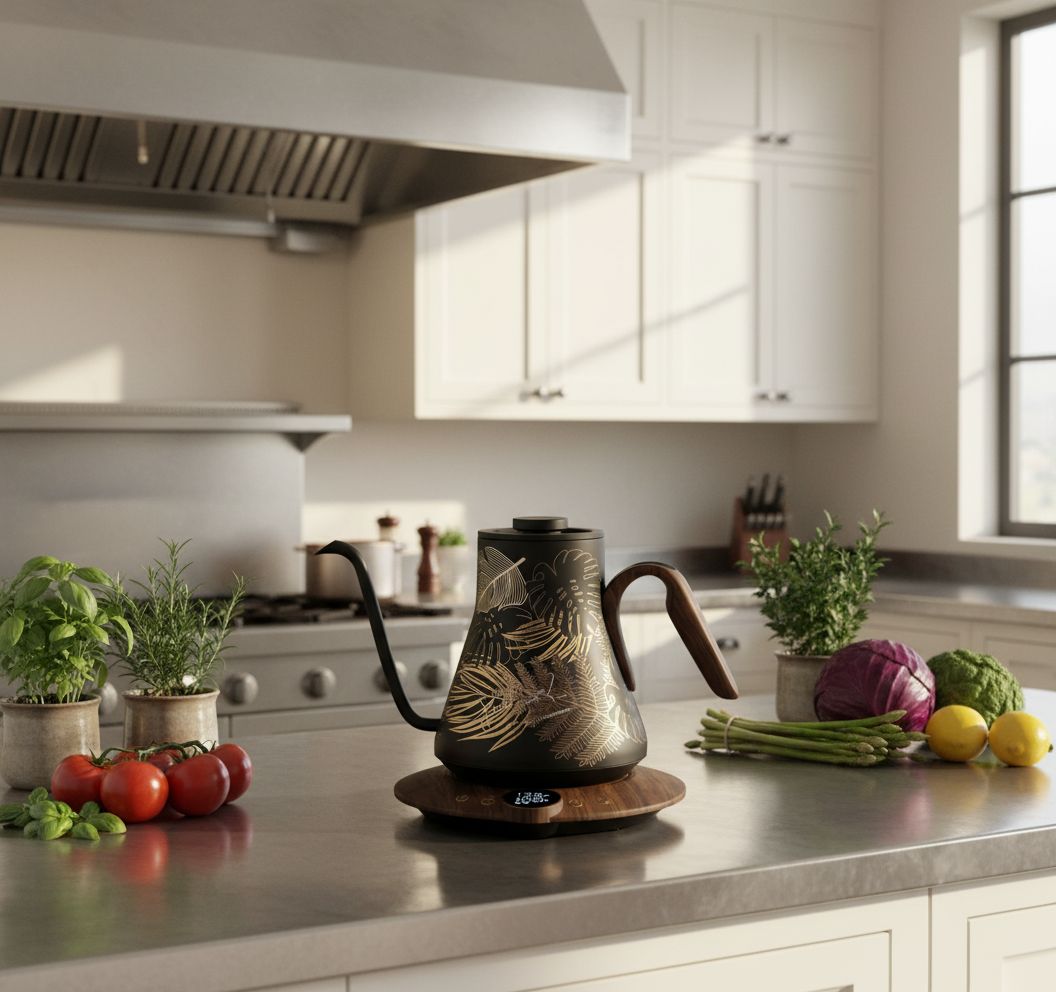
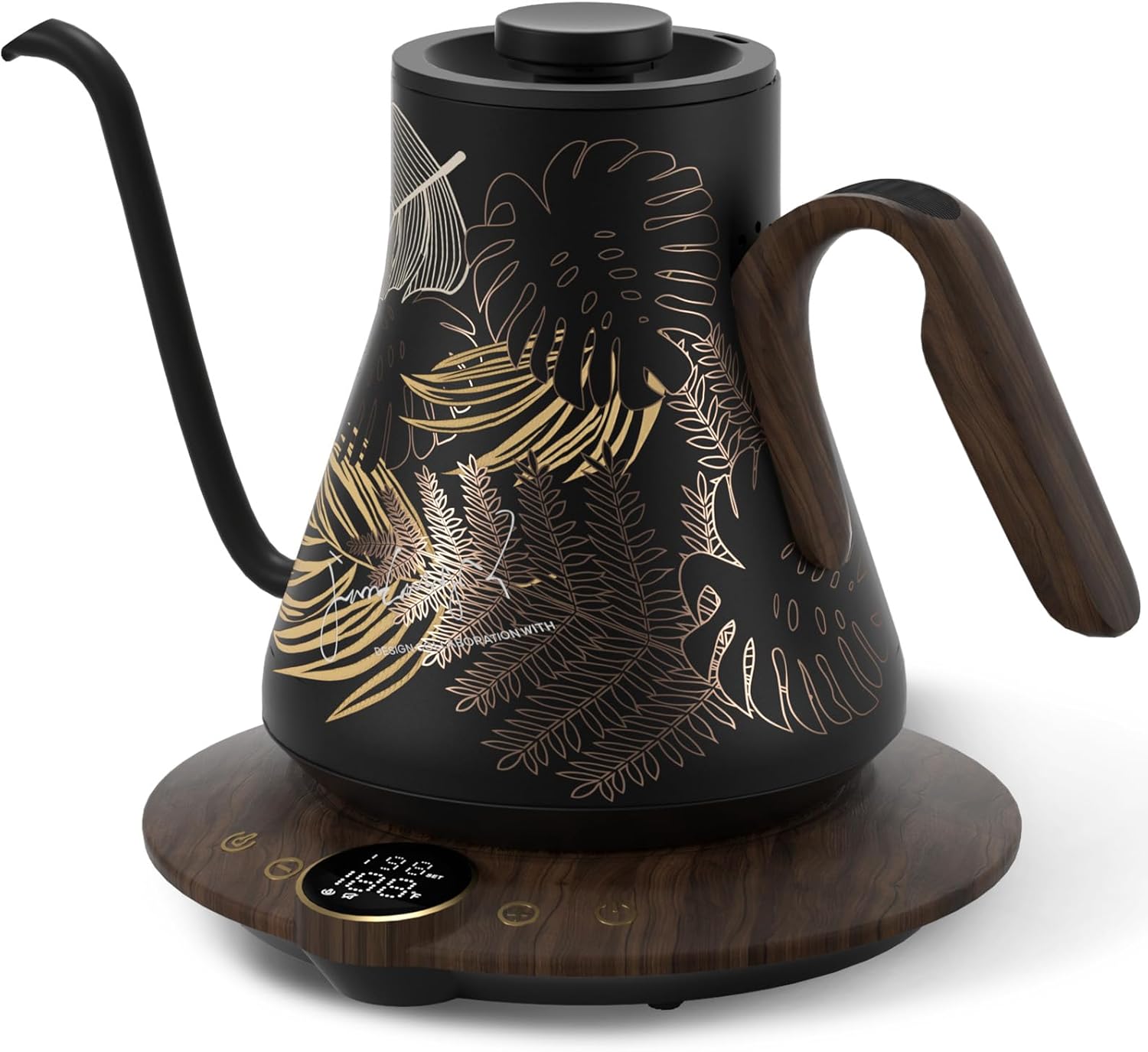
I’ll be honest: I unboxed it skeptically. The Rainforest colorway, the polished stainless finish, the compact 0.9-liter body, it all looked plausible but I’d been burned before by kettles that promised precision and delivered theater. I filled it to the line, set the temperature to 205 degrees Fahrenheit using the front-facing buttons, and watched the display count upward like an eager student. It hit the target in under three minutes.
What caught me wasn’t the speed. It was the fact that the temperature held there, displayed cleanly on the base, without me hovering or second-guessing. I used it that first morning on a medium-roast Colombian with a Hario V60, and the bloom opened exactly the way it does in every coffee video I’ve watched and never quite replicated at home. That gap between watching and doing finally closed.
How It Actually Performs
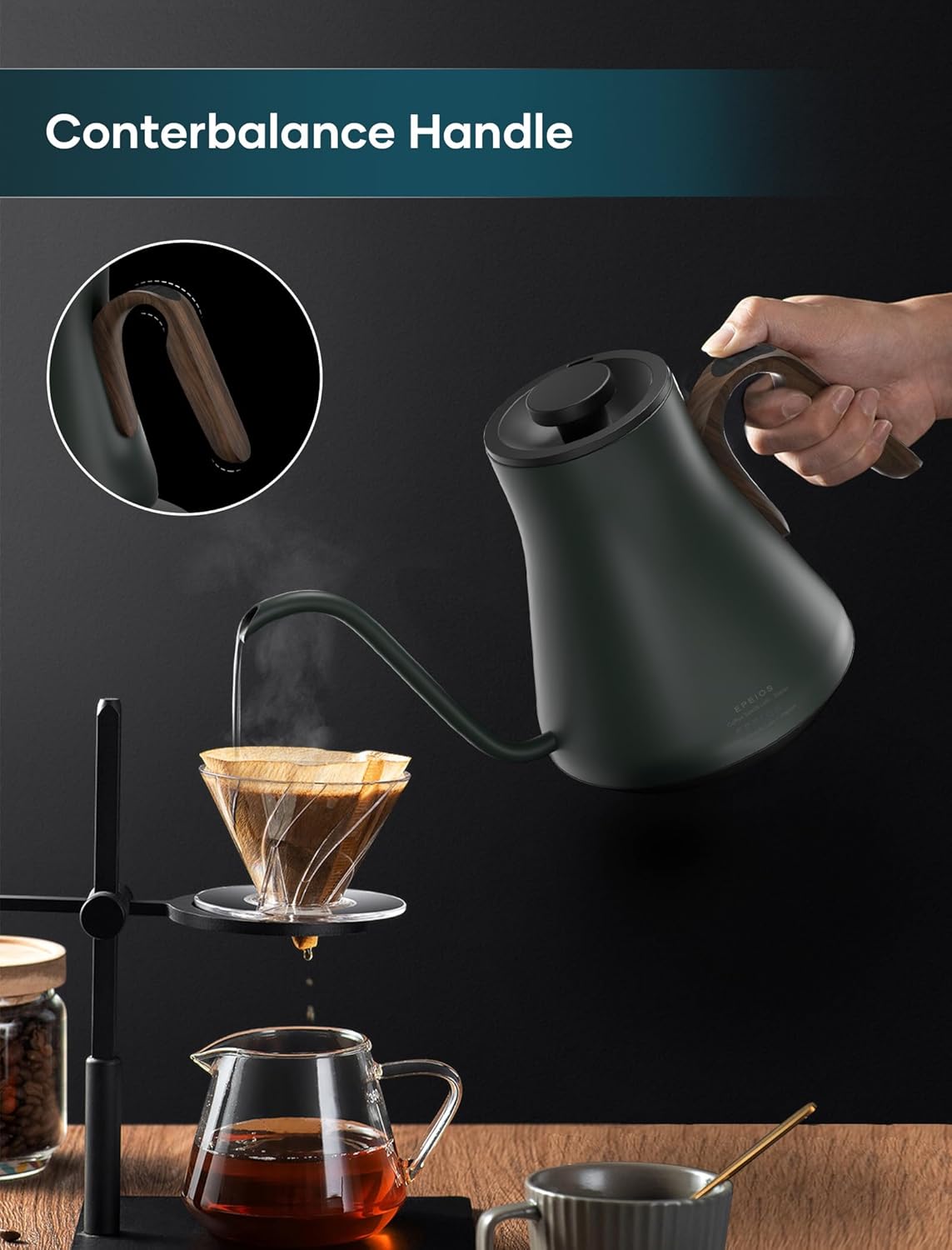
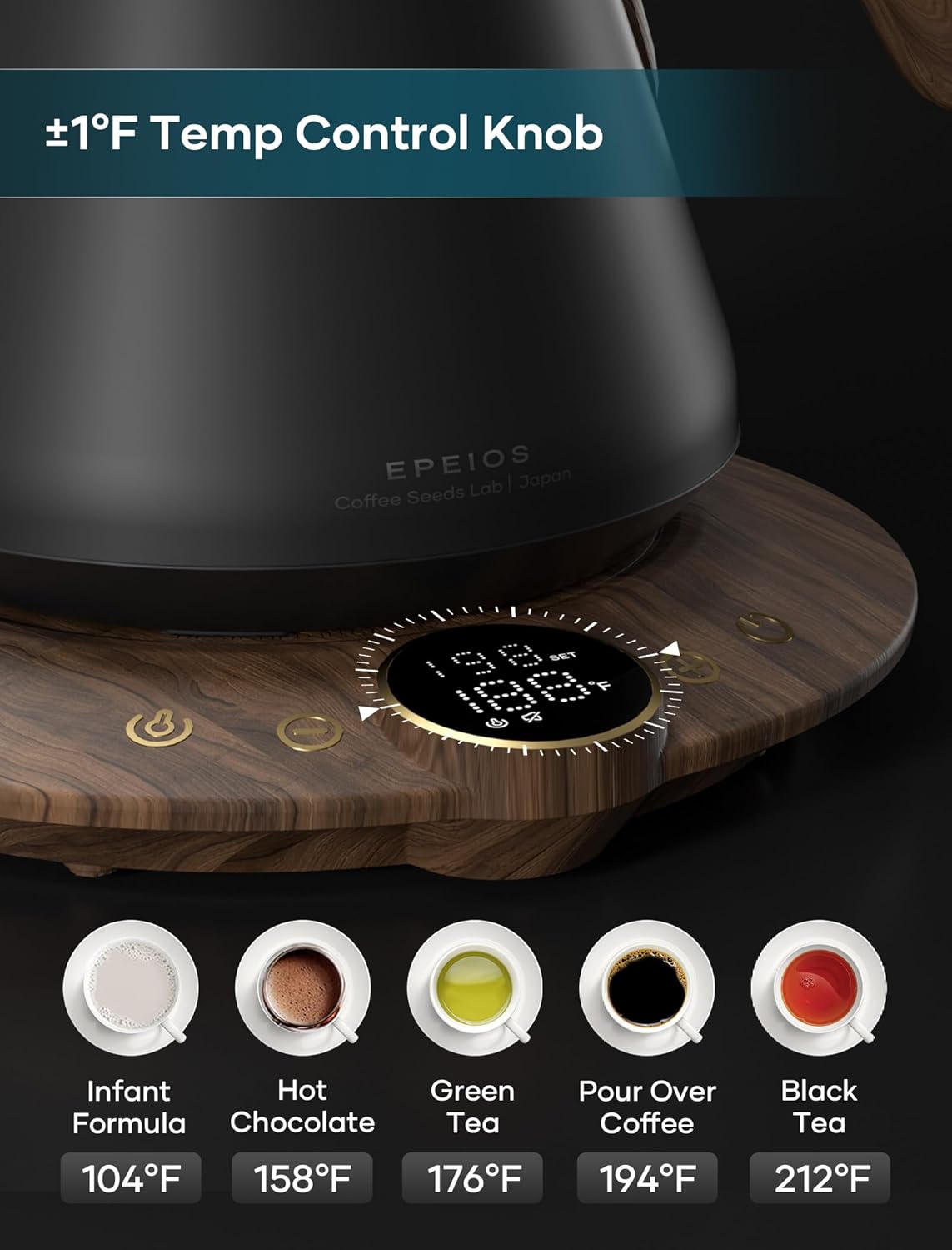
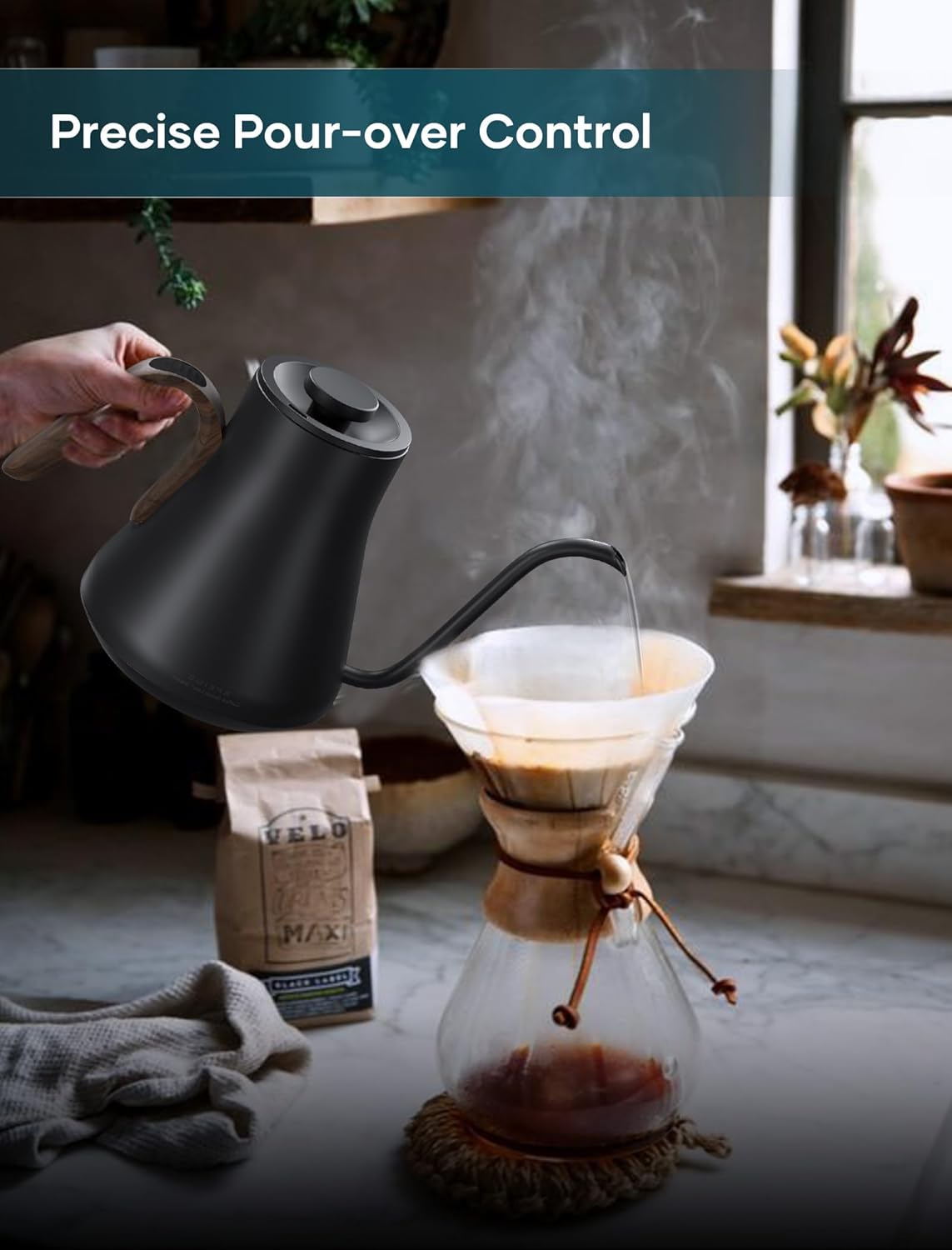
The 1500-watt heating element moves fast, genuinely fast, and the ±1°F temperature control isn’t marketing copy. I tested it twice back-to-back: once for green tea at 170°F, once for a French press at 200°F. Both times the display settled exactly where I set it and stayed there while I ground beans and arranged my gear. The gooseneck spout is narrow and curved precisely enough that water comes out in a controlled stream, not a pour, which is the whole point when you’re doing slow circular pours over a coffee bed that needs coaxing, not flooding.
“This is the first kettle that made me realize temperature isn’t a detail, it’s the whole conversation.”
The built-in brew timer on the base is a small feature that earns its keep. You start it when you begin your first pour and it counts up, so you can hit the two-minute mark on a V60 without checking your phone or losing track mid-pour. Worth noting: the 0.9-liter capacity is slightly smaller than most competitors in this category. If you’re making a full French press for two people and then want hot water for oatmeal, you’ll be refilling. That’s not a flaw, it’s a tradeoff. For a thorough look at how electric kettle design affects brewing outcomes, the Serious Eats equipment review archive has useful context on why gooseneck form matters.
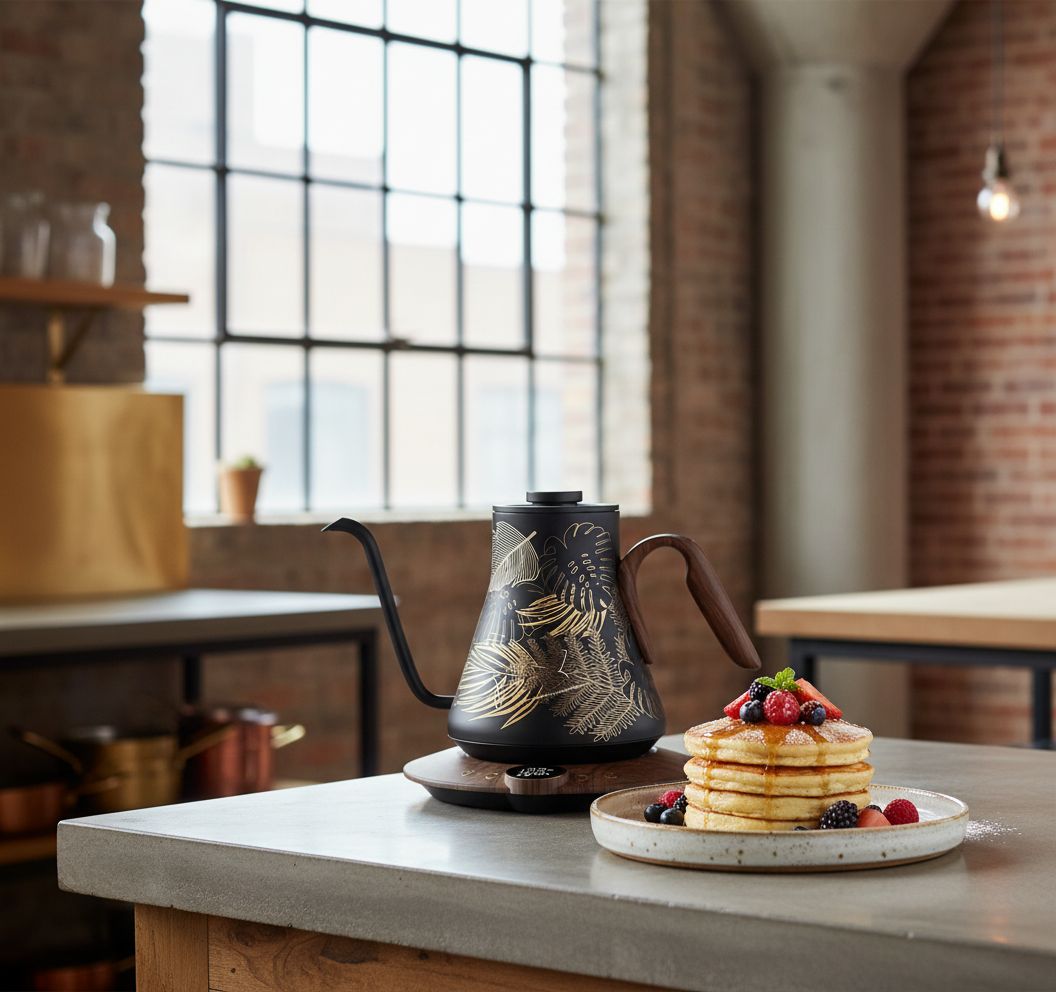
What I Actually Cooked With It
Use 1: Daily Pour-Over at 205°F
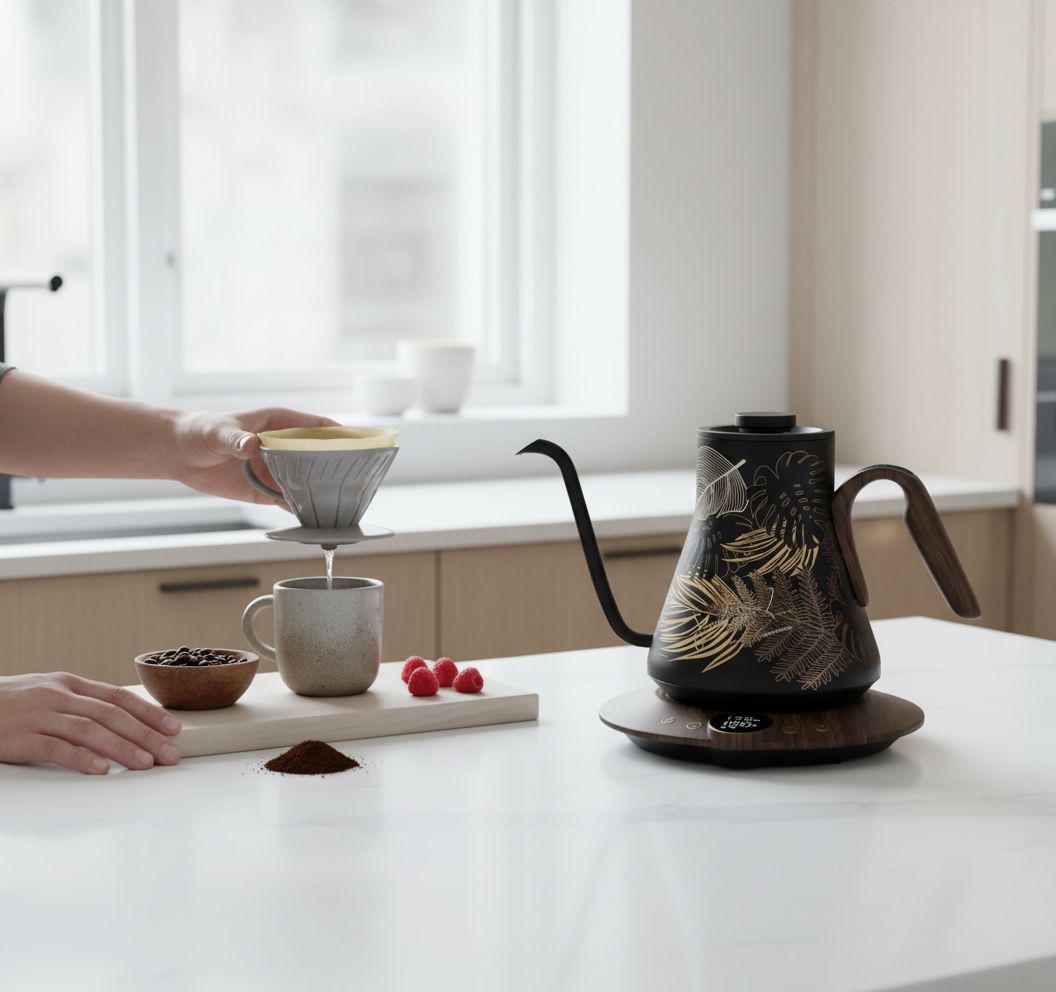
This is the home base. Every morning for three weeks I set 205°F, ground about 25 grams of medium-roast beans to a medium-coarse consistency, and poured. The kettle hits temperature, holds it, and the gooseneck gives you a stream thin enough to saturate the grounds evenly without blowing out the coffee bed. I started tasting extraction differences I’d previously attributed to the beans. Turns out I was just burning them with water that was too hot. Two degrees of precision changed the entire cup.
Use 2: Loose-Leaf Green Tea at 170°F
Green tea is where most people quietly ruin everything by using water that’s still visibly steaming. I set the INTASTING to 170°F, dropped in a teaspoon of a Japanese sencha I’d been under-appreciating, and let it steep for 90 seconds. The result was clean, grassy, almost sweet in a way I hadn’t tasted from that tea before. No bitterness. No astringency. Just the tea doing what the tea is supposed to do. You can explore more about precision pour-over and tea kettles in our dedicated category if this brewing approach is new to you.
Use 3: Weekend French Press for a Crowd
On a Sunday morning with four people at the table, I ran the kettle twice back-to-back. The second fill heated just as quickly as the first, which I hadn’t fully expected. I used 200°F for the French press, started the brew timer, and had four full mugs ready in under ten minutes total. The crowd wasn’t impressed by the kettle. They were impressed by the coffee, which is exactly the right result. Good tools disappear into the process. For anyone shopping this category more broadly, our espresso and coffee equipment picks and drip coffee machine recommendations cover the full brewing spectrum if you’re building a home coffee setup from scratch.
What Other People Are Saying
One buyer noted that “the ability to adjust the temperature in 1° increments makes it very convenient for whatever you would need,” which captures what most reviewers circle back to: the precision isn’t gimmicky, it’s genuinely useful across different brewing methods. The 4.4-star rating across more than 2,000 reviews holds steady, which typically signals a product that performs consistently rather than one that wows a small enthusiastic crowd and disappoints everyone else. You can cross-reference how testers evaluate these features in contexts like the America’s Test Kitchen equipment reviews.
The review pool skews toward daily coffee and tea drinkers who use the kettle multiple times a day, and the heat speed comes up repeatedly. That frequency-of-use data matters. A kettle that holds up to twice-daily brewing over months is a different product than one that’s being reviewed after two weeks.
Who Should Skip It
If your countertop is already crowded and you only make coffee once a week from a pod machine, a precision gooseneck electric kettle is not going to change your life. The 0.9-liter capacity is also a real limitation if you regularly need hot water for large-batch cooking, a full teapot for multiple guests, or anything requiring more than about four cups at once. And if you’ve never tried pour-over or loose-leaf tea and aren’t curious about starting, the temperature control is useful infrastructure for a practice you don’t have yet. You might look at our full coffee and tea equipment category to see whether a different format fits your morning better.
Lastly, people who want a simple, fast, no-settings kettle will find this fussier than they want. The interface is intuitive, but it is an interface. There are buttons to press.
What It Replaces in My Kitchen
Before this, I was using a wide-mouthed plug-in kettle that had a single temperature setting: boiling. I’d fill it, wait, then pour immediately and hope for the best, or I’d fill it and wait too long and have to reheat. Both methods produced fine coffee in the way that food cooked without salt is technically food. The INTASTING replaced that guesswork entirely. It also replaced the stopwatch I was keeping on my phone for brew timing and the candy thermometer I’d occasionally dip in to check whether the water had cooled enough for green tea. Three tools, one compact footprint. Our editor’s top kitchen tool recommendations include a few other precision-focused picks that follow the same philosophy, if you’re rethinking other parts of your setup.
FAQ
How accurate is the ±1°F temperature control in practice?
In repeated testing it holds exactly where you set it. The display updates in real time as the water heats, so you can see it approaching your target and it doesn’t overshoot.
Is the interior easy to clean and does it leave any odors?
The BPA-free stainless steel interior rinses clean with water and doesn’t retain smells. For mineral buildup over time, a brief soak with a small amount of white vinegar every few weeks keeps it clear.
Does this kettle work with all outlet types in North America?
Yes, it’s a standard plug-in electric kettle designed for North American outlets. There is no induction compatibility required since it heats through its own 1500-watt element in the base.
Does the build quality match what you’d expect for a precision kettle in this tier?
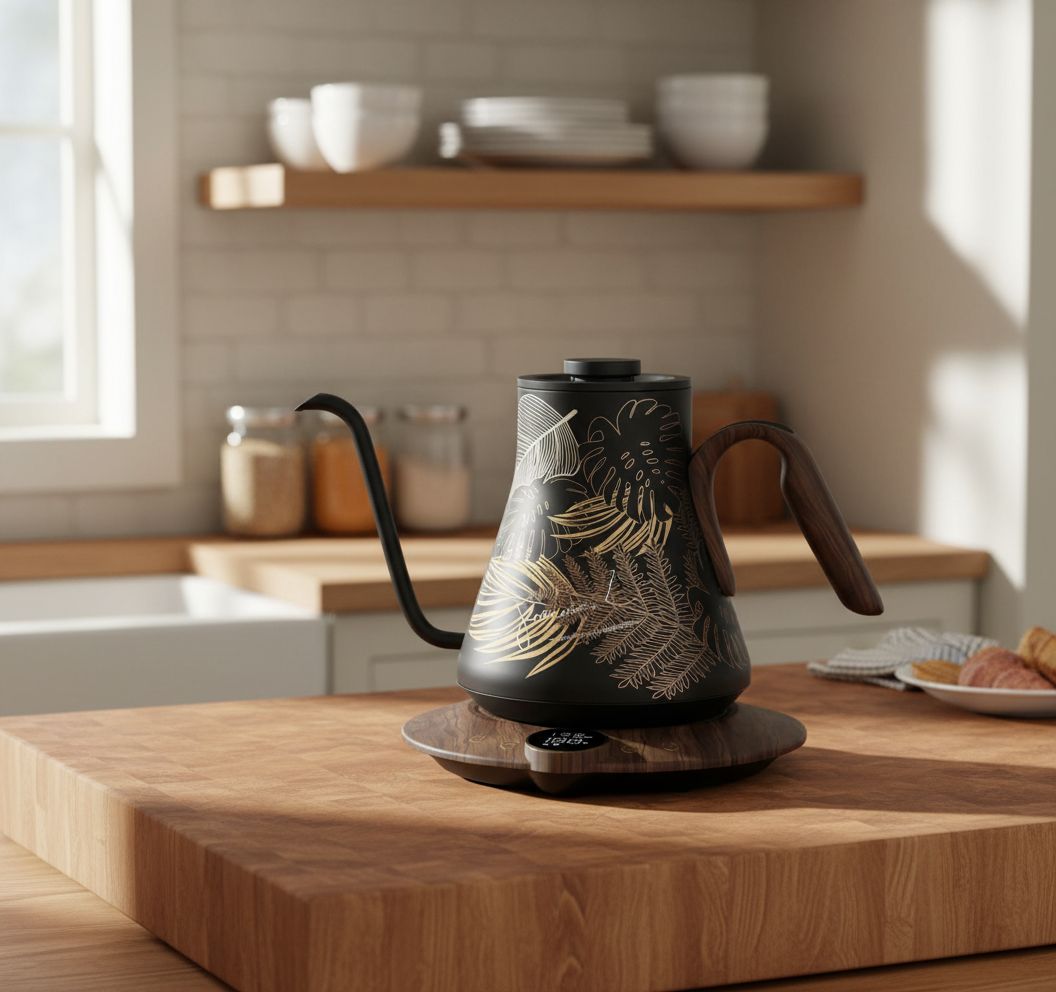
The polished stainless finish is solid, the buttons have a satisfying click, and the base feels planted on the counter rather than lightweight and cheap. For how frequently a daily kettle gets handled, the construction reads above what you’d expect at this price point.
Does INTASTING offer a warranty on this kettle?
INTASTING includes a warranty with the kettle. Check the product listing or the brand’s site directly for current terms and the process for replacement parts or claims, as conditions can update.
The Verdict
I reach for this kettle twice before 9 a.m. now, once for pour-over, once for green tea, and it’s quietly become the most-used piece of equipment on my counter. That’s not a small thing. The Wirecutter kitchen equipment team has written extensively about how precision tools earn their place by reducing variables, and that’s the clearest way I can describe what this kettle does. It removes the temperature variable entirely, which means the only things left to control are your grind size and your pour technique. For anyone reading this INTASTING gooseneck electric kettle review wondering whether it’s worth the investment: if you brew pour-over coffee or loose-leaf tea with any regularity, the answer is straightforward. Precision tools for precision brewing are not indulgences, they’re infrastructure. And this one does its job every single morning without asking for anything in return except a refill. If you’re also exploring the broader home coffee setup world, resources like the Food and Wine cooking techniques guides and our own kitchen gift ideas roundup are good next stops. For what you’re paying and the build quality you’re getting, this is one of the better-reasoned purchases in the gooseneck electric kettle category right now.
Every Angle
The product as photographed for Amazon — front, side, back, detail.
As an Amazon Associate I earn from qualifying purchases.