Ceramic Baking Dish Set for Oven: Honest Review
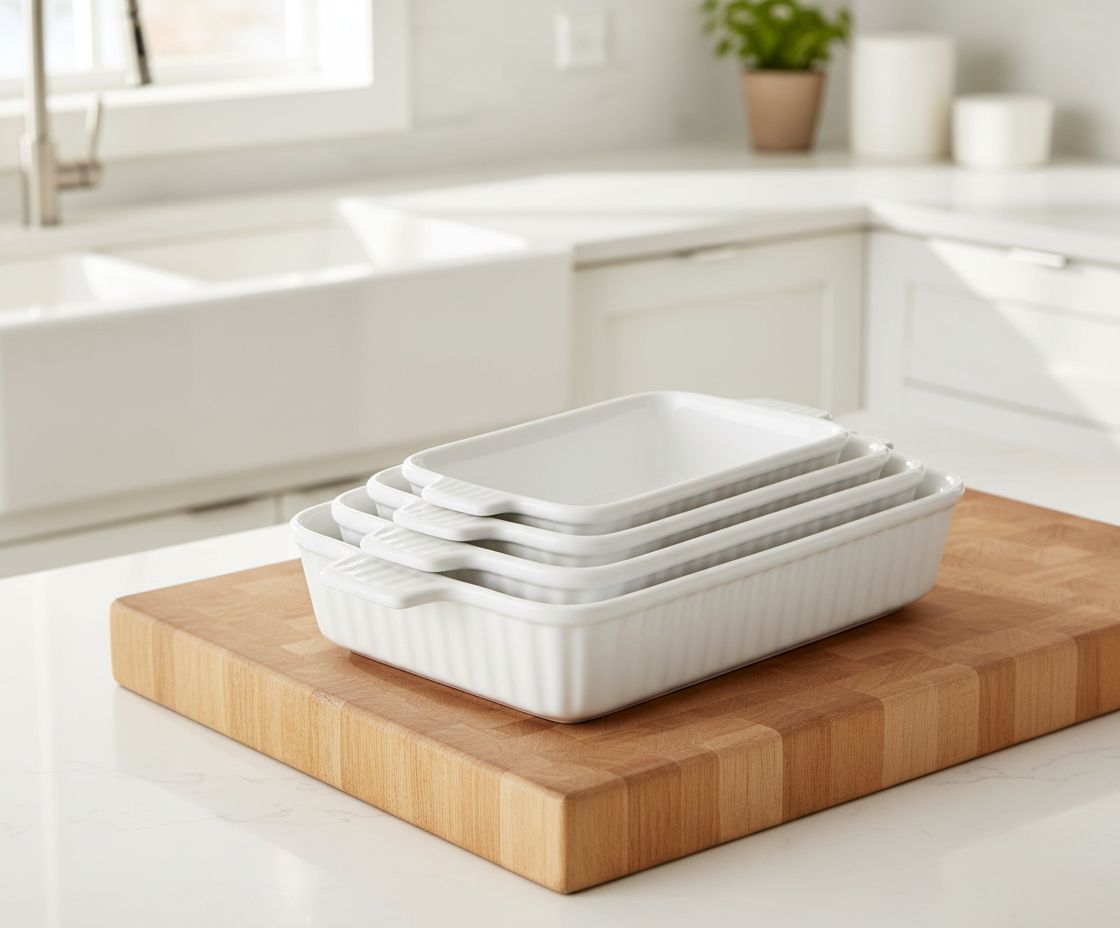
The MALACASA porcelain casserole dish set landed on my counter on a gray November Wednesday, and by Sunday I had baked a lasagna, a lemon olive oil cake, and a bubbling pan of roasted root vegetables I didn’t plan to make until the dishes made me want to.
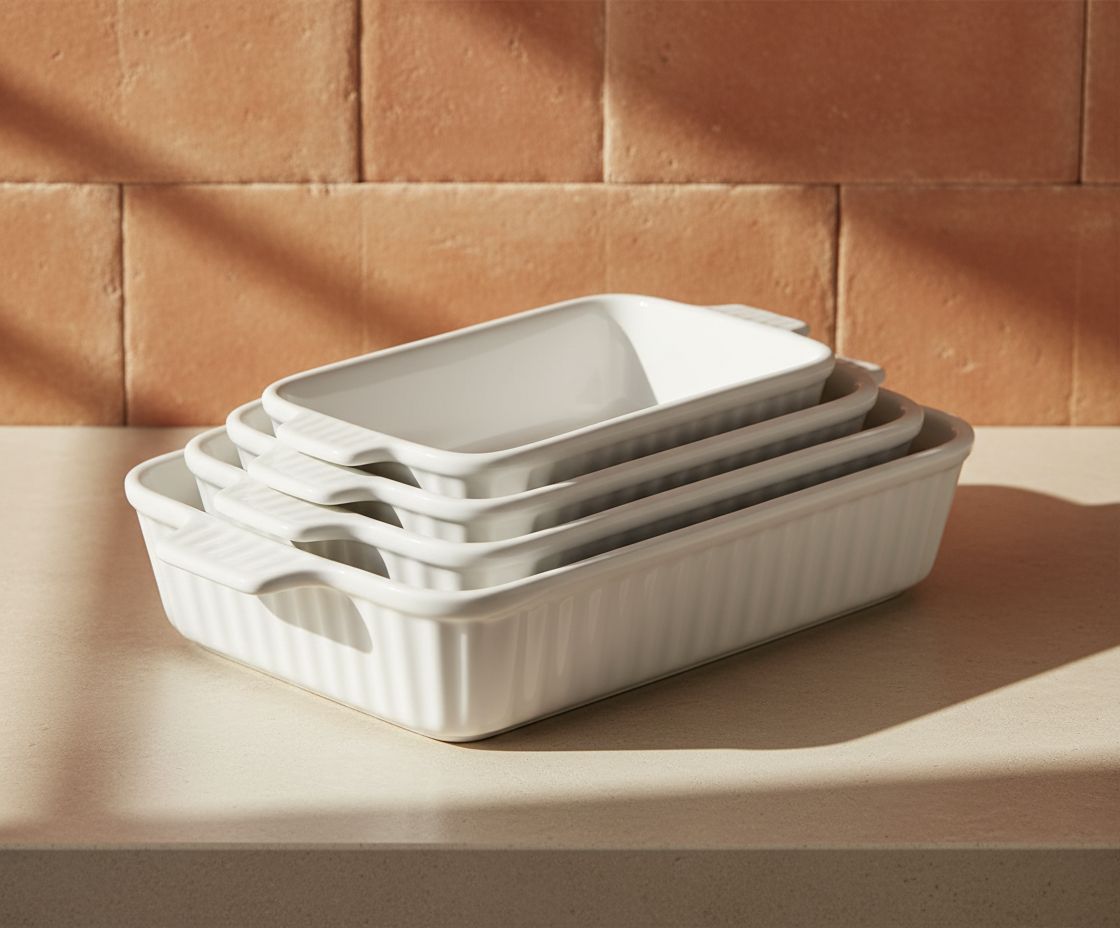
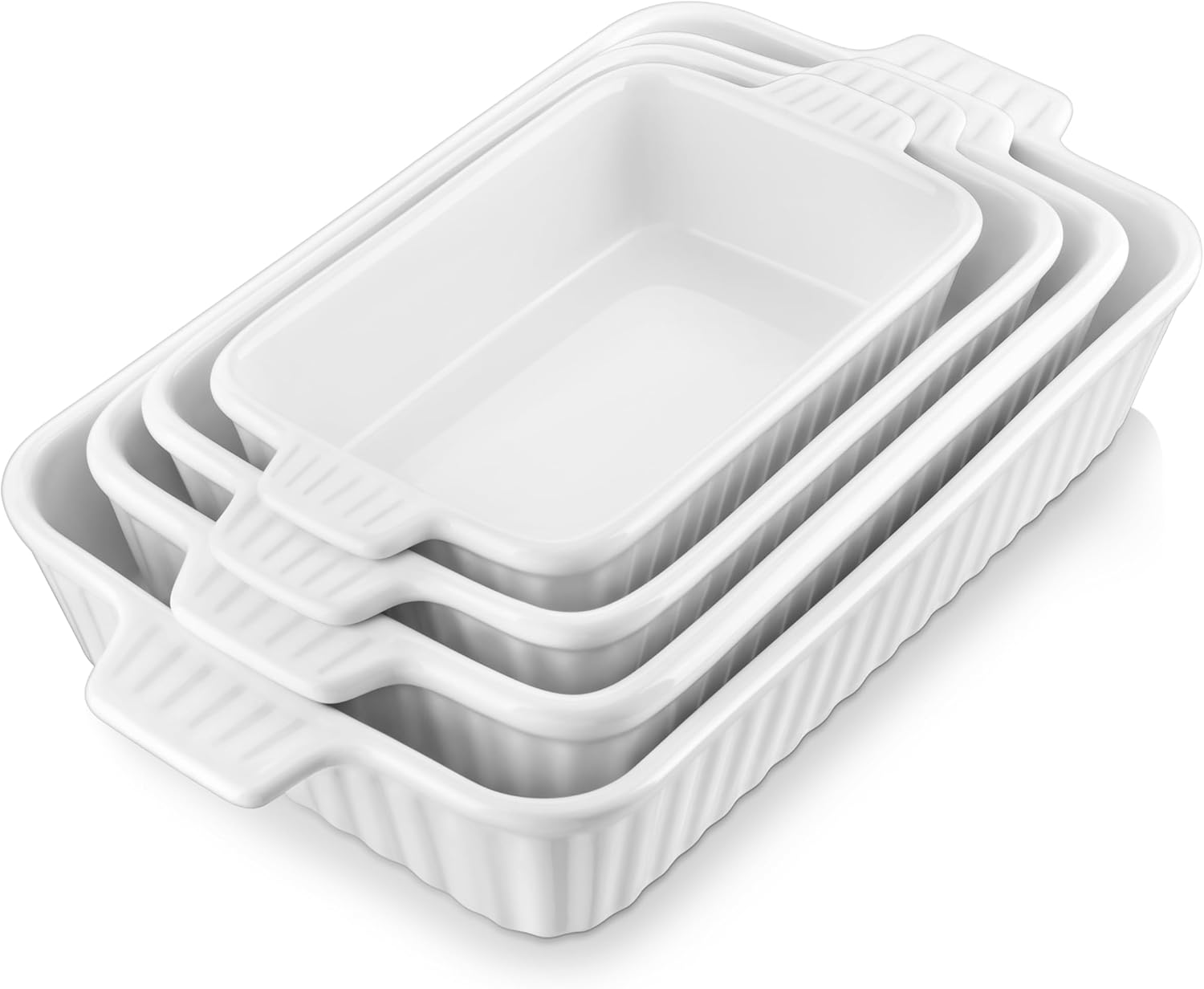
There is a specific kind of Sunday that calls for a heavy baking dish. The kind where the oven runs from noon until dark, the kitchen smells like browned butter and rosemary, and you want everything you pull from the rack to look like it came out of a farmhouse in Provence rather than your third-floor apartment in November. That is the Sunday that broke me on my old motley collection of beat-up metal pans and Pyrex hand-me-downs. I had four different baking vessels that didn’t match, didn’t stack, and at least one of which had a mysterious crack I’d been pretending not to notice. Then the **MALACASA Casserole Dishes for Oven** arrived, all four of them, nested like Russian dolls inside a single box, and something shifted in my pantry and, honestly, in my general cooking morale.
The First Time I Used It
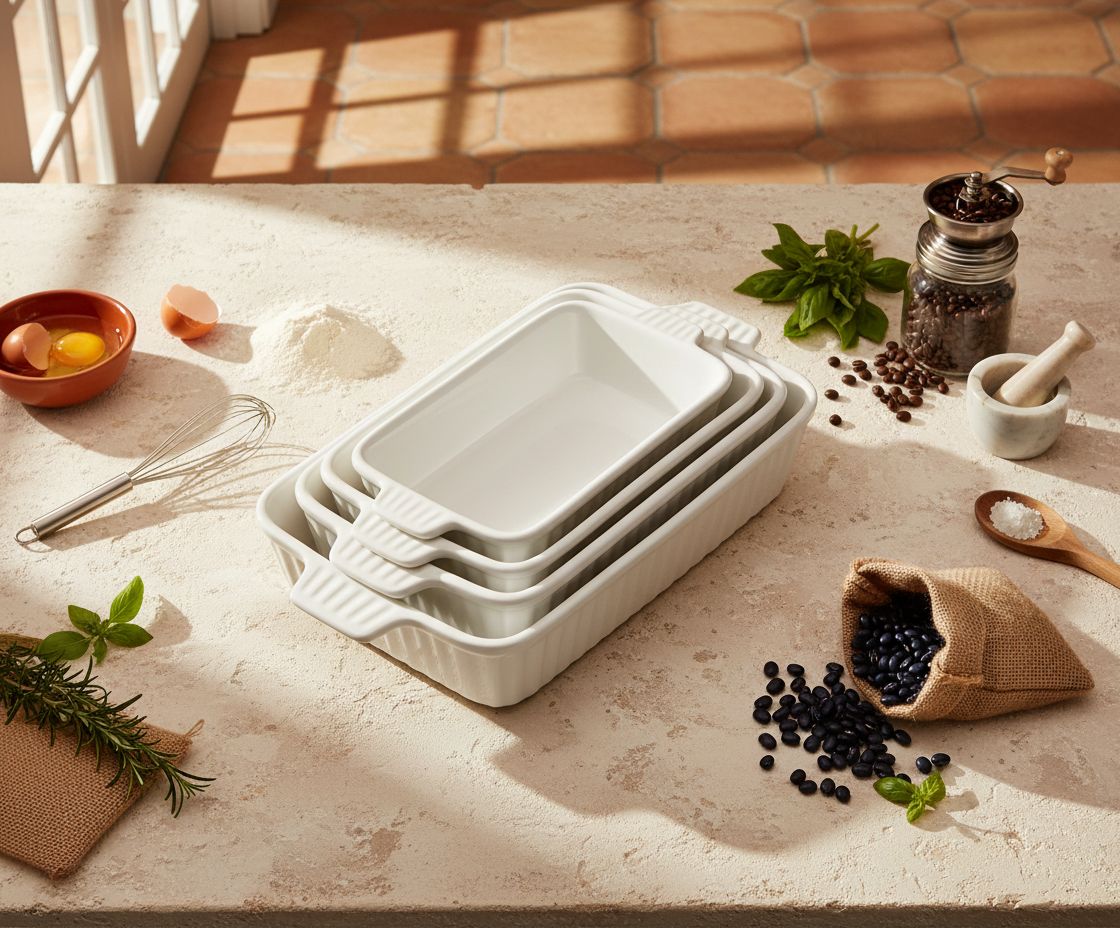
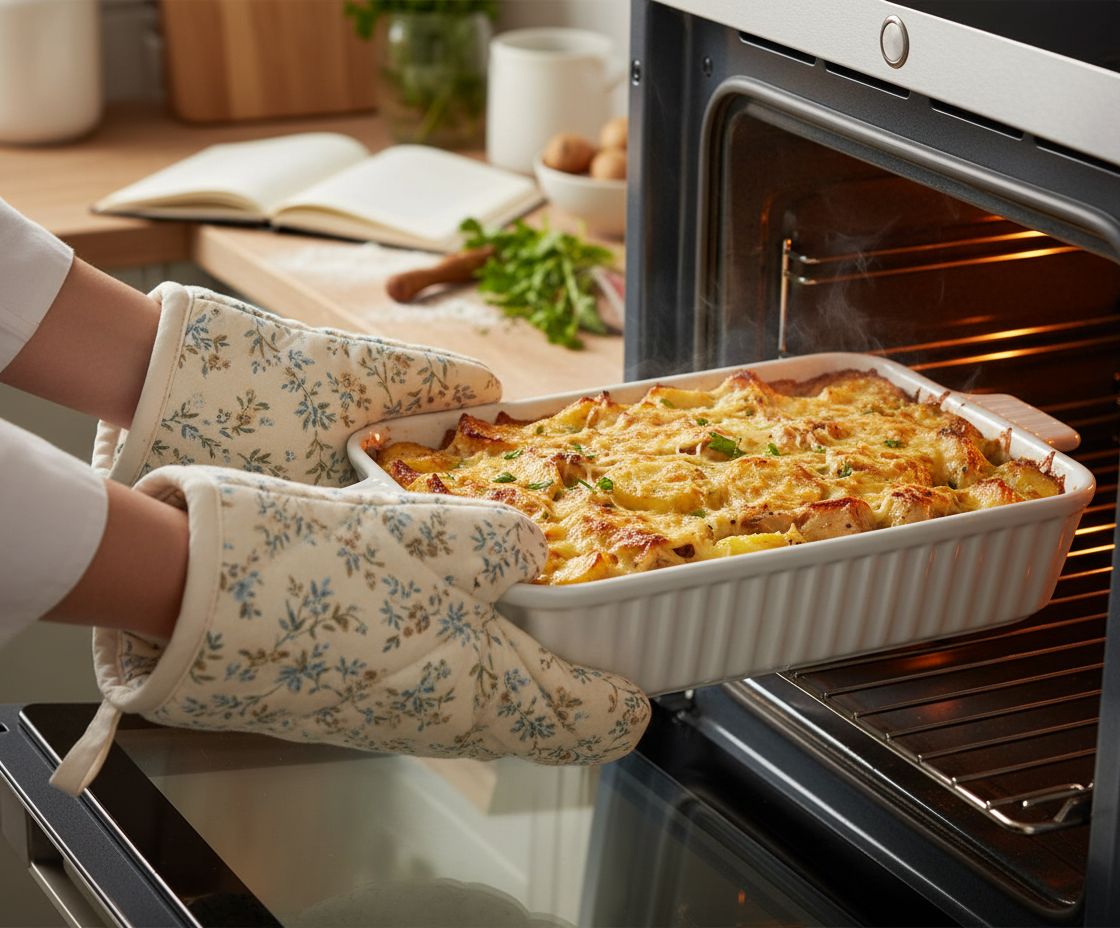
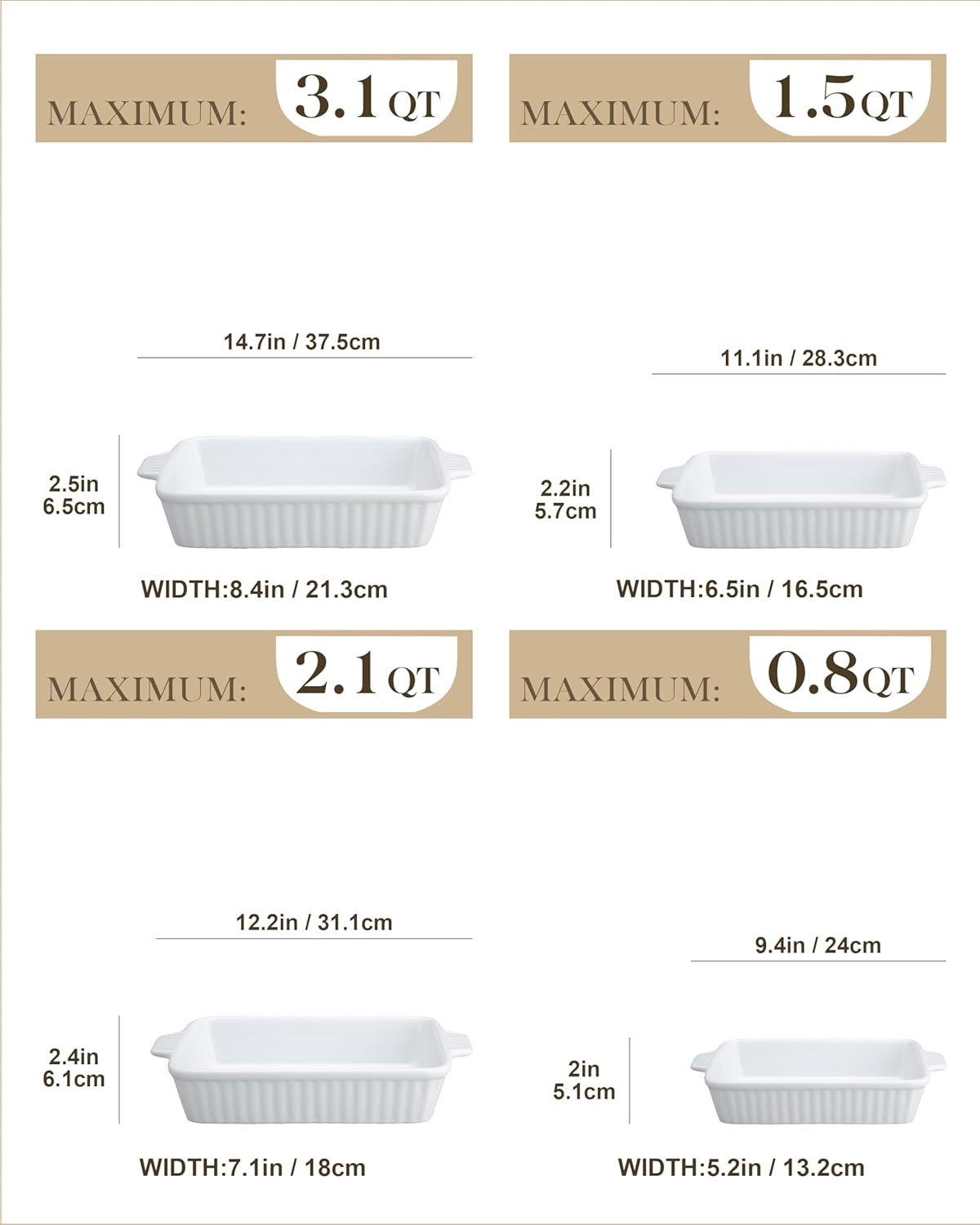
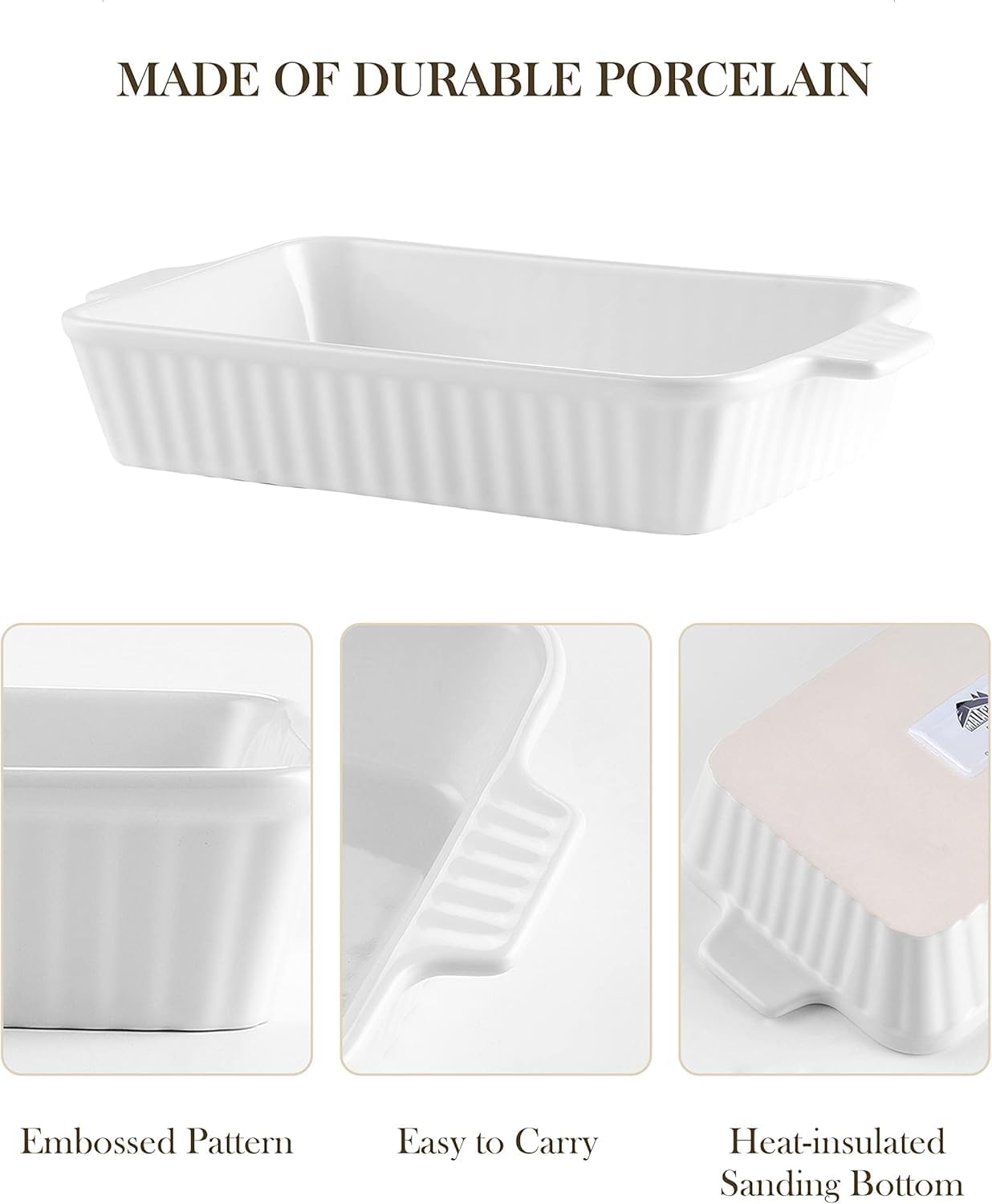
I reached for the largest dish first, the 14.7-inch rectangular pan, because I had a lasagna to build and I wanted to know immediately whether the depth of the dish was real or just good photography. It is real. The walls are high enough that a full eight-layer lasagna fits without the cheese bubbling over the rim and pooling onto the oven floor, which has been the quiet tragedy of every lasagna I’ve made in shallower pans. The handles on either side are wide, sculpted into the dish rather than bolted on, and when I pulled the pan out of a 400-degree oven, they gave my oven-mitted hands an actual grip instead of that slippery-dish panic I’ve experienced more times than I want to count.
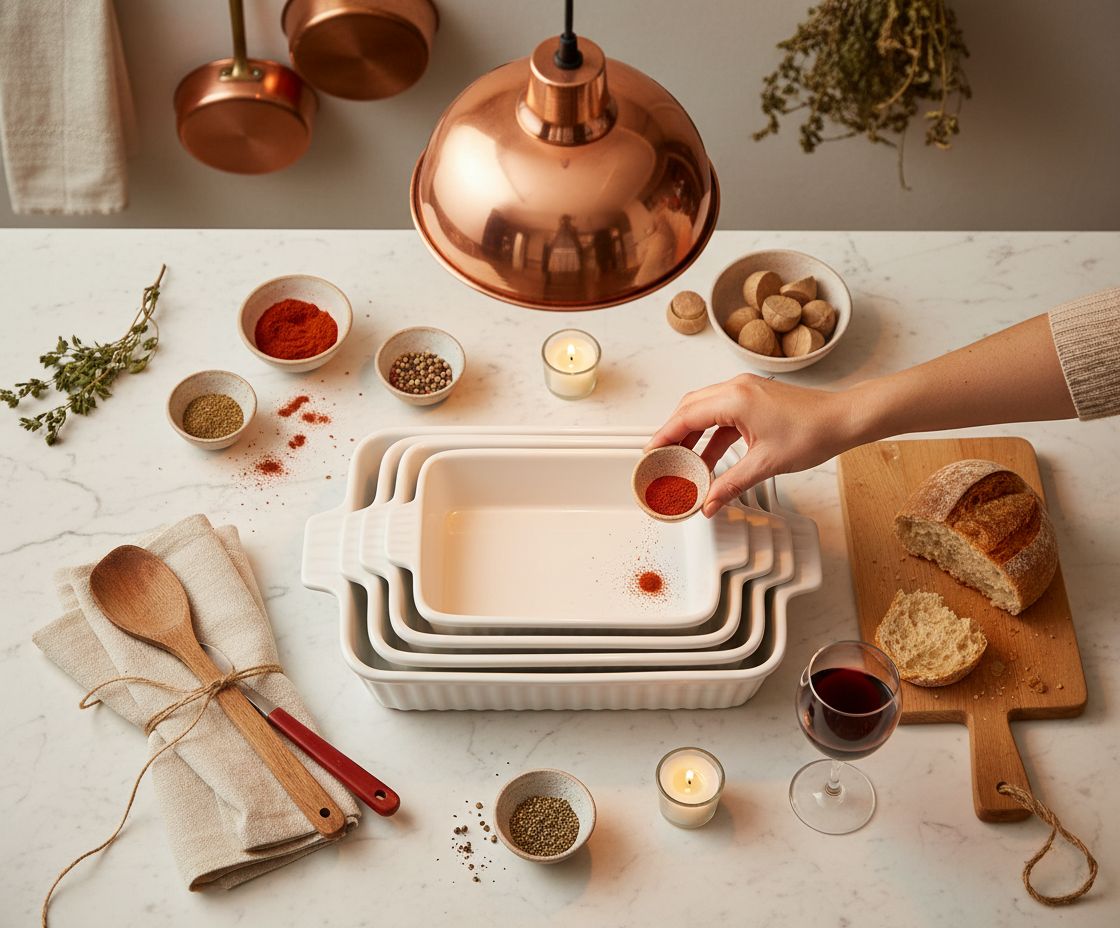
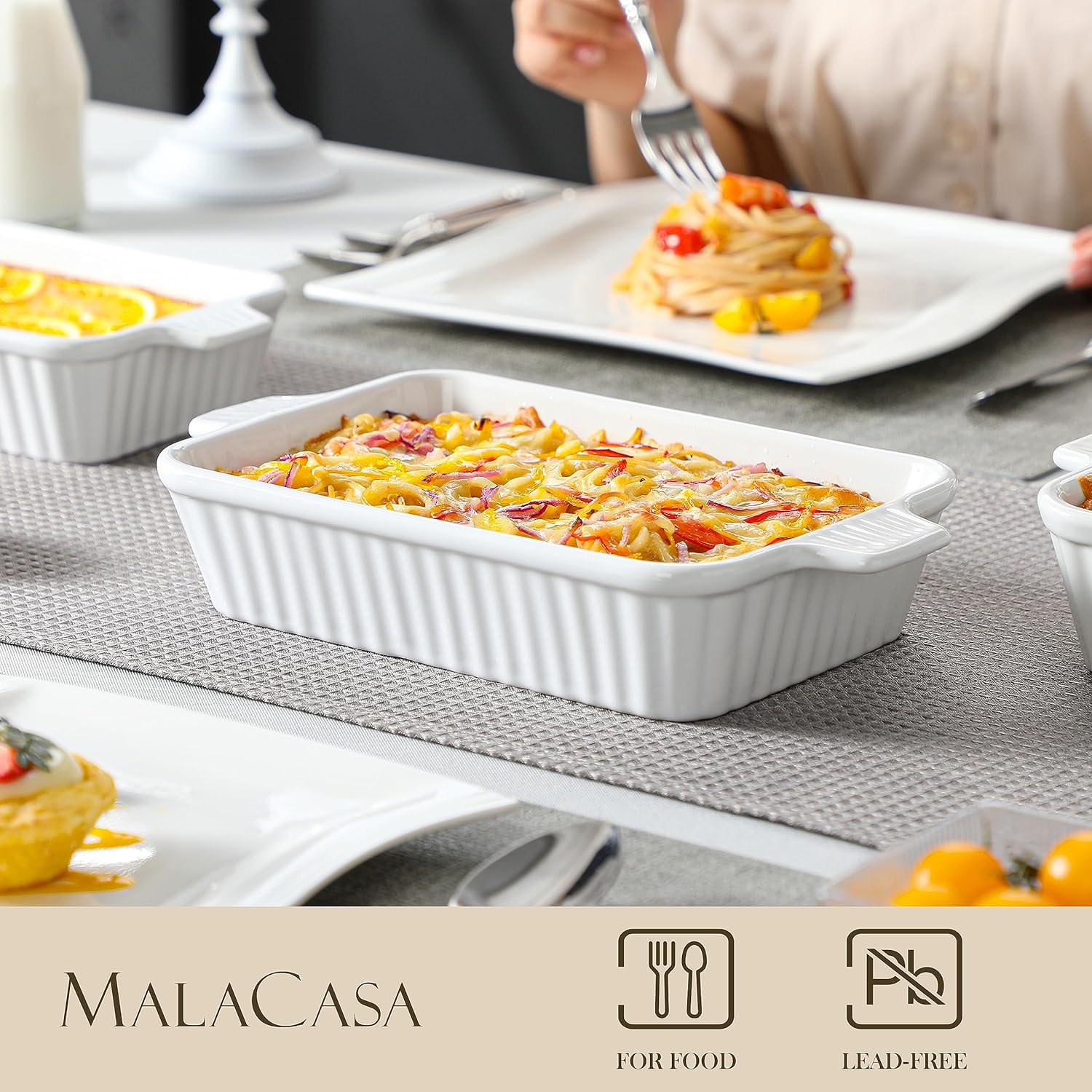
What I didn’t expect was how the matte white porcelain surface would make the finished lasagna look. You set that bubbling, bronzed, slightly chaotic pasta bake into a clean white dish and it stops looking like Tuesday dinner and starts looking like something you’d serve at a table with cloth napkins. That was when I understood what I’d actually bought.
How It Actually Performs
Porcelain ceramic bakeware heats gradually and holds that heat evenly, which matters more than people talk about. When I bake in thin metal pans, I get hot spots, edges that cook faster than centers, and bottoms that over-brown before the interior is done. In these MALACASA porcelain baking dishes, heat distributes across the dish in a way that feels more forgiving. A lemon olive oil cake baked in the 9.4-inch dish came out with a flat, level top, no sunken center, no edge that crisped before the batter set. That’s not luck. That’s the material doing what porcelain ceramic is supposed to do.
“Porcelain bakeware that looks this clean on the table is doing two jobs at once, and these dishes are genuinely good at both of them.”
The finish is matte, not glossy, and it does not discolor after repeated use the way I’ve seen cheaper ceramic bakeware do after a few rounds of high-heat roasting. The handles are oven-safe, rated to handle serious heat, and they don’t show scorch marks even after I pushed the oven to 450 for a round of roasted tomatoes. The one honest caveat I’ll give you: the matte finish requires a touch more care when releasing baked goods than a slick non-stick surface. Grease your dishes. Don’t skip it. For a full look at how ceramic performs against other materials under real cooking conditions, the Serious Eats equipment review archive is worth spending time in before you decide what category of bakeware fits your kitchen.
What I Actually Cooked With It
Use 1: Classic Meat Lasagna in the 14.7-Inch Pan
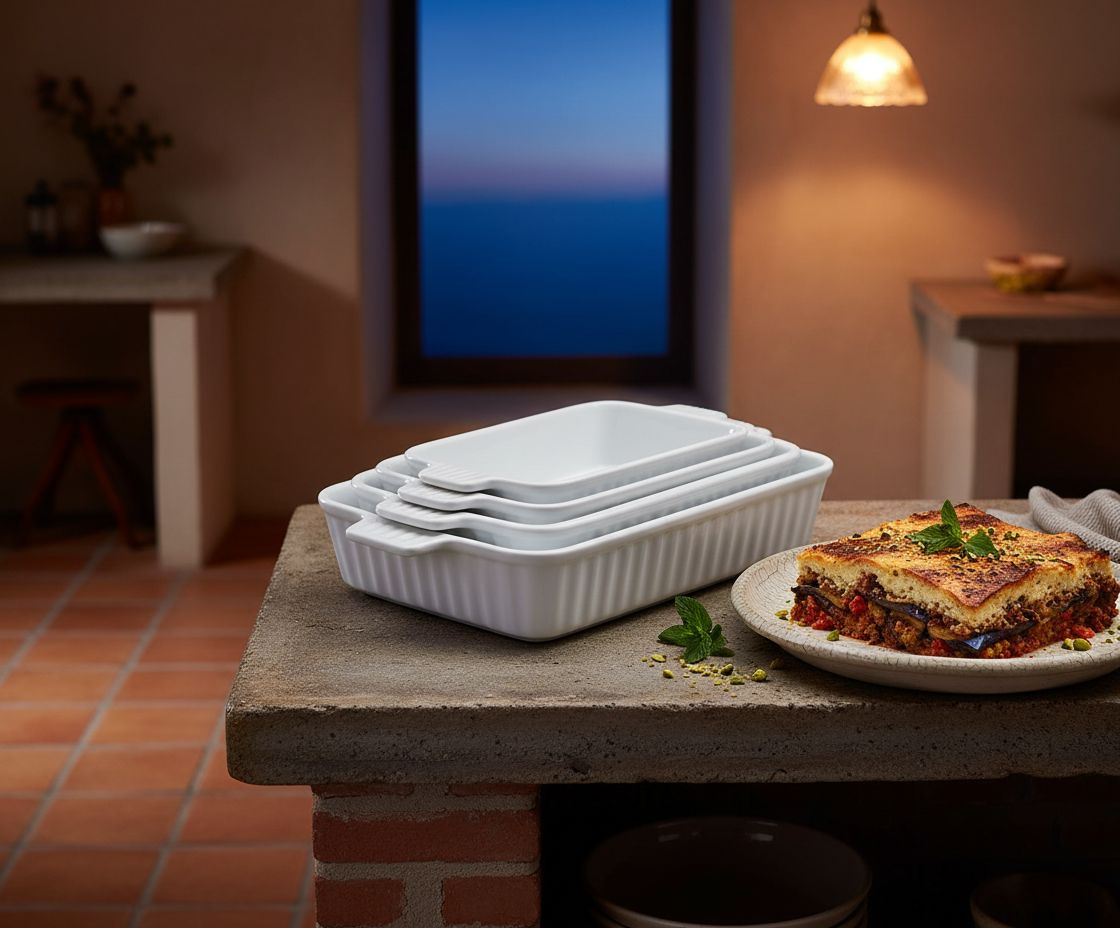
Eight layers. Bolognese, bechamel, fresh pasta sheets, and enough mozzarella to make a cardiologist nervous. The 14.7-inch dish held all of it without requiring me to do the anxious architectural engineering I usually do with shallower pans. The handles meant I could rotate the pan halfway through baking without dropping it. And when I brought the whole dish to the table still in the pan, it looked intentional, like a serving vessel rather than a cooking vessel. That distinction sounds small until you’ve eaten lasagna out of a warped aluminum tray your whole adult life.
Use 2: Olive Oil Cake in the 9.4-Inch Dish
I’ve been making a version of this cake for years. Lemon zest, good olive oil, a little yogurt, finished with flaky salt and a glossy glaze. The 9.4-inch dish is the smallest in the set and it’s the one I reach for most often now, which surprised me. The depth gives the cake room to rise properly, the porcelain’s **even heat distribution** means the crumb sets before the outside over-bakes, and the white dish presents so cleanly at the table that guests have asked me what bakery I ordered from. I have not corrected them.
Use 3: Sheet-Pan-Style Roasted Root Vegetables
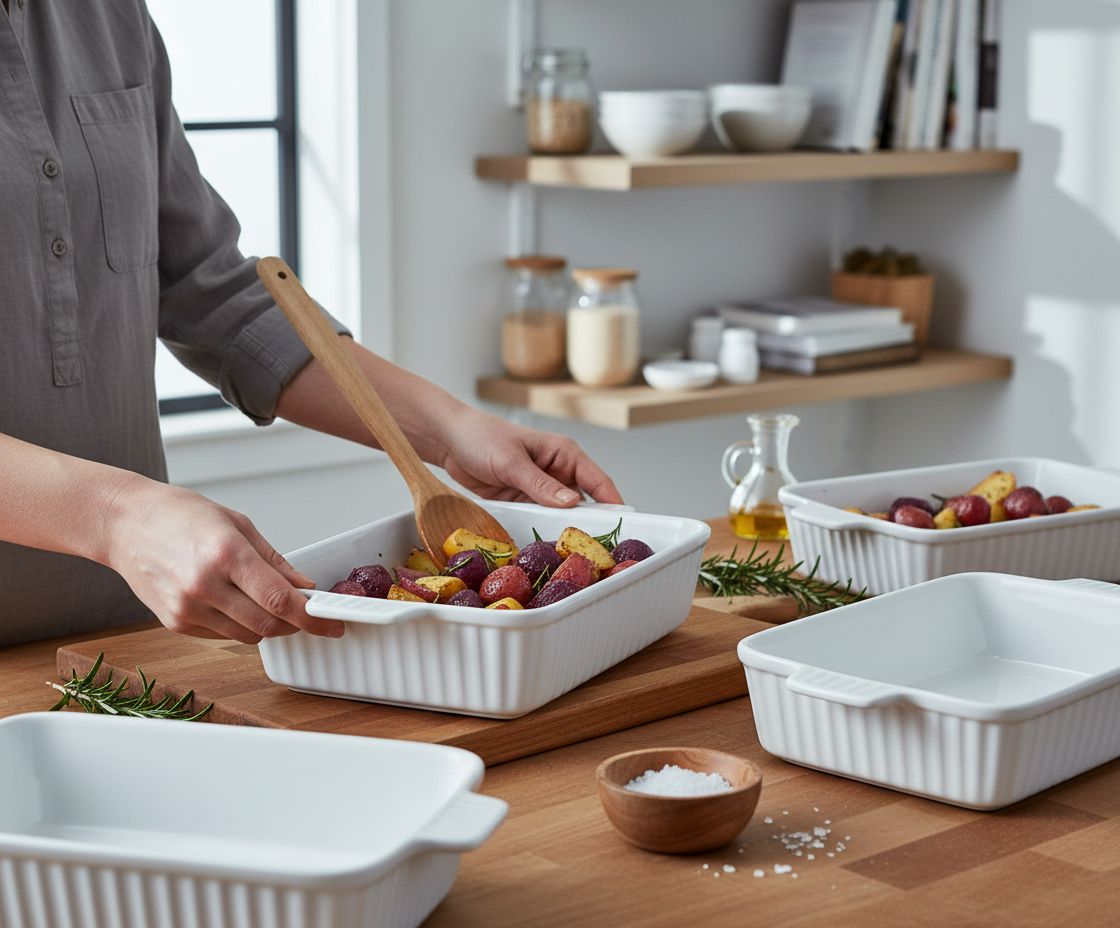
This wasn’t a planned test. It was a Wednesday in December and I had carrots, parsnips, half a butternut squash, and a lot of olive oil. I reached for the 12.2-inch dish, which has become the mid-size workhorse of this set, and loaded it with vegetables, herbs, and a full head of garlic cut crosswise. Roasted at high heat for forty-five minutes. The vegetables caramelized deeply on the bottom, the edges of the dish caught the drippings without burning them, and the whole thing came to the table in the dish it cooked in. No transfers, no second vessel, no mess. That is the deal with bakeware that doubles as serveware, and these dishes make the deal feel worth it.
What Other People Are Saying
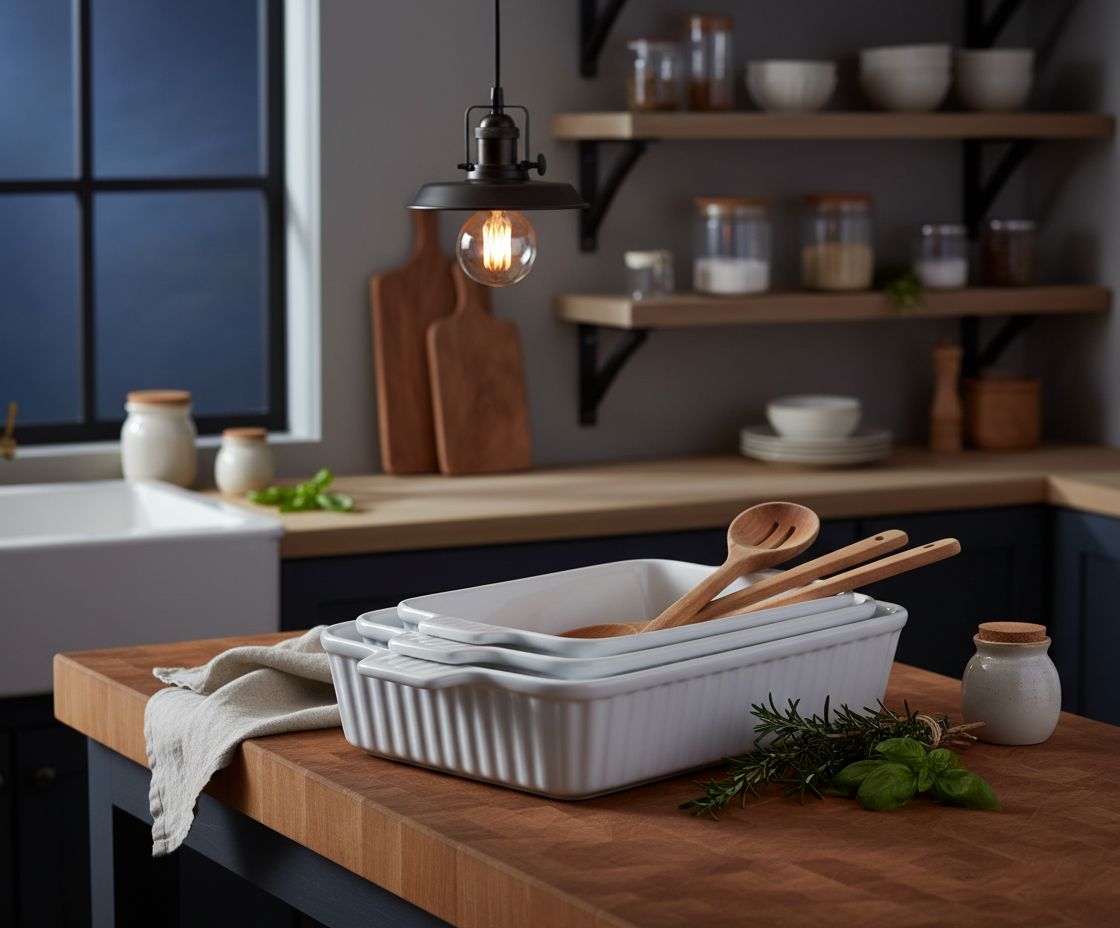
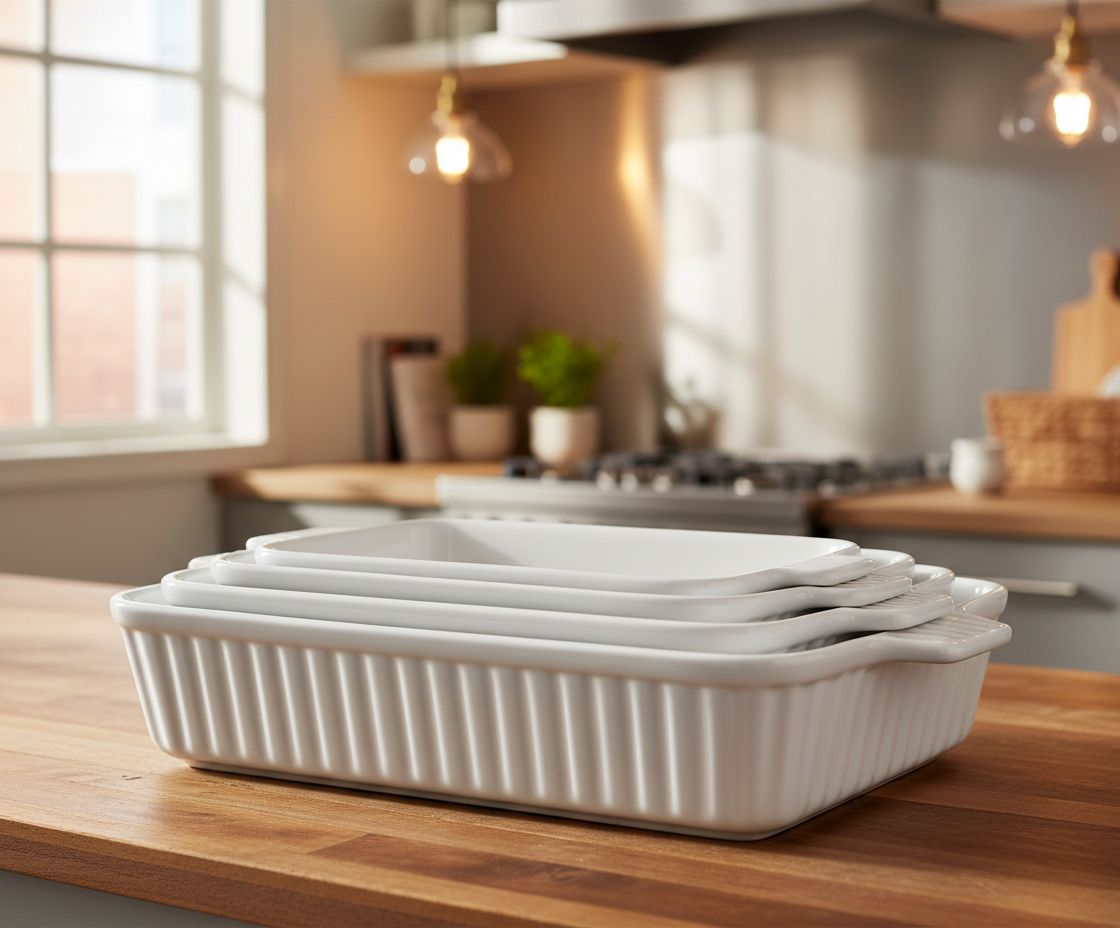
This product launched with enough real-world use behind it that a pattern of feedback has emerged. Consistent praise lands on the graduated sizing and the stacking design. Home cooks repeatedly mention how much they appreciate having four dishes that nest cleanly in a cabinet, something the disorganized bakeware drawer crowd, myself included, responds to viscerally. The look of the dishes at the table also comes up again and again. People mention bringing dishes directly from oven to table in a way that sounds almost relieved, like they’ve been waiting for a casserole dish they didn’t feel embarrassed to set out in front of guests.
The rare criticism focuses on the weight when the dishes are fully loaded, which is a fair note for anyone with wrist or grip concerns. Porcelain bakeware is heavier than aluminum by nature. That weight is part of why it performs the way it does, but it’s not nothing.
Who Should Skip It
If you have a very small kitchen without dedicated cabinet space for a nested set of four dishes, this might be more commitment than your storage situation can absorb. The set stacks neatly, but it still takes up real shelf real estate. If your baking life is mostly sheet-pan cooking and you rarely make casseroles, lasagna, or deep bakes, the depth of these dishes won’t serve you as efficiently as a shallower, rimmed baking sheet would. And if you’re looking for something you can throw in the dishwasher every single time without thinking about it, check the care instructions for your specific unit. Hand-washing porcelain extends its life, and if that’s a dealbreaker for your routine, better to know now. These are not the right baking dishes for someone who needs maximum non-stick release without any prep. Grease them, line them when needed, and they perform beautifully. Skip that step and you’ll be frustrated.
What It Replaces in My Kitchen
I had a 9×13 glass baking dish I’d been using for a decade. It was fine. It was also chipped on one corner, slightly cloudy from mineral buildup, and so visually uninspiring that I’d been transferring food out of it before serving for years just to avoid putting it on the table. The MALACASA ceramic bakeware set replaced that dish and the three other mismatched pans I’d accumulated around it. The 11.1-inch dish in particular landed in a size gap I didn’t realize I had, perfect for a half-batch of brownies, a small gratin, or a breakfast bake for four. I also retired a battered loaf pan I’d been using as a makeshift small casserole dish, which was never a good idea and I knew it. For more context on what a well-rounded baking collection should include, our specialty baking pans category is worth a look, and if you’re building from scratch, our editor’s recommended kitchen tools list covers the hierarchy of what to buy first.
FAQ
How do these MALACASA porcelain baking dishes handle high-oven temperatures?
They’re rated for standard home oven temperatures and perform reliably at the high end of that range. I’ve used them at 450 degrees Fahrenheit without any cracking, discoloration, or warping across multiple uses.
How do you clean porcelain casserole dishes after baking something with a lot of cheese or sauce?
Soak them in warm soapy water for fifteen to twenty minutes after cooking, and most baked-on residue releases easily. Avoid metal scourers, which can scratch the matte finish. A non-scratch scrub pad handles the stubborn spots without damage.
Are these baking dishes safe to move from the freezer directly to a hot oven?
Avoid extreme temperature shocks with porcelain ceramic, including going from a very cold freezer directly into a preheated high-heat oven. Let the dish come to room temperature first, or place it in the oven as it preheats. Thermal shock can cause cracking over time.
Is the MALACASA casserole dish set worth the investment for everyday home cooking?
For what you’re getting, the build quality reads well above the price point. Four graduated dishes in a durable, oven-safe porcelain that pulls double duty as serveware, for an entry-level ceramic bakeware set, the value is genuinely strong. This is a set built to last several years of regular use, not a seasonal buy.
Does MALACASA offer replacement dishes if one breaks?
MALACASA sells individual dishes separately across some retail channels, which means you’re not necessarily committed to replacing the whole set if one piece breaks. Check current availability directly with the retailer or brand for replacement sizing options.
The Verdict
I have used this set of four MALACASA porcelain baking dishes nearly every week since they arrived, which is the only metric that matters to me when I’m evaluating a piece of kitchen equipment. Not how it looks in the box, not how it photographs, but whether I reach for it when I’m standing in front of an open refrigerator at six in the evening trying to figure out what to cook. I reach for these. The 12.2-inch dish goes into the oven two or three times a week. The 9.4-inch has become my go-to for single-layer cakes and small gratins. The 14.7 comes out every time I’m cooking for a group. The graduated sizing, the clean matte white finish, and the practical handles make this a set that works as hard as it looks good, which is harder than it sounds to engineer at this price point. If you’re building or rebuilding a baking kit and you want dishes that go from oven to table without apology, this is the set to start with. Browse our stand mixer picks and hand mixer recommendations if you’re outfitting a full baking setup, or check our gift ideas section if you’re buying for someone else. For additional context on what professional test kitchens look for in ceramic bakeware, both America’s Test Kitchen’s equipment reviews and Bon Appétit’s test kitchen favorites are worth reading alongside your research. Buy the set. Use every dish. Stop apologizing for your bakeware at the dinner table.
Every Angle
The product as photographed for Amazon — front, side, back, detail.
As an Amazon Associate I earn from qualifying purchases.