Anti-Fatigue Kitchen Mat for Daily Cooking: Honest Review
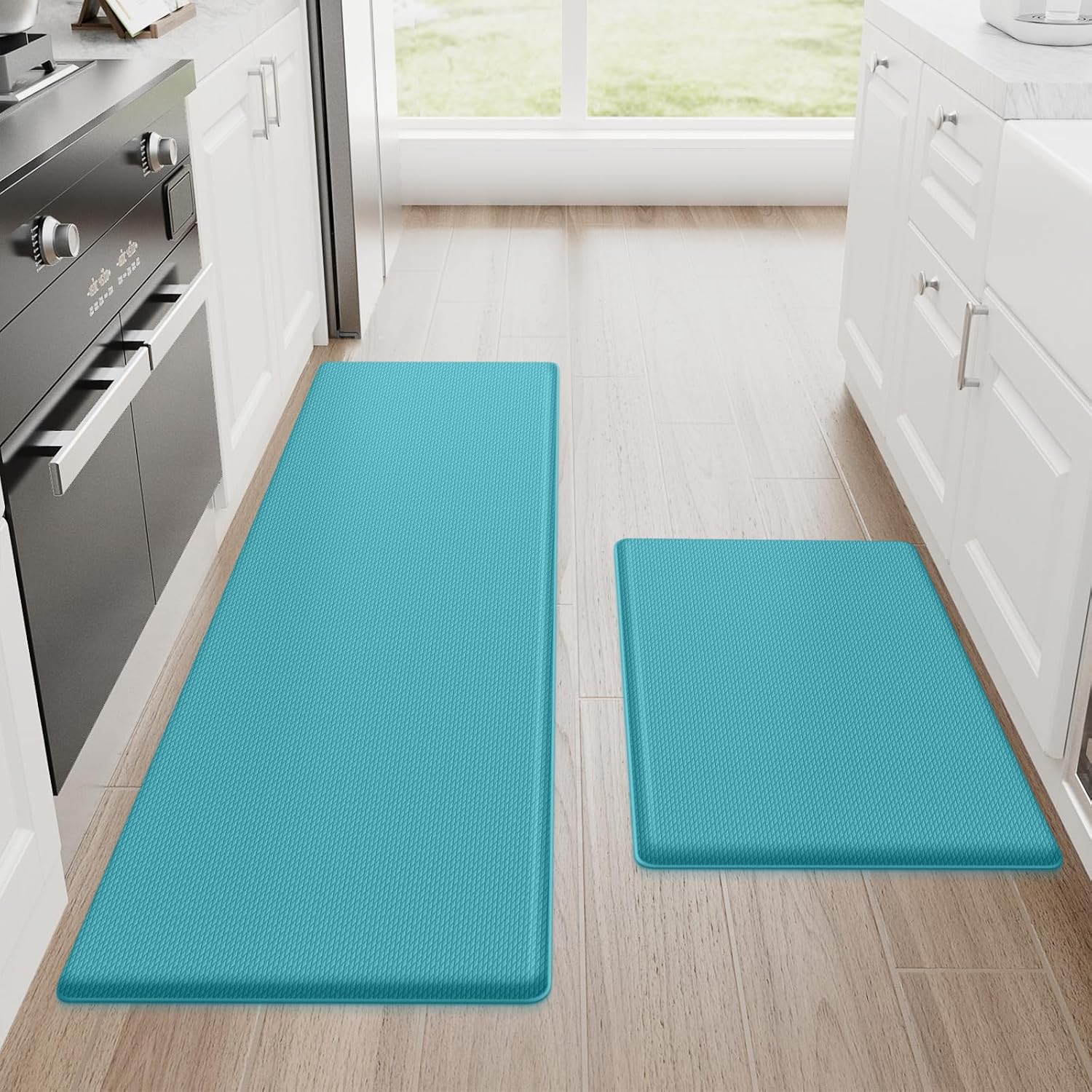
After six months of cooking on hard tile with aching heels, I finally laid down a pair of StepRite Kitchen Mats for Floor and spent the next hour wondering why I had waited so long.
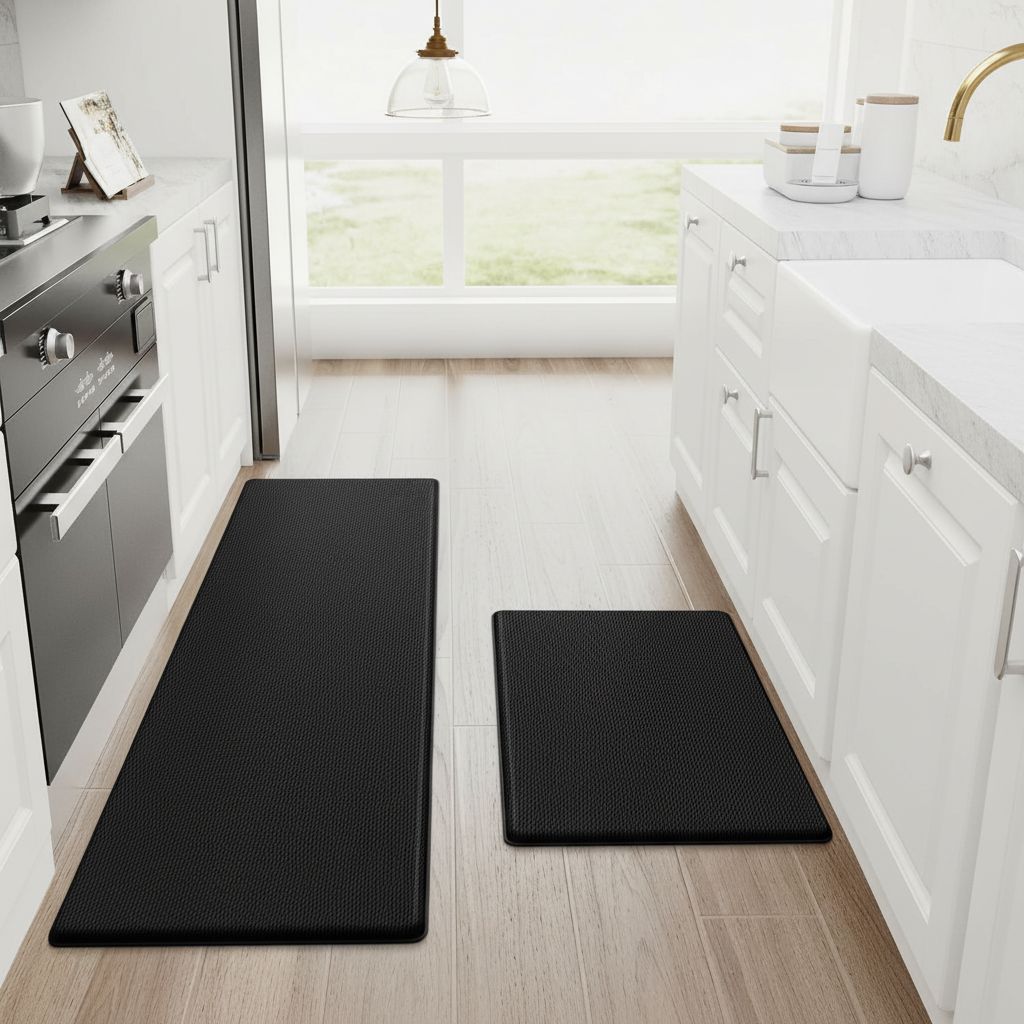
There is a particular kind of tired that has nothing to do with how complicated dinner was. It is the tired that lives in the arch of your foot, creeps up your calves, and settles somewhere behind your knees by the time you’ve finished washing the last pan. I cook on white subway tile, which looks lovely in photographs and feels, after forty minutes of active standing, like a slab of concrete poured specifically to punish you for deciding to make homemade pasta on a Wednesday. So when the StepRite Kitchen Mats for Floor, 2-Piece Anti-Fatigue Kitchen Rugs in Black arrived at my door, I did not treat them with the detached professionalism I like to pretend I maintain. I opened the box, unrolled both mats, and stepped on them immediately, still in my coat.
The First Time I Used It
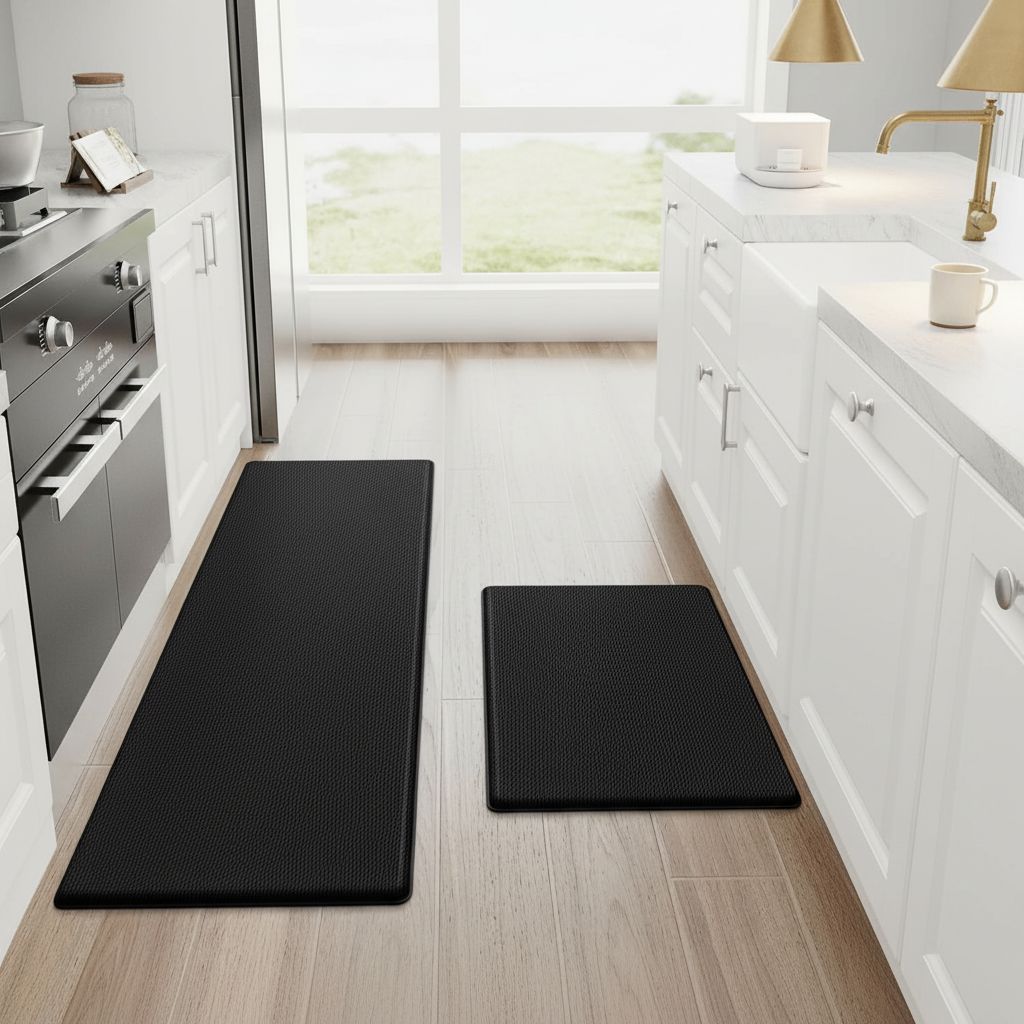
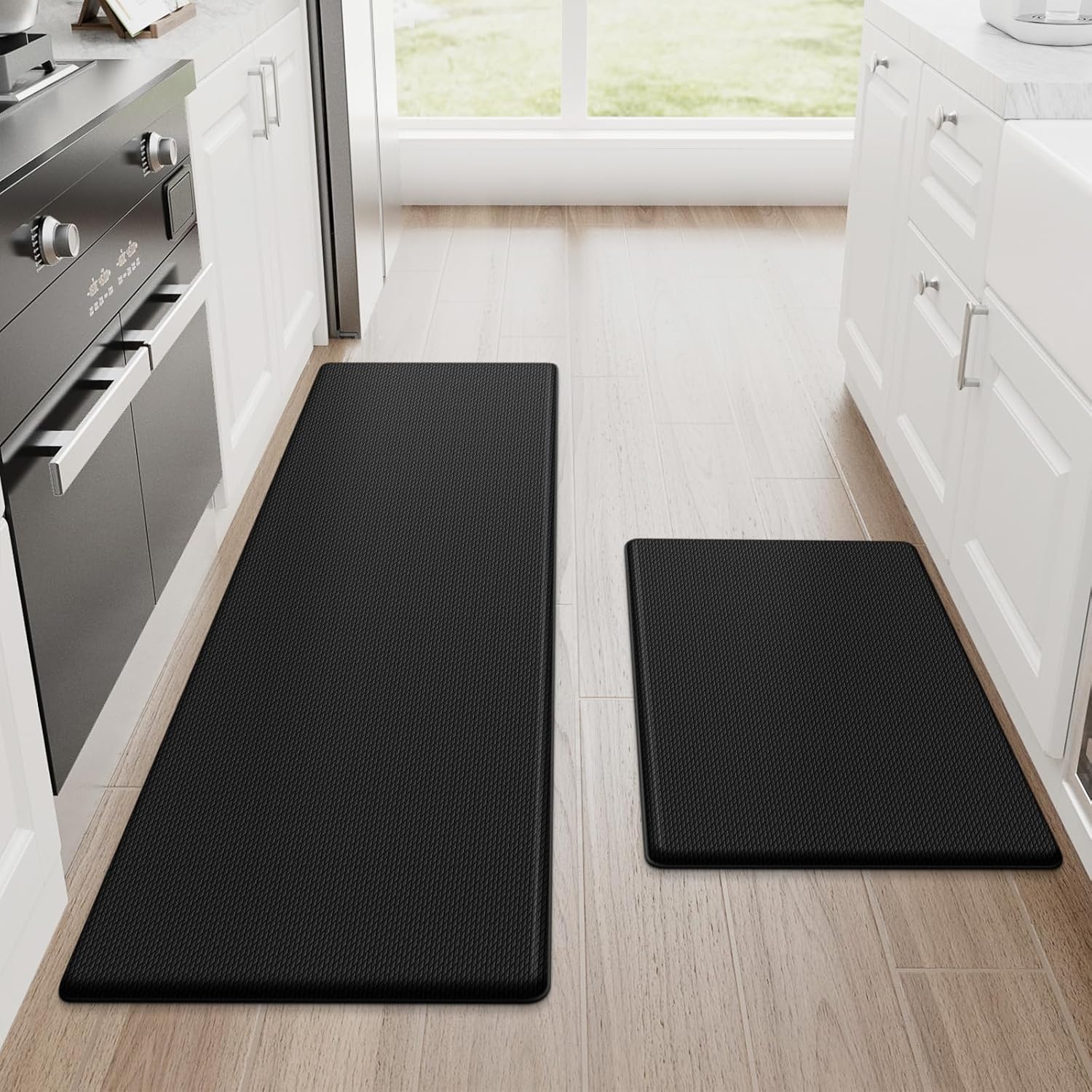
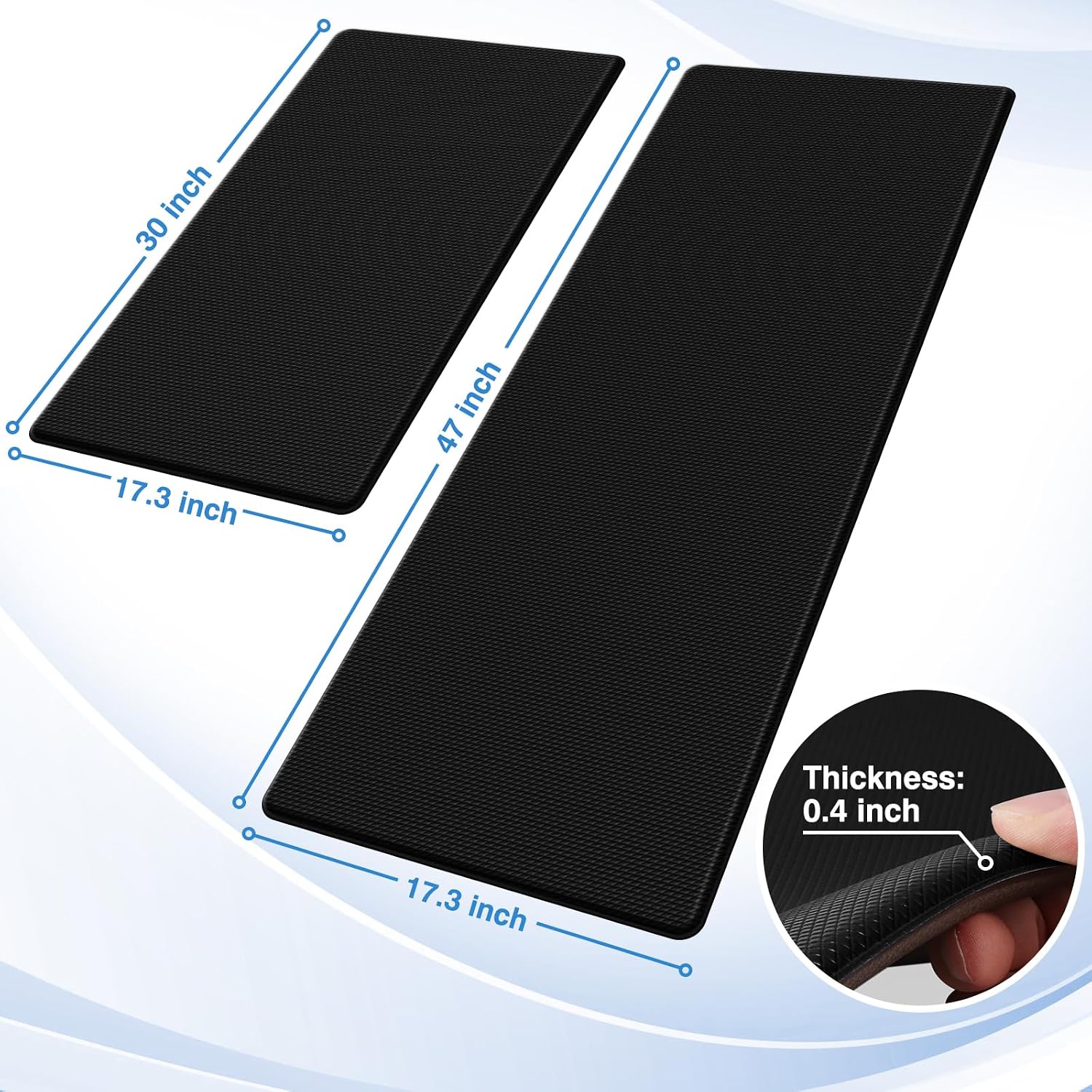
The first real test was a Sunday afternoon sauce situation. I had committed to a long braise, which meant roughly two hours of standing near the stove, stirring, adjusting heat, tasting, stirring again. I placed the larger mat in front of the range and the smaller one in front of the sink, which is where I tend to loiter between tasks. By the second hour, I noticed I hadn’t shifted my weight once. That’s unusual for me. I’m usually performing a kind of unconscious slow-dance of discomfort during any long cook.
What struck me wasn’t some dramatic revelation. It was just the quiet absence of the usual ache. And once you notice the absence of something that’s bothered you for years, it’s very hard to unfeel it.
How It Actually Performs
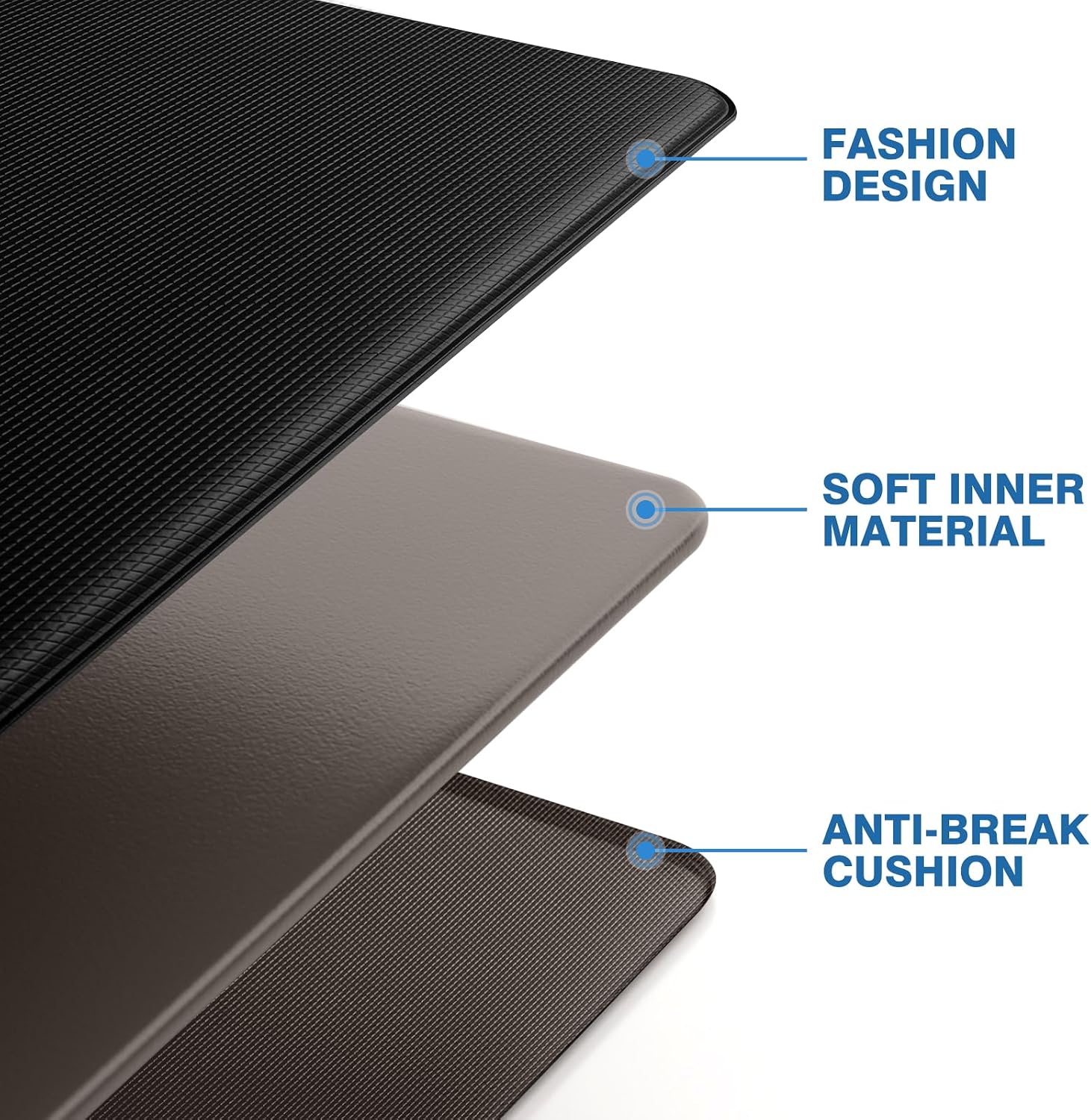
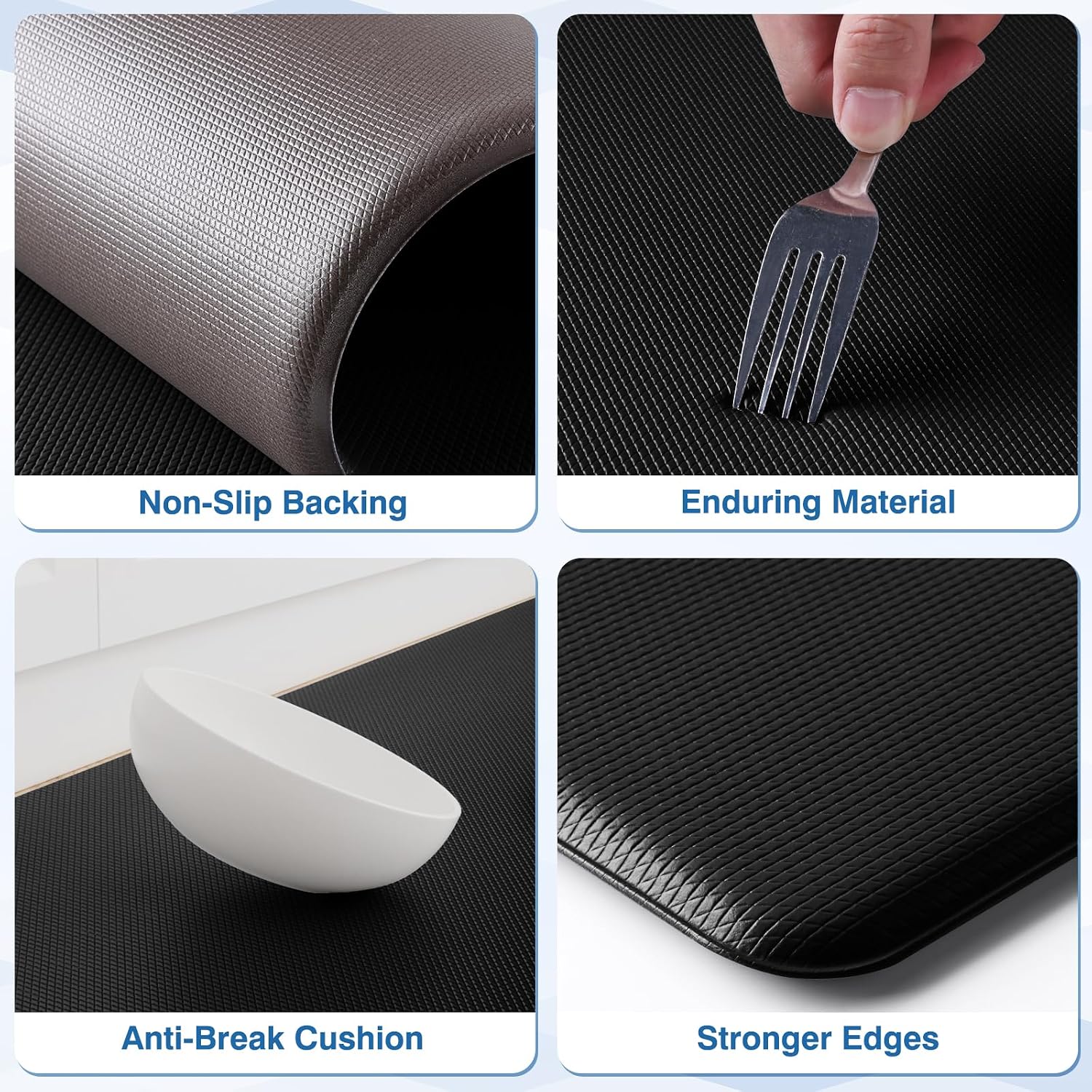
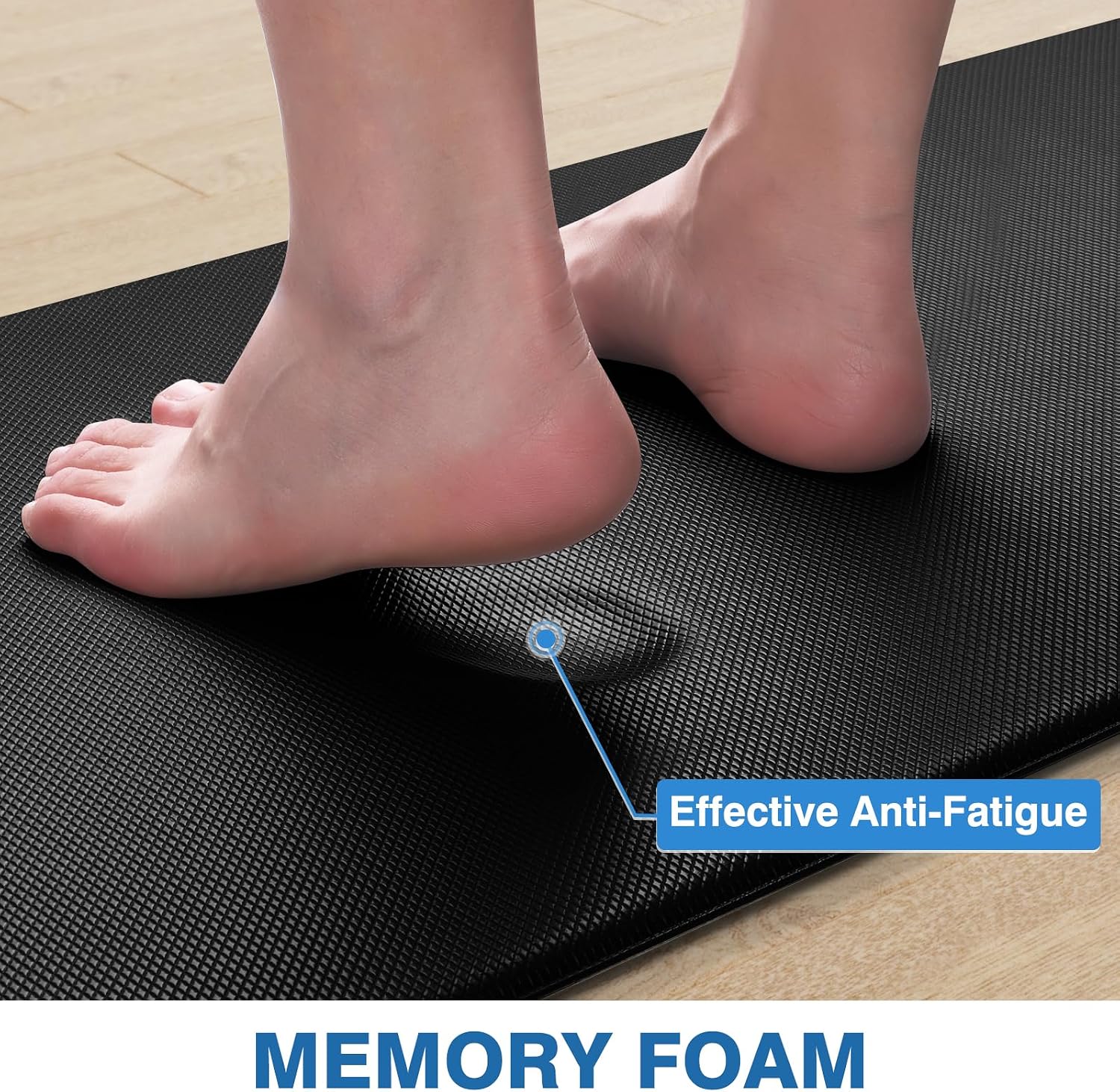
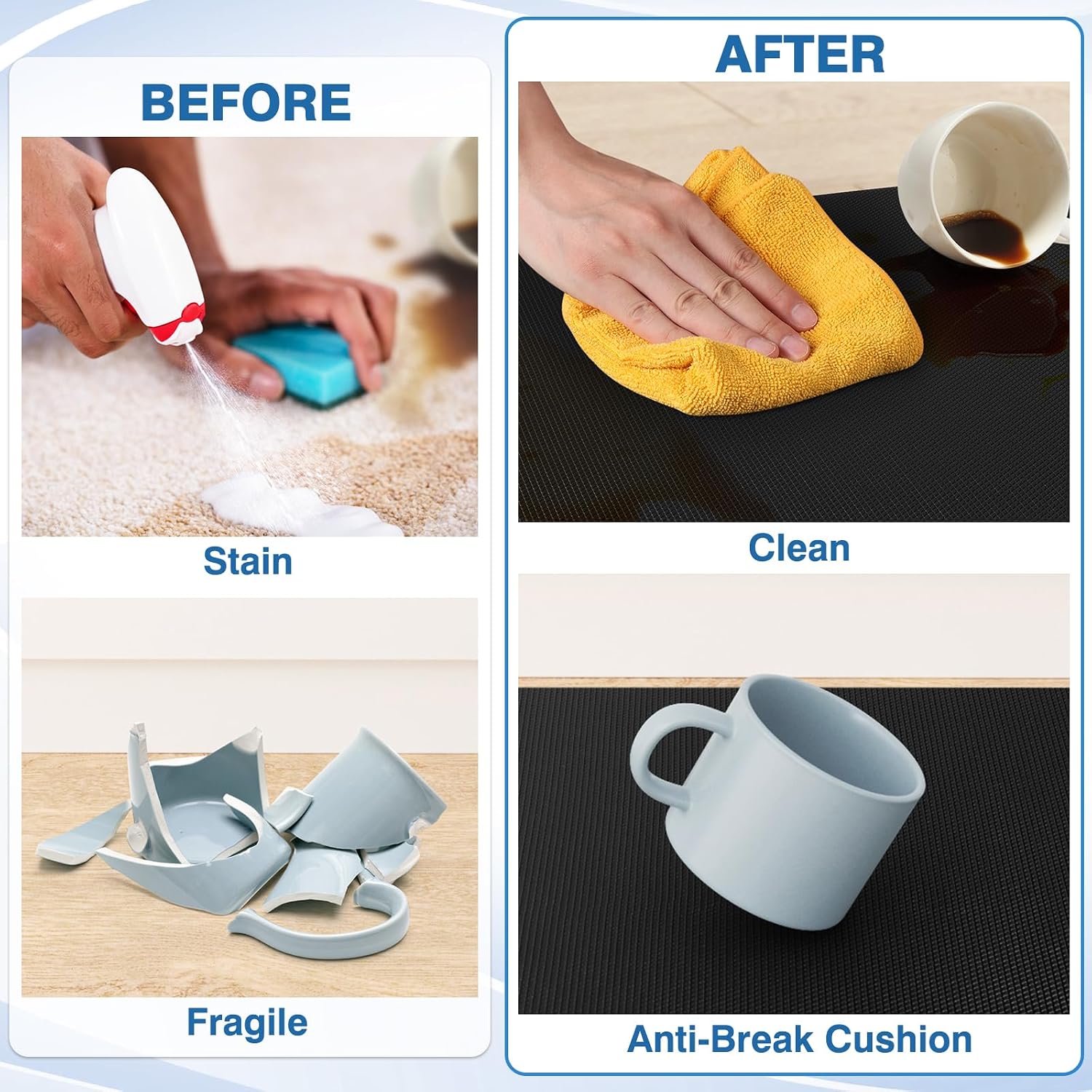
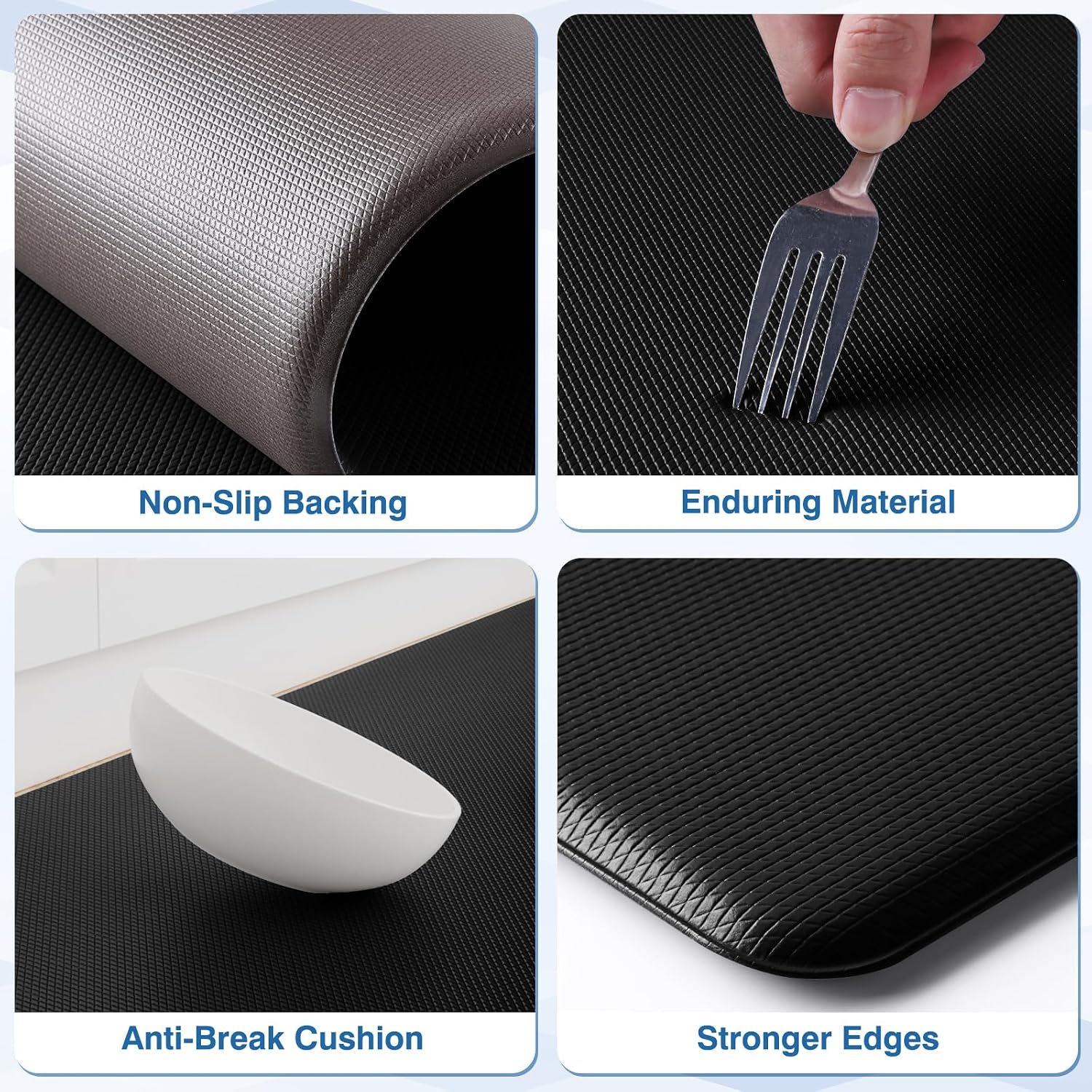
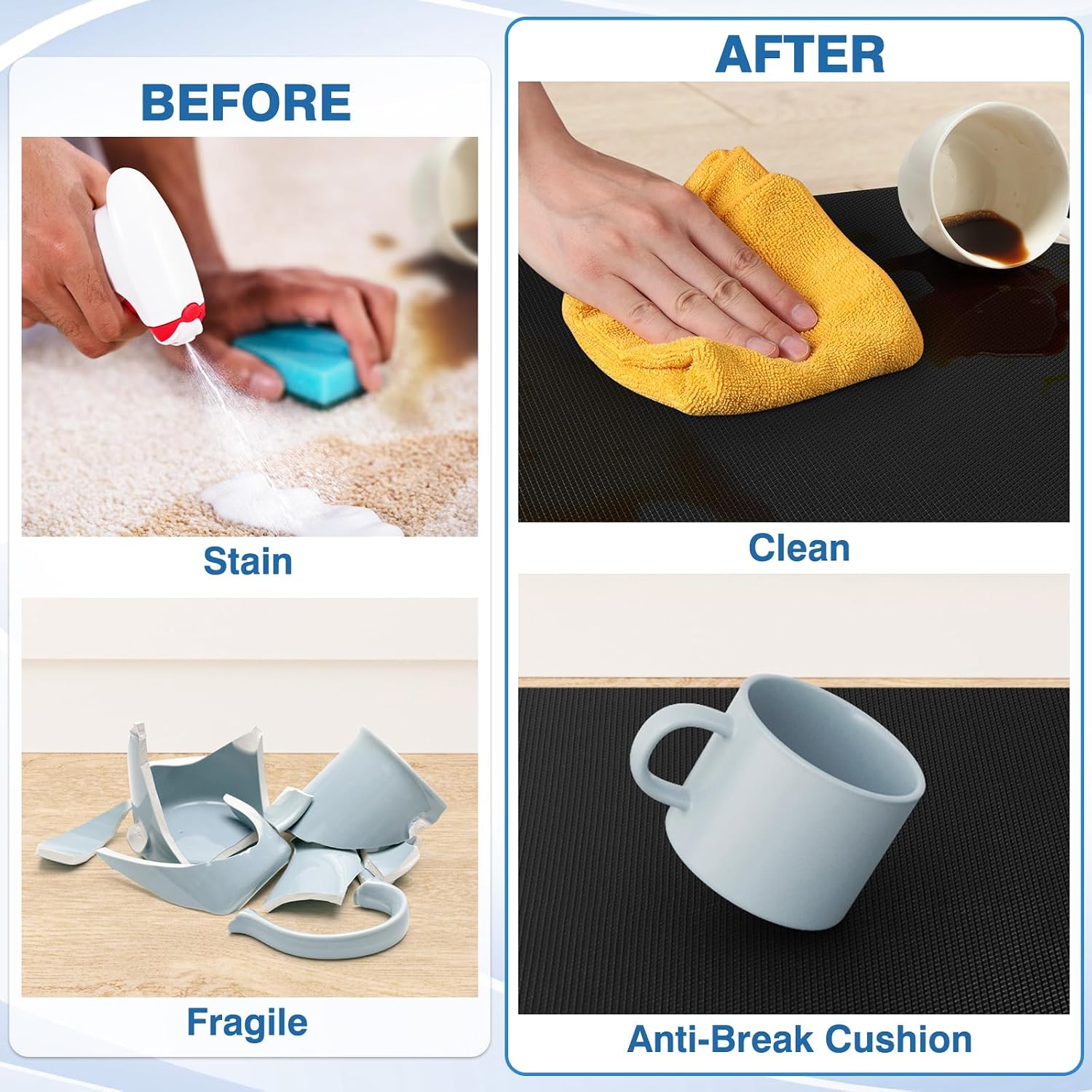
The rubber anti-fatigue kitchen mat construction is denser than I expected for this price tier. It doesn’t compress completely underfoot the way cheaper foam mats do. There’s genuine resistance, the kind that actually redistributes pressure rather than just adding a thin cushioned layer between you and the floor. The matte black finish holds up to spills, splatters, and the occasional dropped pepper grinder without showing much of anything. I wiped oil off the surface after a particularly aggressive sauté session and it cleaned up in about ten seconds.
“The mat that actually earns its counter space, even when it’s living on the floor.”
That said, the edges do curl slightly in the first few days, especially at room temperature. It’s not a safety concern, but it’s worth noting. I placed a heavy pot on each corner overnight and they’ve stayed flat since. Serious Eats equipment reviews have written about this edge-curl issue with rubber mats generally, and it does seem to be the category’s most common complaint, not specific to this brand. The fix is simple; the awareness is useful.
What I Actually Cooked With It
Use 1: Three-Hour Sunday Ragu
Long braises require long standing. I had a Dutch oven going with short ribs, canned tomatoes, and enough wine to make the kitchen smell like a trattoría by noon. The mat in front of the stove absorbed the entire session without incident. I moved freely, crouched to check the oven, returned to standing, and never once felt the soles of my feet registering a complaint. That’s the real performance metric for anti-fatigue kitchen rugs, not a feature spec, but how your body feels at the end of a three-hour cook.
Use 2: Holiday Cookie Assembly Line
December in my kitchen is what I’d describe as a standing endurance event. Rolling dough, cutting shapes, rotating trays, icing batches in sequence. It goes on for hours. I placed both mats in a configuration that let me rotate between the counter and the oven, and the difference was palpable by hour two. My ankles felt less compressed. That’s the small, boring, life-improving truth of a good anti-fatigue kitchen floor mat. It doesn’t make you a better baker. It just means you can bake longer without suffering for it.

Use 3: Morning Coffee and Breakfast Prep
Not every use case is dramatic. Most mornings I’m standing at the counter grinding beans, heating milk, slicing something for toast. The mat in front of the sink handles this quietly and without complaint. The rubber backing holds the mat firmly in place on tile, which matters more than it sounds. I’ve had fabric rugs migrate halfway across my kitchen floor during morning routines. This one doesn’t budge. After six months of daily breakfast prep, it still looks essentially the same as the day I unboxed it.
What Other People Are Saying
With nearly ten thousand ratings and a score that holds steady in the high fours, the consensus here is unusually consistent for a product this utilitarian. The patterns are predictable in the best way: people are surprised by the mat’s density, they appreciate the no-slip backing, and the most common complaint is that initial edge curl, which resolves with a little weight and patience. A few reviewers mention that the black finish shows dust and dry debris more readily than lighter mats, which is true and worth knowing before you buy.
What the review volume actually tells you is that a lot of people are cooking on hard floors and suffering for it quietly. This product found its audience because the need is real and the solution works. You can explore more America’s Test Kitchen equipment evaluations for how they approach fatigue and ergonomics in kitchen tool testing, but for this category, the crowdsourced data is about as reliable as lab testing gets.
Who Should Skip It
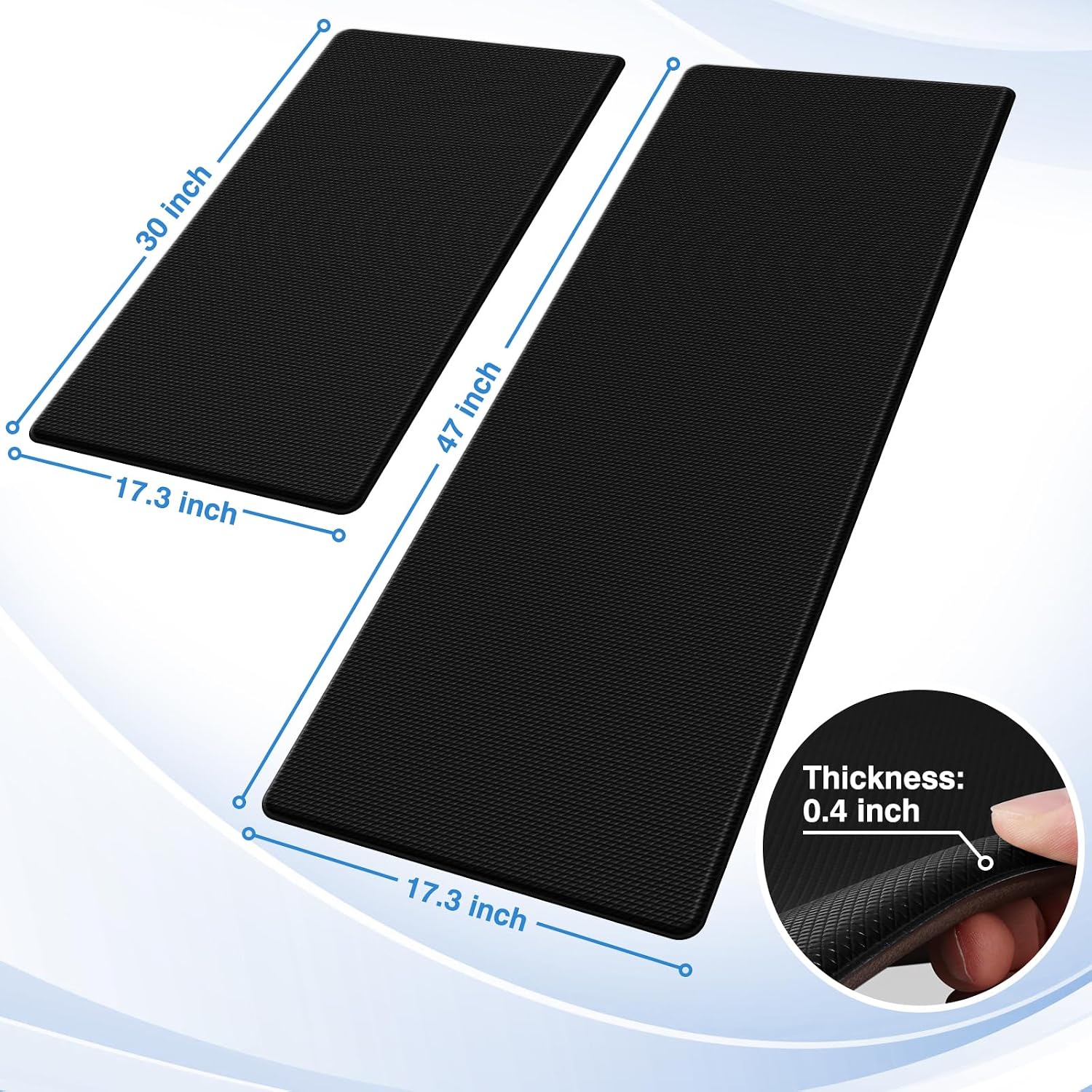
If your kitchen floor is carpeted, you don’t need this, and the rubber backing won’t grip carpet the same way it grips tile or hardwood anyway. If you’re looking for something decorative, with pattern or texture or warmth, the matte black rubber aesthetic is firmly utilitarian. It reads modern and clean, but it reads like a kitchen tool, not a kitchen accessory. Cooks who prefer fabric runners or woven rugs for the visual warmth they bring to a kitchen will find this mat visually blunt. And if you have a very small galley kitchen where two mats side by side feel like a logistical puzzle, the 2-piece format may be more awkward than helpful.
What It Replaces in My Kitchen
I used to have a cushioned foam mat from a home goods chain that smelled faintly of synthetic vanilla when it was new and began to compress into uselessness within four months. Before that, I tried a woven cotton runner that looked beautiful, slipped constantly, and developed a permanent cooking-smell by week three that no amount of washing fully resolved. The StepRite mats replaced both, in the literal sense that I rolled them up and donated them. What this mat fills is the gap between decorative kitchen textiles and serious ergonomic support. It is not trying to look like a farmhouse accessory. It is trying to keep your feet from hurting. It succeeds at that.
If you’re building out a working kitchen from scratch, this kind of practical foundation belongs alongside your everyday cookware set choices and your nonstick pan picks. The stuff you reach for every single day deserves the same attention as the stuff that sits on the shelf looking impressive.
FAQ
Do the mats stay flat on their own, or do they curl?
Expect slight edge curling in the first few days, especially in cooler rooms. Placing something heavy on the corners overnight flattens them reliably. After the initial break-in period, they stay flat with normal use.
How do you clean rubber anti-fatigue kitchen mats?
A damp cloth handles most spills and splatters. For oil buildup, a mild dish soap solution and a scrub brush work well. These are not machine-washable, but cleanup is genuinely fast, which is part of why rubber beats fabric for kitchen floor use.
Are these mats safe on hardwood floors as well as tile?
The rubber backing is designed for hard floor surfaces including tile, vinyl, and hardwood. Check your specific hardwood finish first, as some rubber-backed mats can affect certain floor sealants over time with prolonged contact.
Does the build quality match what you’d expect for an entry-level kitchen mat?
Honestly, it reads above what you’d expect in this tier. The rubber density is closer to what you’d find on mats that cost considerably more, and after six months of daily use, there’s no visible wear or compression loss. For what you’re paying, the longevity is the real argument here.
Is there a warranty or replacement option if one mat wears out?
StepRite includes standard manufacturer support, though because this is a 2-piece set, individual mat replacement would mean purchasing a new set. Given the build quality and the modest investment, most users find that a reasonable trade-off over several years of use.
The Verdict
Six months from now, I know exactly where I’ll be when I’m pulling a roast from the oven or standing over a cutting board working through a pile of winter vegetables. I’ll be standing on these mats. Not thinking about them at all. That’s the thing about a product that does its job correctly. It disappears into your routine and just makes everything else slightly more bearable. The everyday cooking tools that actually earn their keep are rarely the flashiest ones. They’re the ones you stop noticing because they quietly solve a real problem. If you’re building a kitchen that works for serious daily cooking, this belongs in it. Browse our full editor recommendations for more tools that earn this kind of quiet confidence.
For cooks who spend real time on their feet, for anyone who has blamed their energy levels at the end of a long cook when the real culprit was their floor, and for anyone who’s been skeptical that a floor mat could actually matter, the StepRite Kitchen Mats for Floor make a convincing, understated case. Explore more of our practical kitchen gift ideas if you want to give someone the kind of present they didn’t know they needed. Or check out what Bon Appétit’s test kitchen considers a favorite tool to see how the best working kitchens think about ergonomics and daily use. And if you’re still on the fence about whether this category is worth your attention, spend one long Sunday cooking on bare tile and then answer the question yourself.
The bottom line: a two-mat rubber set that solves real kitchen fatigue, holds up to daily use, and asks almost nothing of you in return.
Every Angle
The product as photographed for Amazon — front, side, back, detail.
As an Amazon Associate I earn from qualifying purchases.