Bonavita Gooseneck Kettle for Pour-Over Coffee: Honest Review
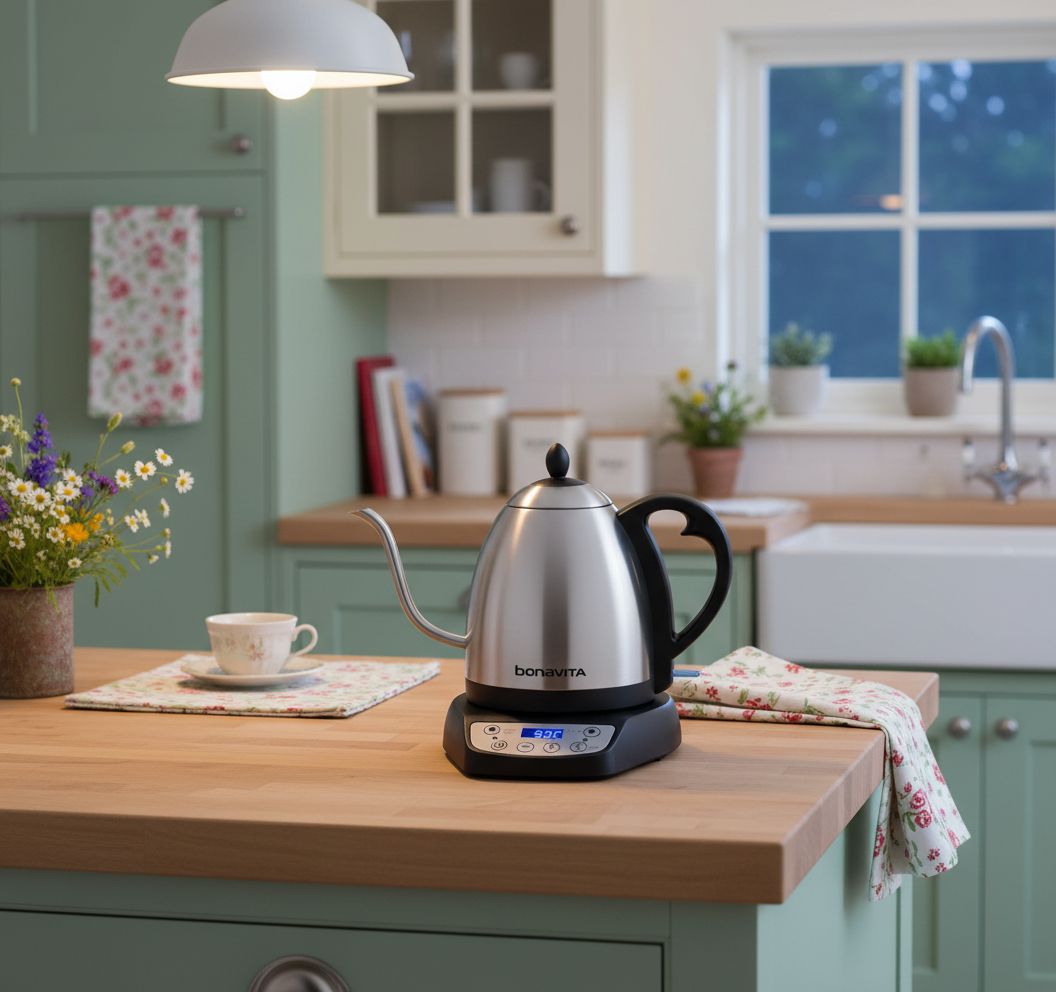
The Bonavita 1L Digital Variable Temperature Gooseneck Electric Kettle changed the way I think about water, which sounds absurd until the morning your pour-over finally tastes like the café version.
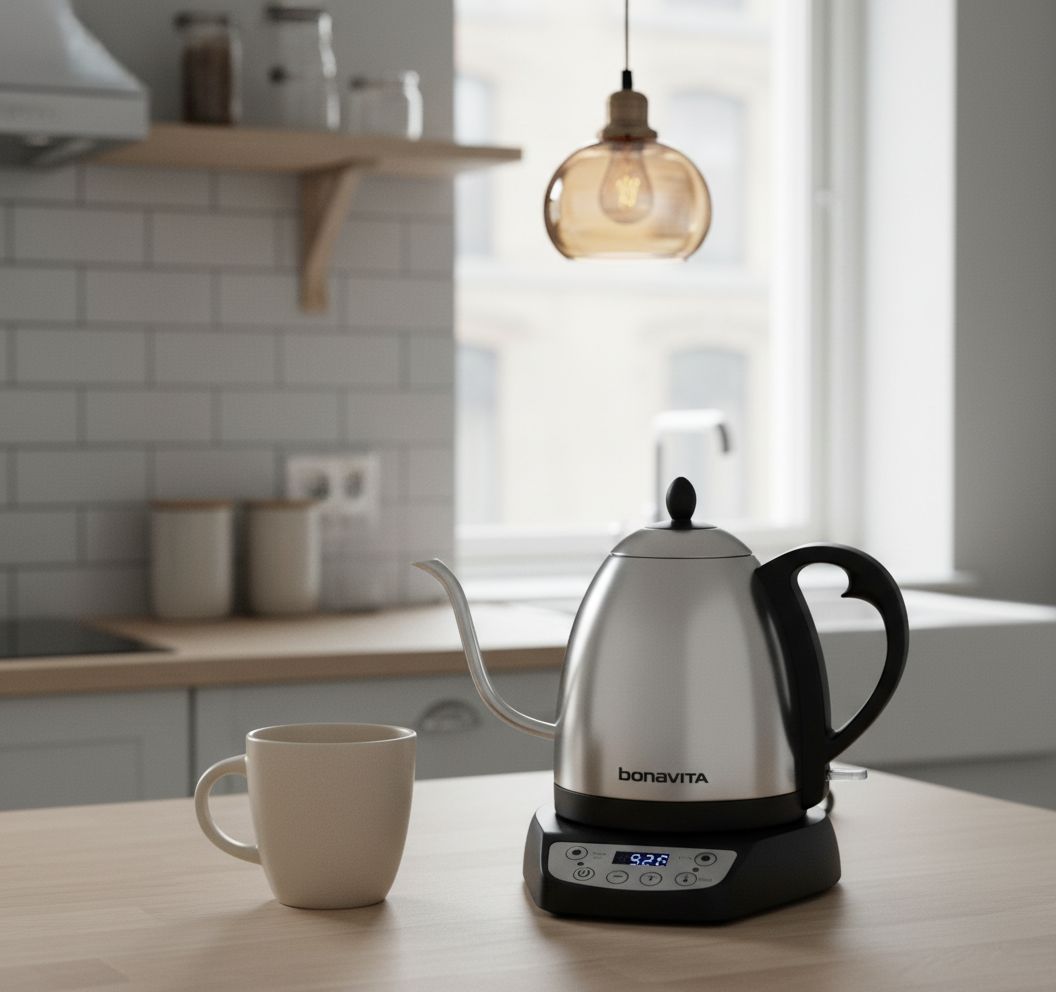
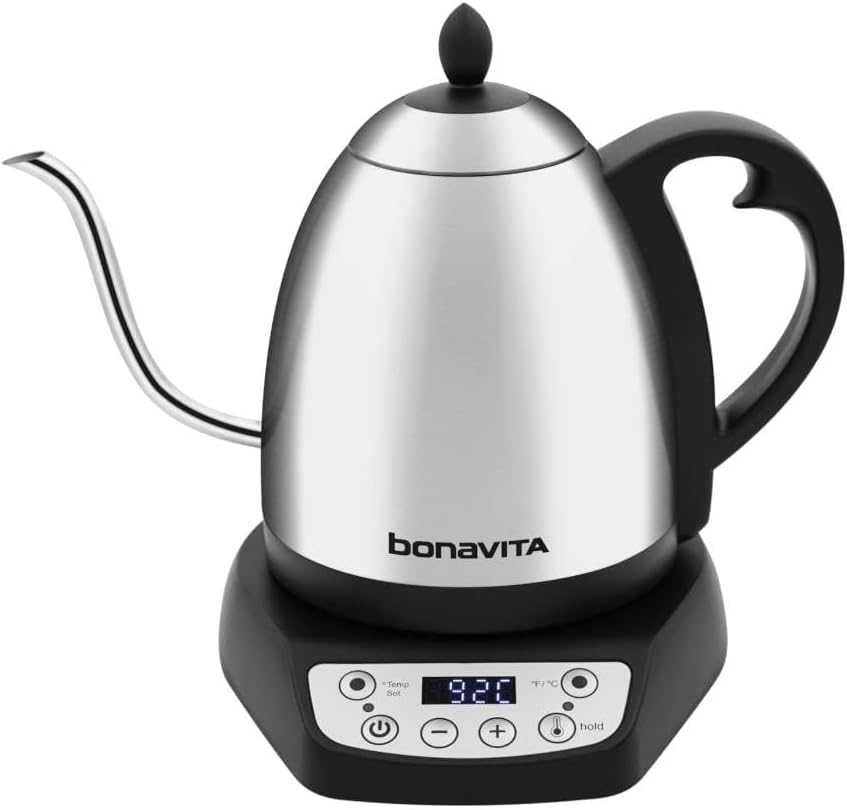
There is a specific kind of Saturday morning I’ve been chasing for years. The apartment is quiet, the light is still low and golden, and the coffee is exactly right, not scorched, not flat, but bright and clean and tasting of something intentional. I used to blame my beans when it came out wrong, then my grind, then my ratio. It took me an embarrassingly long time to realize I was blaming everything except the one variable I had never actually controlled: the temperature of the water hitting the grounds. I found the Bonavita 1L Digital Variable Temperature Gooseneck Electric Kettle sitting on a friend’s counter last winter, its polished stainless steel catching the kitchen light, its spout curved with a kind of architectural confidence. I asked if I could borrow it for a weekend. I never gave it back. She bought a new one. That is the whole review, really, but let me tell you what happened in between.
The First Time I Used It
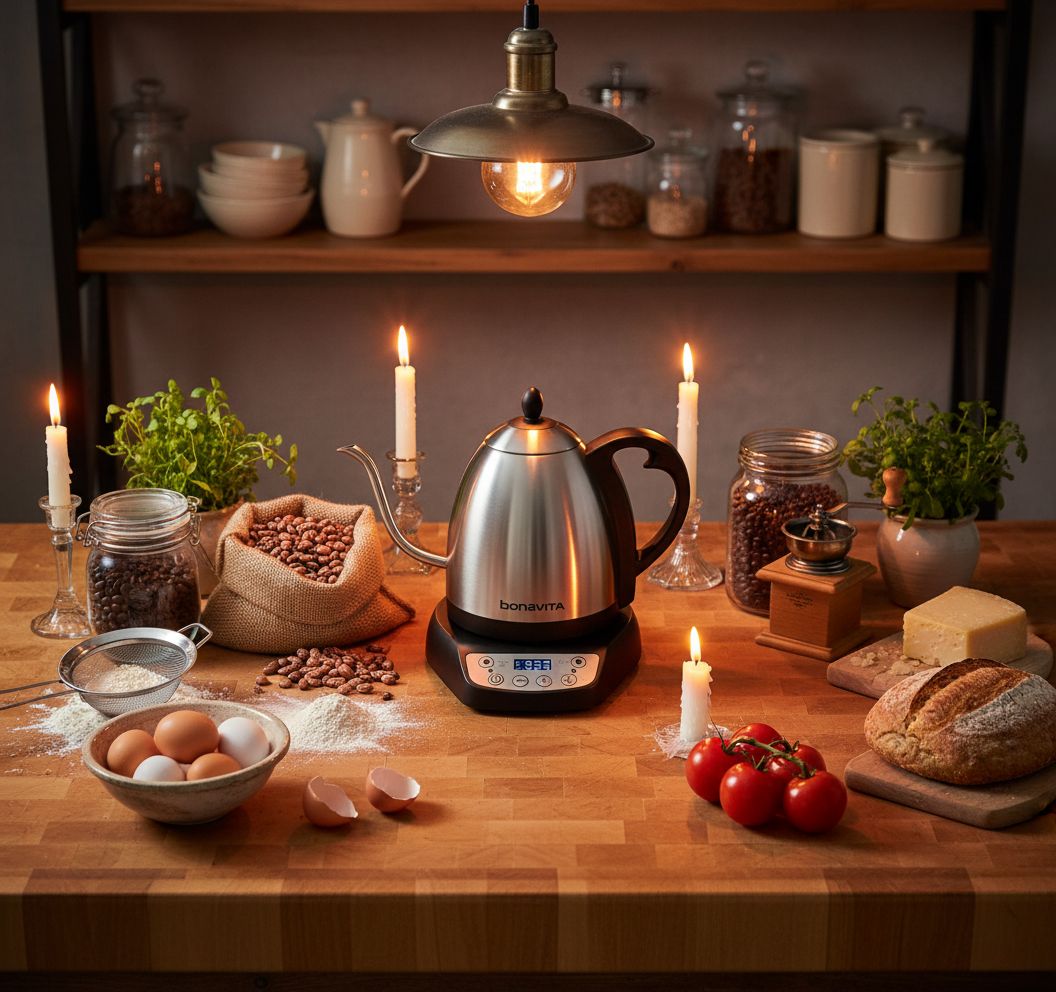
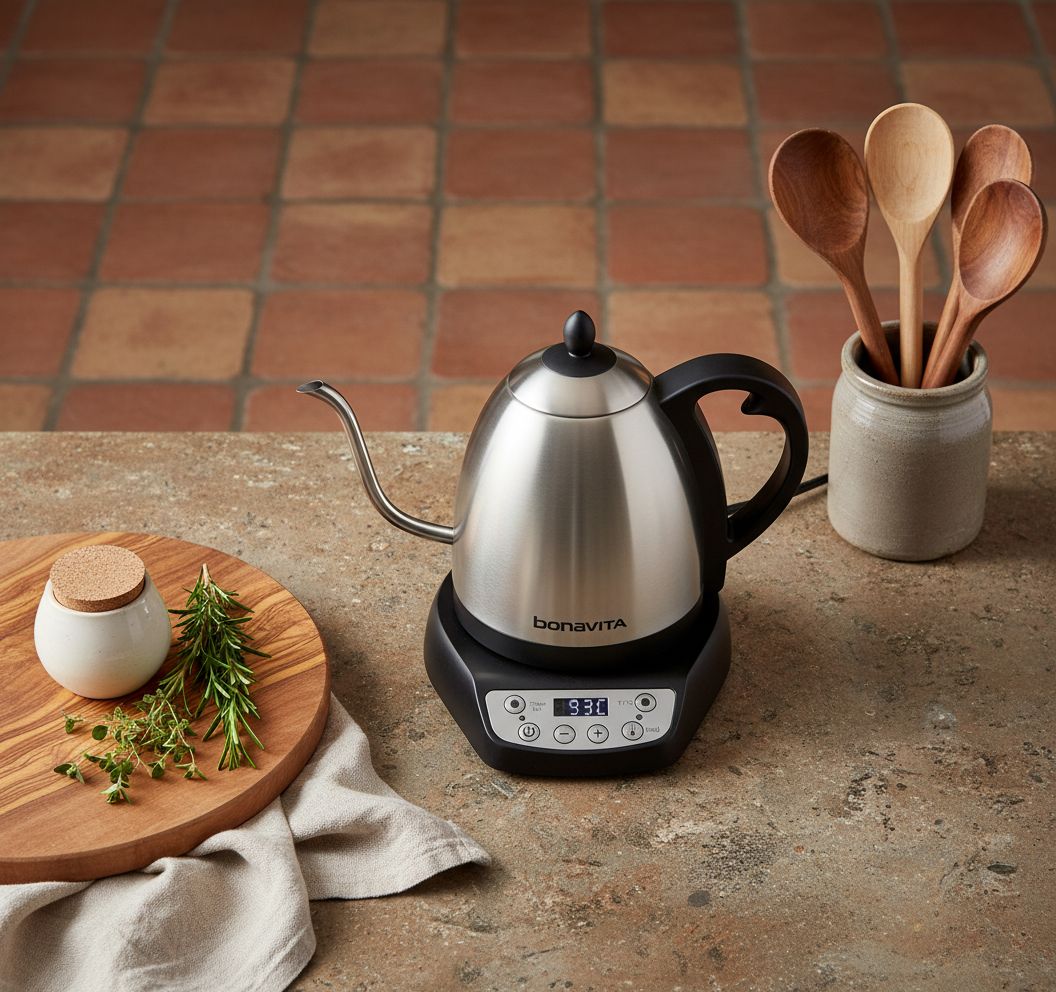
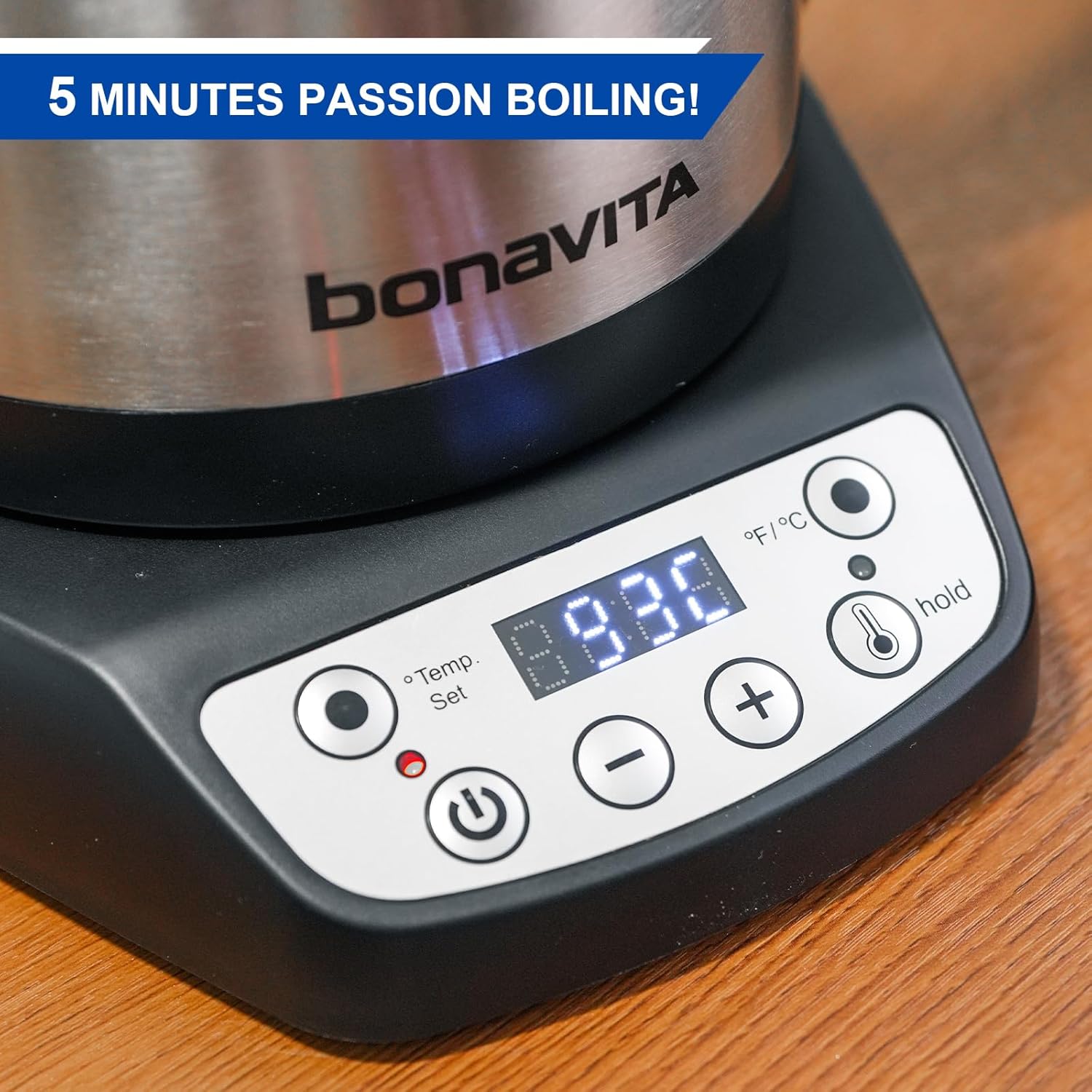
The first morning I plugged in this gooseneck electric kettle, I stood in front of the LED panel longer than I’d like to admit, scrolling through the six preset temperatures with something close to giddiness. Pour-over coffee. Herbal tea. Green tea. Oolong. French press. I didn’t know I’d been making green tea wrong for a decade until I saw the 175°F preset and realized I’d been pouring full-boil water over delicate leaves and wondering why it tasted harsh. I dialed it in, waited the thirty seconds for it to lock, and made a cup of sencha that actually tasted grassy and sweet.
That moment of small revelation is what this kettle does best. It doesn’t just heat water; it makes you think more carefully about what you’re brewing and why temperature is the variable that ties it all together.
How It Actually Performs
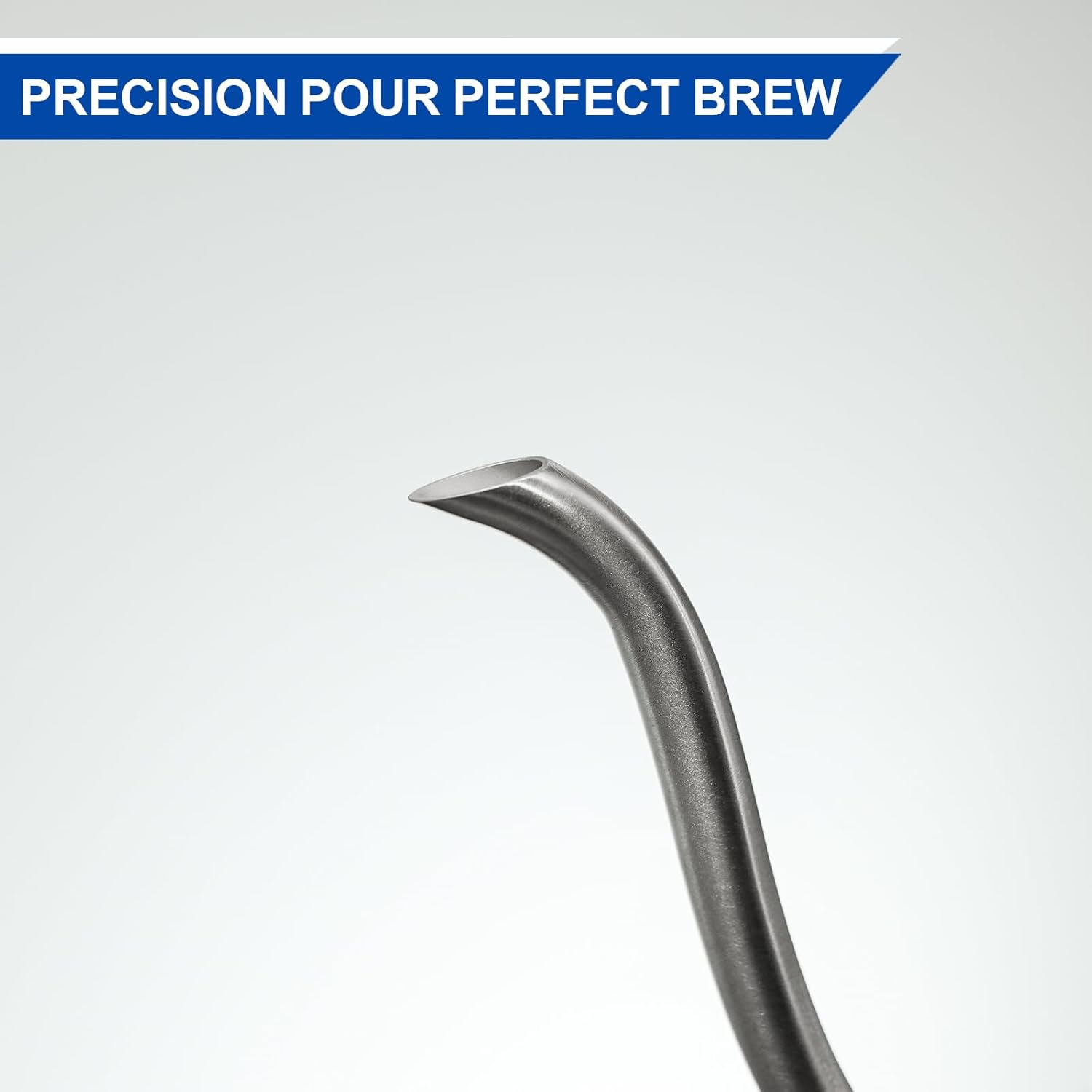
The 1200-watt heating element brings a full liter to boil with real speed, and the **hold function keeps the water at your chosen temperature for up to an hour**, which sounds like a minor convenience until you’re in the middle of grinding beans and the water is still exactly where you left it. The gooseneck spout is not decorative. It gives you genuine pour control, a thin, steady, arcing stream that you can slow or quicken with minimal wrist adjustment. That precision matters enormously for proper pour-over coffee brewing techniques, where an uncontrolled pour can channel water unevenly through the grounds and flatten the entire extraction.
“This is the first kettle I’ve owned that made me feel like I actually knew what I was doing at the coffee bar.”
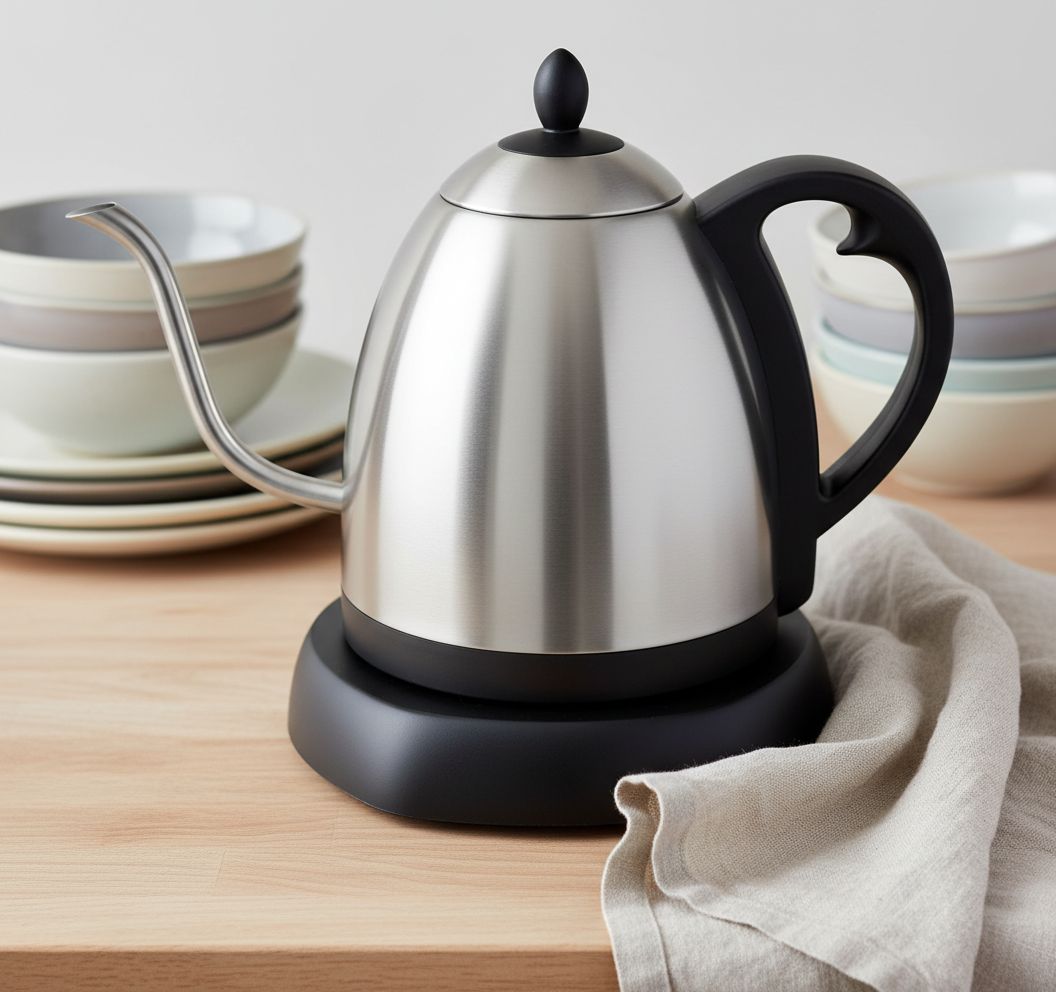
The stainless steel body stays cool enough on the outside that you’re not hunting for a potholder, and the handle has a solid, balanced grip that doesn’t make a full liter feel precarious. One honest limitation worth naming: the kettle is not whisper-quiet during heating, it produces a moderate hum and a soft bubbling as it climbs temperature, which is nothing alarming but worth knowing if you were imagining a spa-silent morning. For deeper context on what separates a good gooseneck kettle from a great one, the Serious Eats equipment review methodology breaks down exactly what to look for in pour-control kettles, and this one checks nearly every box they outline.
What I Actually Cooked With It
Use 1: The Pour-Over That Converted Me
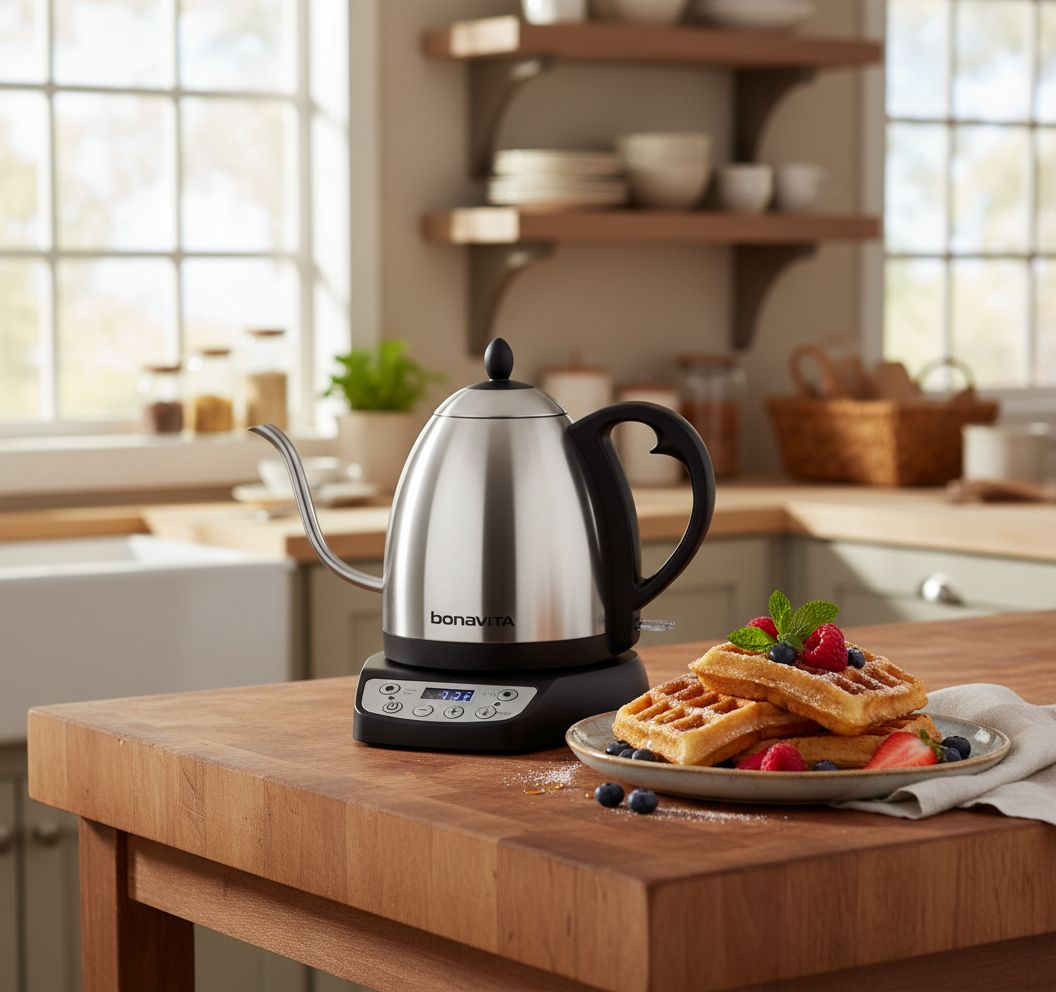
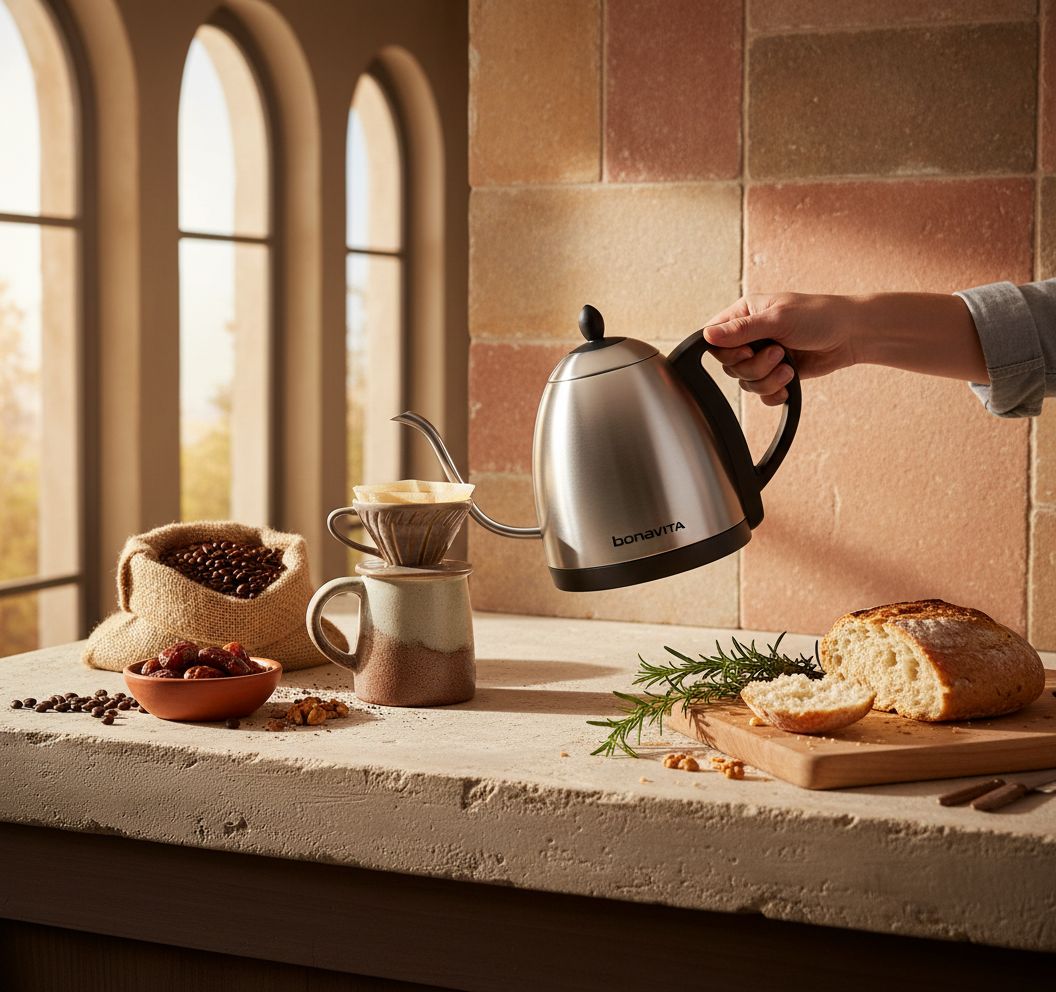
I’ve been making pour-over coffee for years using a basic stovetop kettle and a thermometer I had to balance on the gooseneck rim like a circus act. With this kettle set to 205°F, the flow was controlled and even, and I could focus on the bloom and the spiral pour instead of juggling equipment. The coffee came out cleaner and brighter than my usual morning cup, with a finish that lingered rather than dropped off. I felt, for the first time, like the equipment was working with me instead of against me.
Use 2: Weekday Matcha, Actually Done Right
Matcha is unforgiving. Pour water that’s too hot and you get a bitter, fishy cup that no ceremonial-grade powder deserves. I set the Bonavita to 175°F, whisked in a small sifted measure of ceremonial matcha, and got a foam so consistent it looked like something from a specialty tea bar. **The difference between 175°F and boiling is the difference between a drink you savor and one you endure.** I’ve made it this way every Wednesday since, which is the kind of behavioral change that quietly signals a tool has earned its counter space.
Use 3: AeroPress Espresso-Style on a Slow Sunday
The AeroPress community has long been meticulous about water temperature, and there’s a reason for that: even a 10-degree variance shifts the extraction profile noticeably. I used the kettle at 200°F, the temperature sweet spot I’ve landed on after too many over-extracted batches, and the result was a concentrated, dense cup with real chocolate-forward depth. Pouring through the AeroPress cap was exactly the kind of slow, deliberate act the gooseneck spout is built for. No splashing, no accidental flooding of the paper filter, just a controlled press from start to finish.
What Other People Are Saying
Across more than 7,200 reviews, the phrase that stopped me mid-scroll came from a buyer who described the kettle as having “worked flawlessly” through ten months of daily pour-over use, heating a full liter to precise temperatures and holding them for up to an hour. That’s not a throwaway endorsement; that’s someone logging actual use. The one dissenting voice, rated a single star, flagged a genuinely useful safety note: **if you add cold water to the kettle while it’s still on the base during the hold cycle, the heating element may not register the temperature drop accurately**, so let it reset before topping off. It’s a valid quirk to know, not a dealbreaker, but worth filing.
The overall rating pattern is remarkably stable for a product with this volume of reviews, which tends to suggest that the edge cases are real but rare, and that the core experience delivers what it promises for the vast majority of people using it for everyday coffee and tea preparation.
Who Should Skip It
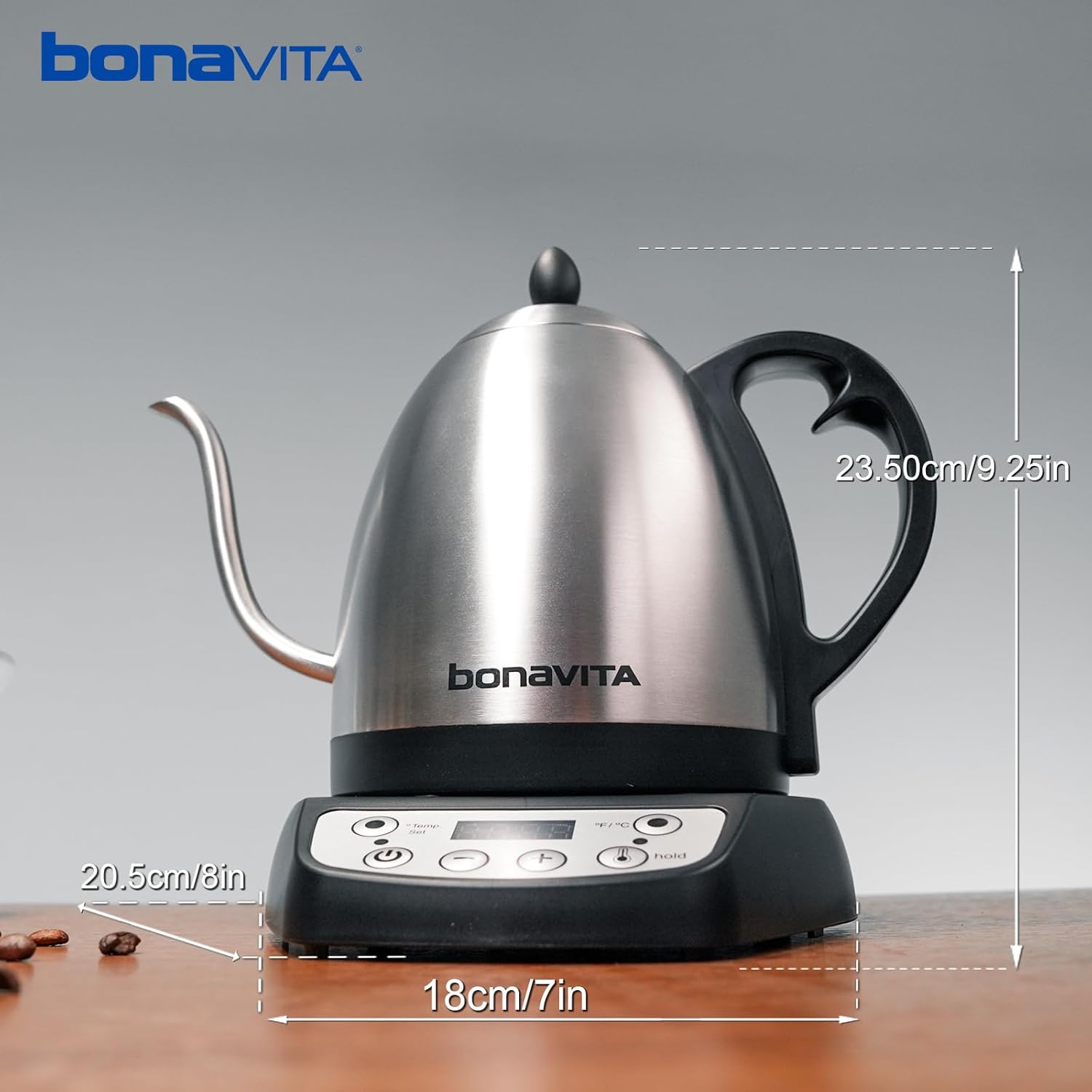
If you drink only drip coffee, made by a machine that handles its own water temperature, this gooseneck electric kettle will sit unused and slightly guilt-inducing on your counter. The same goes for anyone who exclusively uses a single-serve pod machine and has no plans to change that. The gooseneck format is purpose-built for manual brewing, and if that’s not part of your morning, the precision pour it offers won’t mean much in practice. Counter space is also worth considering: this is a compact 1L kettle, but it does require a dedicated footprint and a nearby outlet, and in a very small kitchen, that negotiation matters.
What It Replaces in My Kitchen
For years my system was a wide-mouth stovetop kettle, a clip-on thermometer, and a prayer. I’d bring the water to a boil, remove it from the heat, wait some approximate number of minutes, check the thermometer, wait again, and then pour while trying not to slosh. The whole ritual took longer than this kettle takes to heat water to a precise degree. What the Bonavita replaced wasn’t just the stovetop kettle but also the thermometer, the guesswork, and the mild anxiety that I was always a few degrees off from a good cup. It also quietly replaced my habit of just making drip coffee on mornings when the manual process felt like too much, because now the manual process genuinely isn’t that much.
If you’re building out a more intentional coffee or tea setup, it pairs naturally with everything else on our editor’s recommended kitchen tools list, and it makes a strong case as a considered coffee-lover gift idea for anyone who’s been doing the stovetop-thermometer juggle.
FAQ
How accurate are the preset temperatures?
The six presets are calibrated to land within a degree or two of their labeled targets, which is close enough to matter for specialty brewing. If you’ve been reading about the America’s Test Kitchen kettle temperature accuracy standards, this Bonavita gooseneck kettle holds up well against those benchmarks in real-world use.
Is the interior easy to clean?
The stainless steel interior resists staining and mineral buildup reasonably well, and a periodic descale with a diluted white vinegar solution keeps it clear. Do not submerge the base unit or get water in the electrical connection.
Is it compatible with induction cooktops?
No. This is a plug-in electric kettle with its own heating base, so induction compatibility doesn’t apply. It requires a standard electrical outlet and cannot be used on any cooktop surface.
Does the build quality match what you’re paying for it?
For the price point this kettle sits at, the polished stainless steel construction and the precision of the digital LED panel both read well above what you’d expect. The handle feels secure at full capacity, the lid seals cleanly, and nothing about the physical build suggests it’s cutting corners to reach its tier.
What warranty does Bonavita offer?
Bonavita typically includes a two-year limited warranty on this kettle, covering manufacturing defects. It’s worth registering the product after purchase and keeping the receipt, as warranty claims occasionally require proof of purchase.
The Verdict
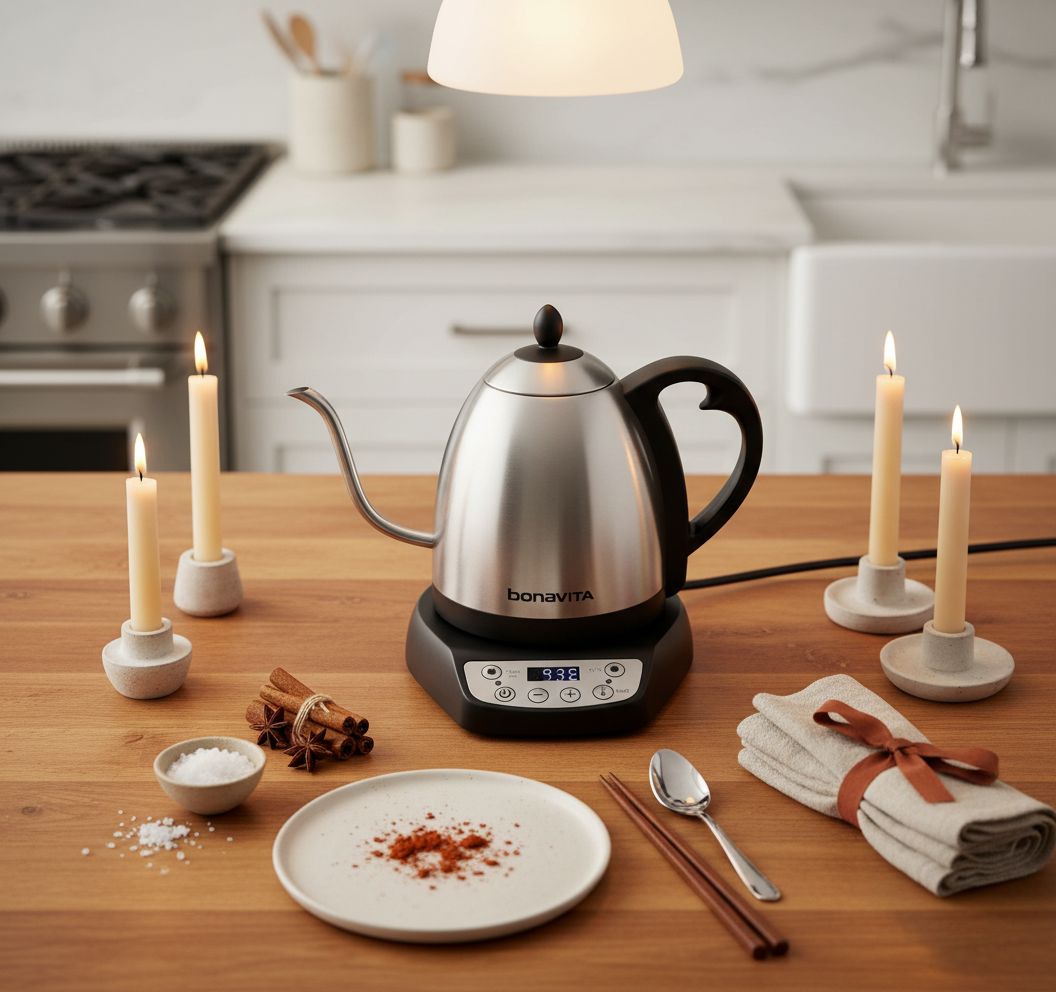
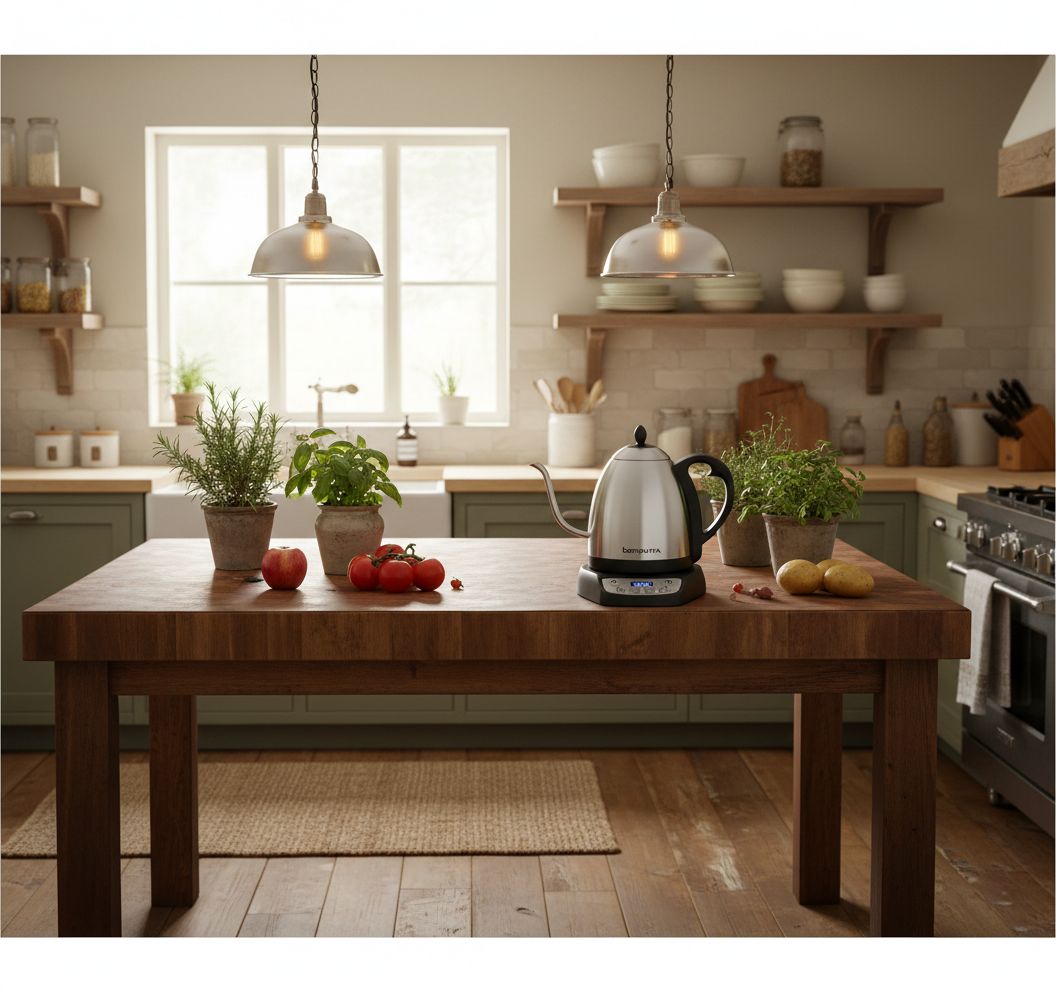
Six months from now, I’ll be standing at the same counter, same low morning light, filling the Bonavita to the one-liter line and dialing up 205°F before I’ve even fully woken up. The routine is already that automatic. This gooseneck electric kettle does something rare for a piece of kitchen equipment: it removes friction from a process I used to find annoying and replaces it with something that actually feels considered. The pour control is real, the temperature presets are genuinely useful, and the hold function is the kind of small convenience that accumulates into something significant over months of daily use. If you are serious about pour-over, AeroPress, or loose-leaf tea, the value reads well above what you’d expect given the build quality at this tier. It won’t be the right tool for everyone, but for the right kind of brewer, it’s the one you’ll stop looking past. You can browse the full range of options in our coffee and espresso equipment picks or go deeper into drip coffee equipment reviews if you’re still deciding which direction your morning ritual is heading. But if the pour-over path is already calling, stop second-guessing and start brewing. The Bonavita gooseneck kettle is the most impactful single upgrade I’ve made to my morning coffee routine, and I have the Wirecutter rabbit hole to thank for sending me down it.
Every Angle
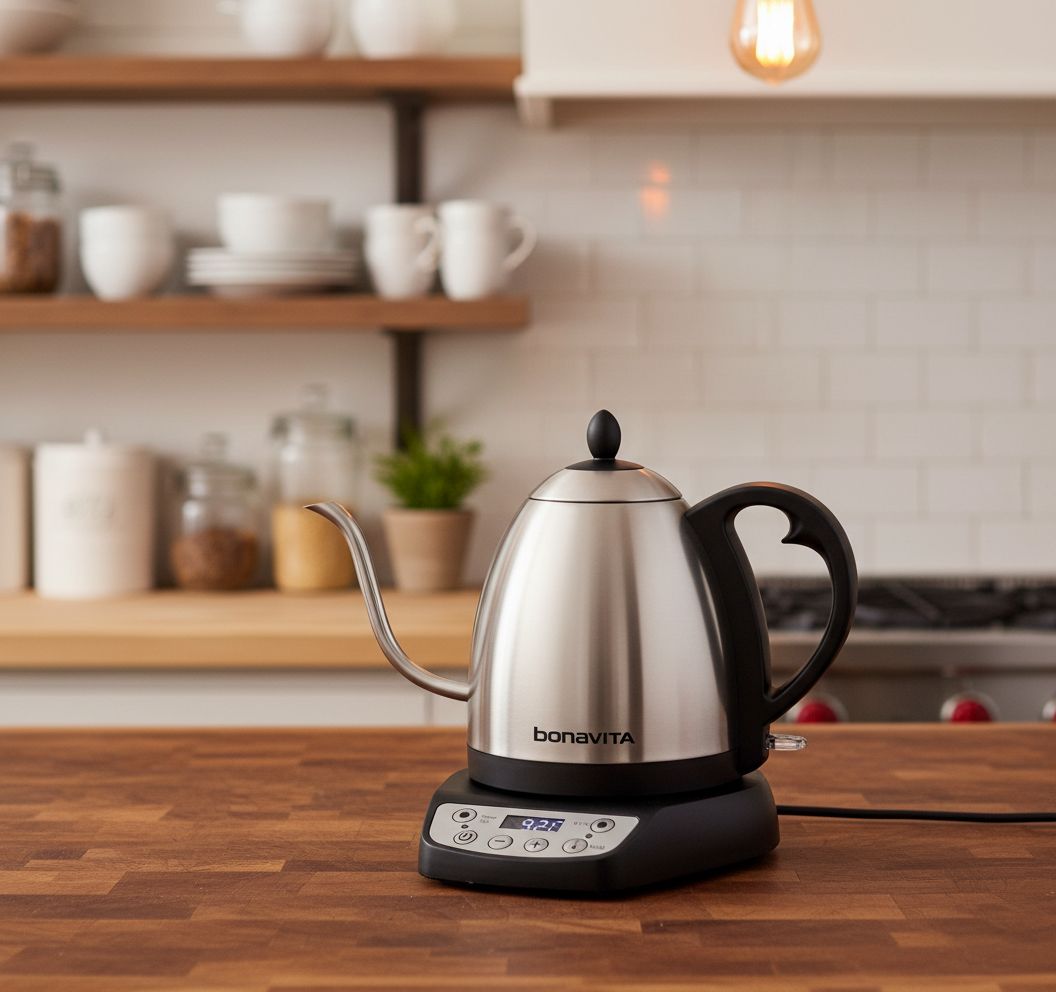
The product as photographed for Amazon — front, side, back, detail.
As an Amazon Associate I earn from qualifying purchases.