Non-Slip Cabinet Liner for Kitchen Storage: Honest Review
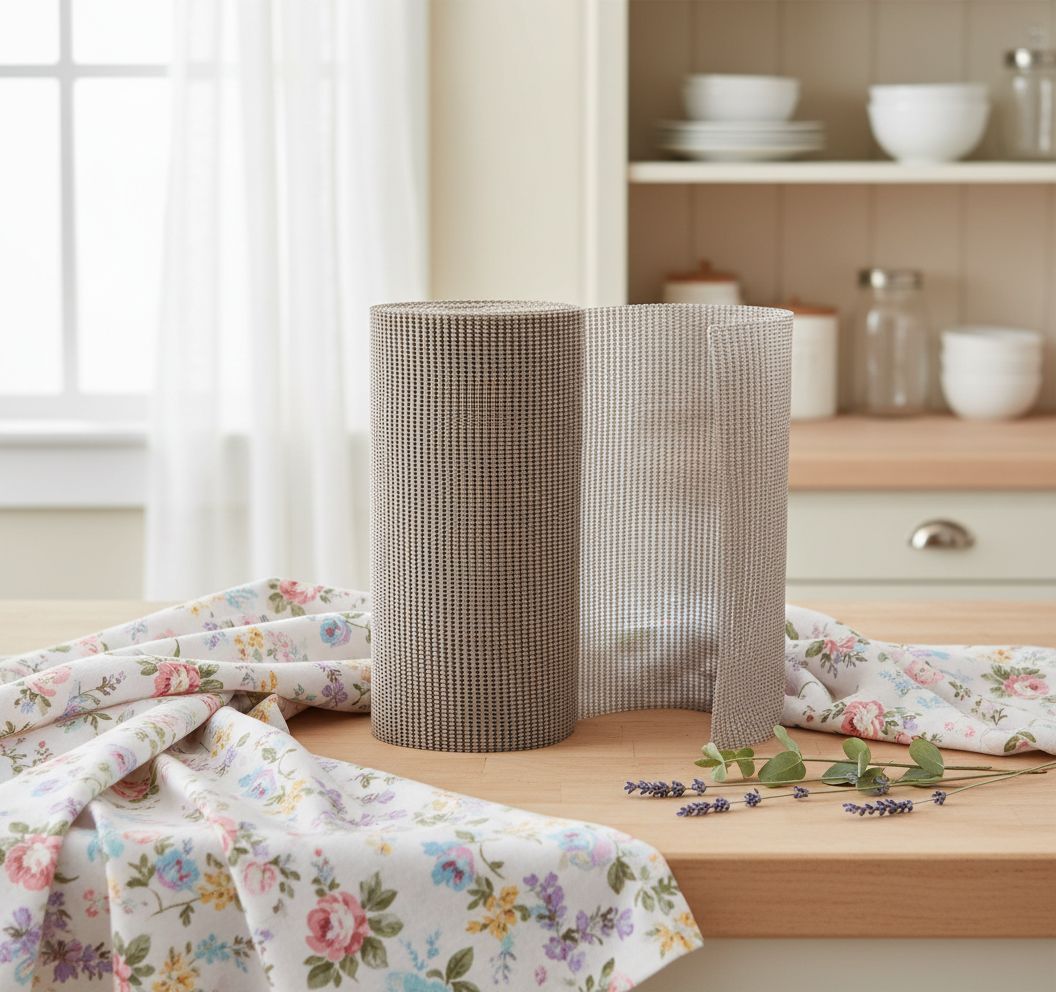
The moment a stack of sheet pans stopped avalanching out of my lower cabinet every single time I opened the door, I understood why something this unglamorous had nearly thirty-one thousand reviews.
It was a Tuesday night, the kind where dinner has to happen fast and the kitchen is already working against you. I pulled open the cabinet under my counter to grab a baking sheet, and the whole tower, three pans, a cooling rack, and a muffin tin I barely use, came sliding toward me like a slow, metallic avalanche. Again. It had been happening for months. The cabinet floor is smooth-painted wood, the pans are heavy, and there is nothing to stop them from drifting every time I open the door with any kind of momentum. That was the night I finally cut a length of the GORILLA GRIP powerGRIP Drawer Shelf and Cabinet Liner and laid it down flat, slightly annoyed that I hadn’t done it sooner.

The First Time I Used It
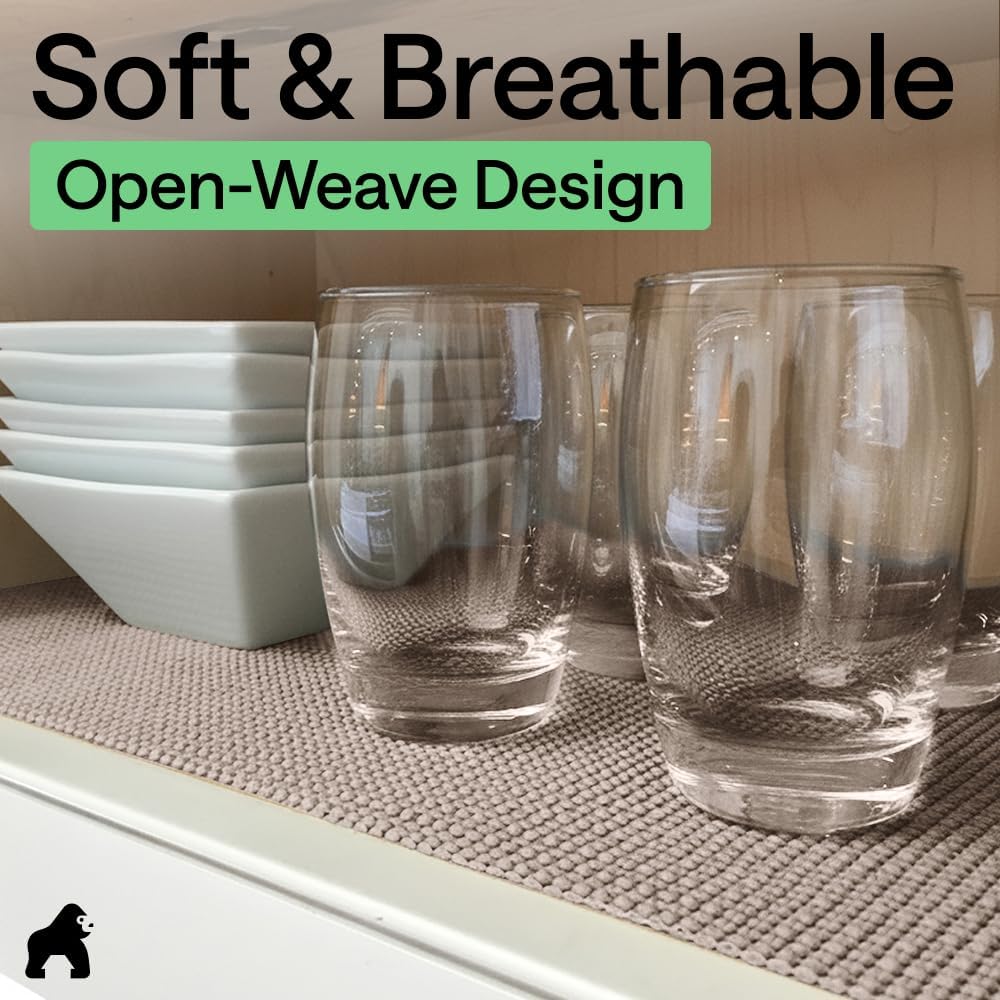
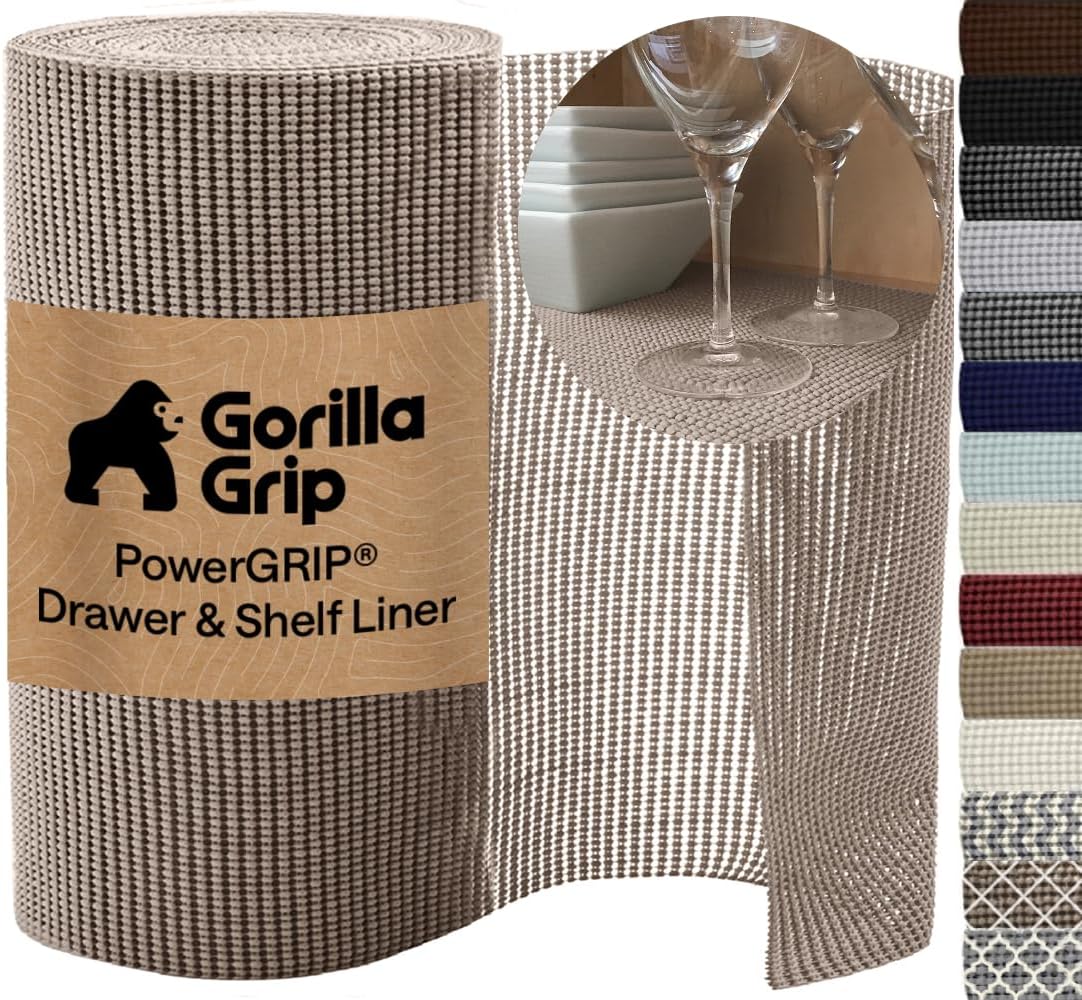
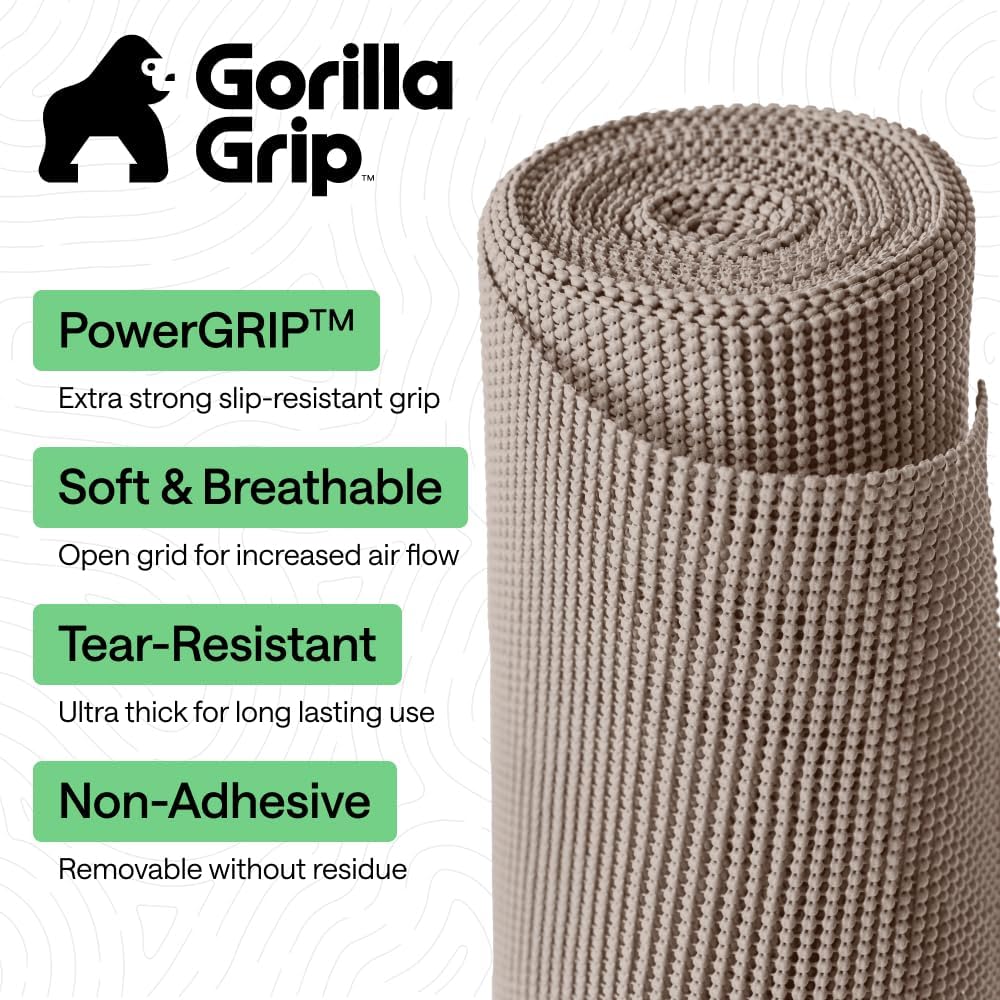
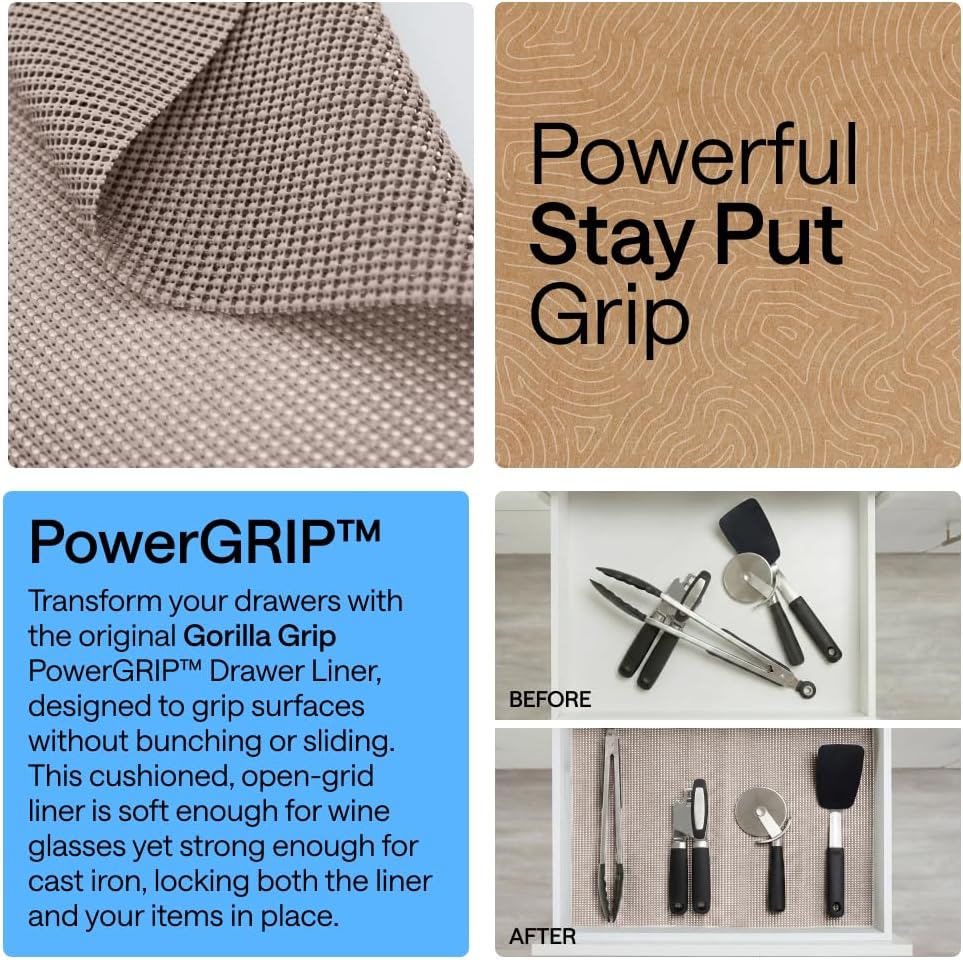
I unrolled the liner across my kitchen table to cut it to size, and the first thing I noticed was how substantial it felt for what it is. It’s a non-adhesive plastic liner with a cushioned, almost dimpled grip surface on both sides, cream-colored and matte, which sounds aggressively beige but reads as genuinely neutral in a real kitchen. I measured the cabinet floor, added a half-inch on each side, and cut it with a pair of kitchen shears in about forty-five seconds. No adhesive backing to peel, no paper to wrestle with, no mysterious chemical smell.
I slid the liner into the cabinet, set the baking sheets back down on top of it, and opened and closed the door three times in quick succession. Nothing moved. That small, quiet moment of things just staying where I put them was more satisfying than I expected. It made me want to line every drawer in my kitchen immediately, which is more or less what happened over the following weekend.
How It Actually Performs
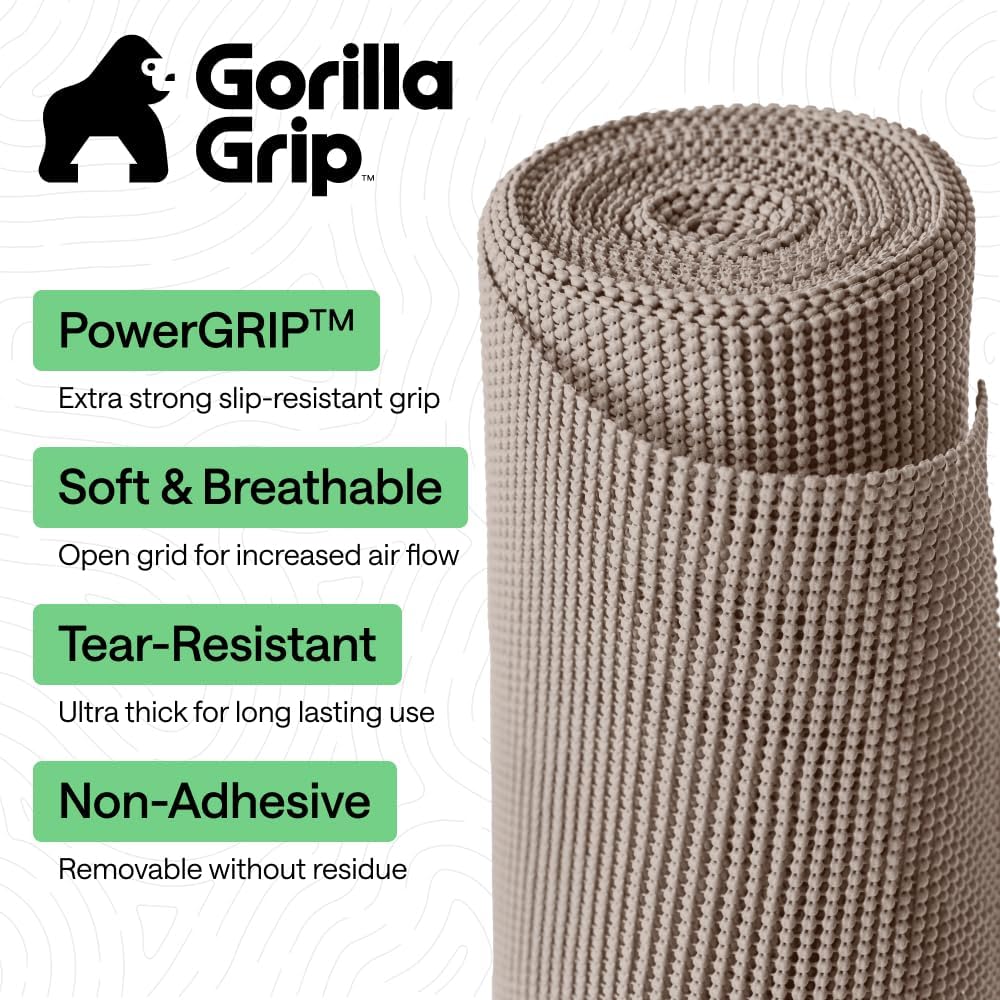
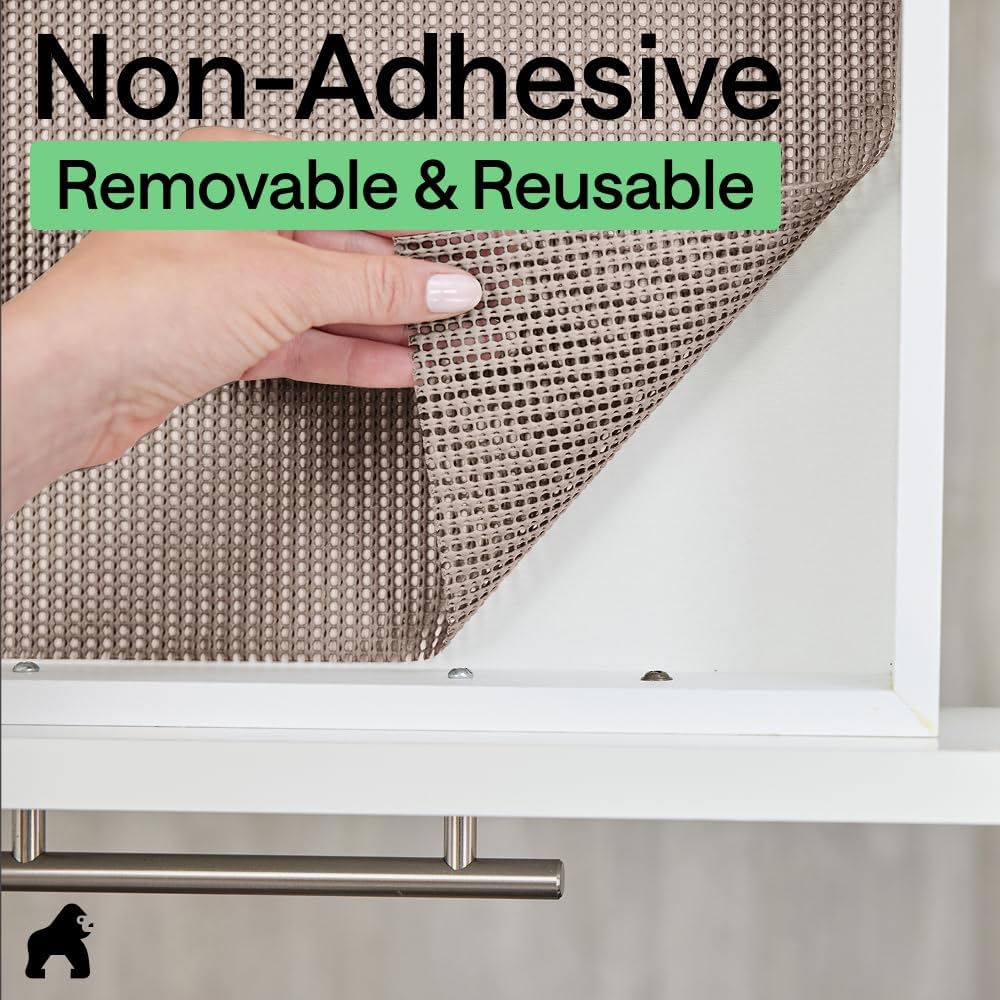
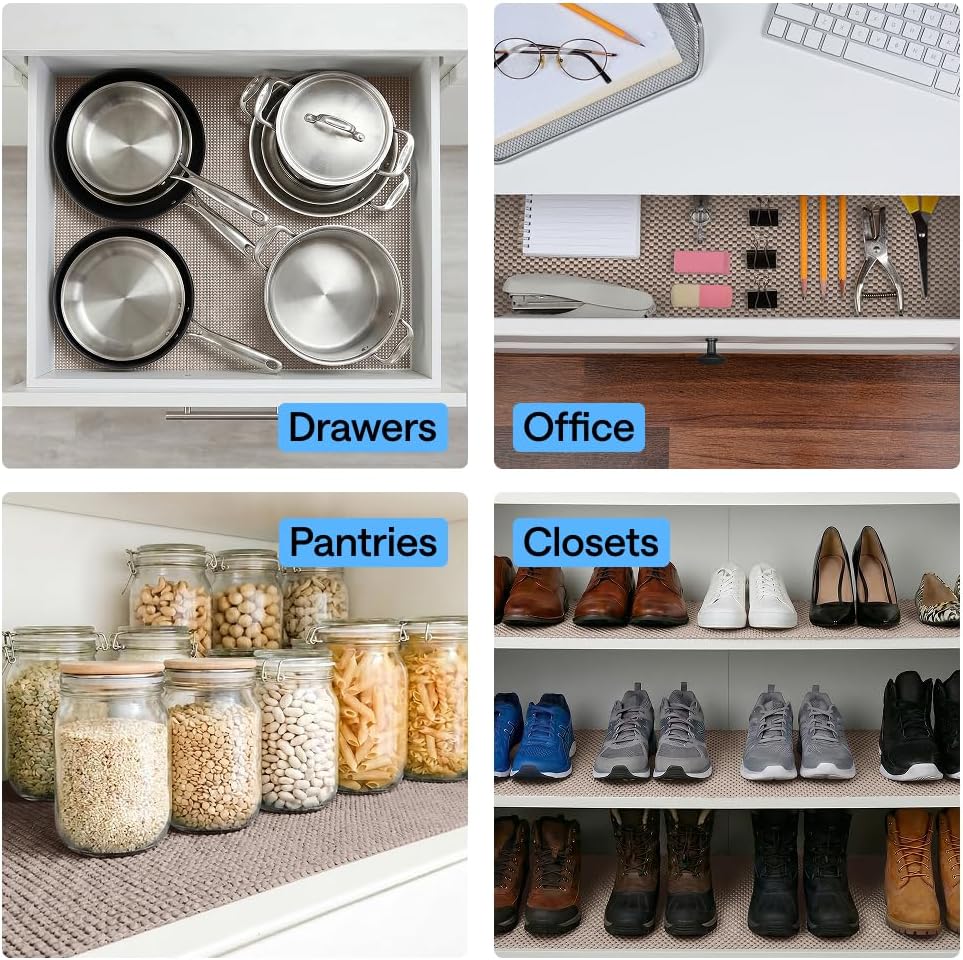
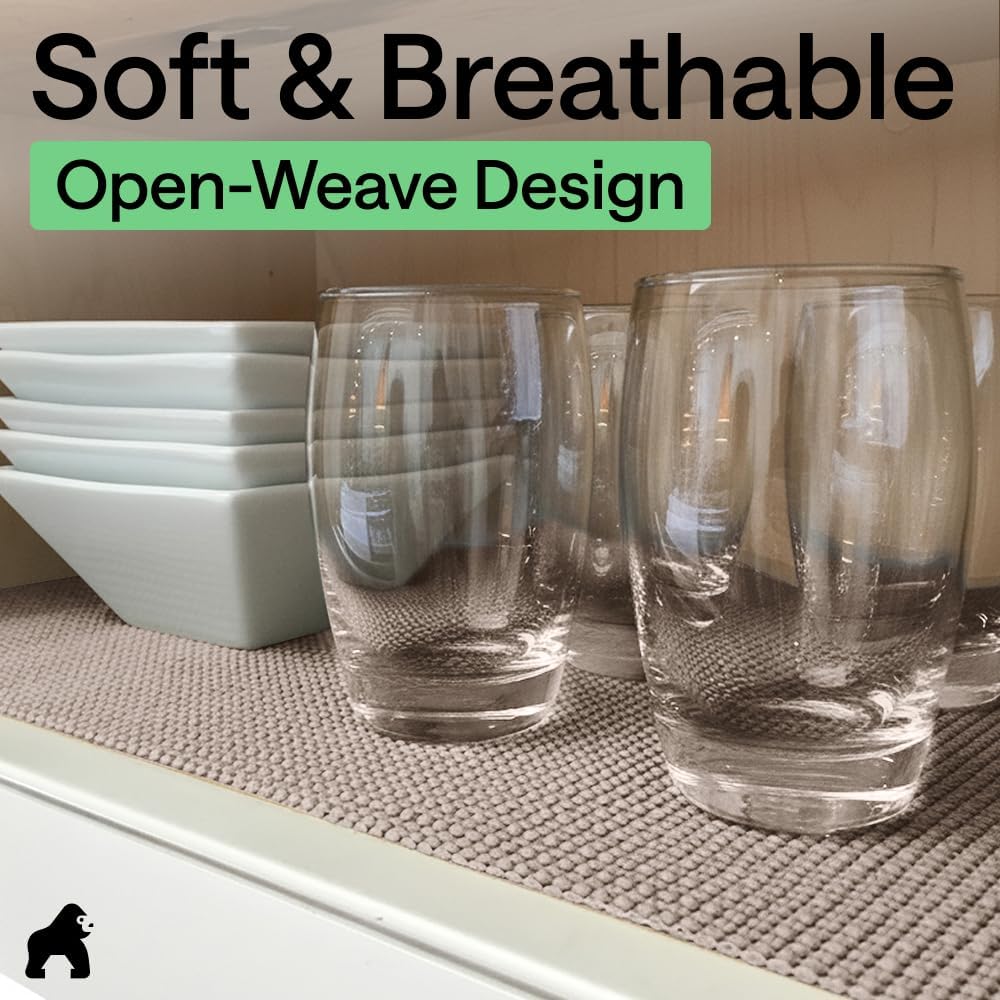
The liner’s grip comes from the texture of the material itself, not from any adhesive or sticky coating, which matters a lot in practice. Adhesive liners can curl at the corners, leave residue on cabinet shelves, and become a genuine headache when you need to remove or replace them. This one stays flat because of its own weight and the friction between its surface and whatever it’s resting on. In my lower cabinet, it held a cast iron skillet, a Dutch oven, and a baking stone without any of them migrating toward the front of the shelf.
“A drawer liner should disappear into your kitchen. This one does exactly that, and then quietly solves three problems you had stopped noticing.”
In my utensil drawers, the grip surface kept wooden spoons and whisks from shifting every time I slid the drawer open fast. I will note that on very smooth, freshly painted shelves, the liner can creep slightly if you’re pulling out something extremely heavy with a jerking motion. It’s not dramatic, and pushing it back into place takes two seconds, but it’s not magic. For anyone who wants a deeper technical read on how surface materials affect kitchen organization and cookware storage, the Serious Eats equipment reviews archive has useful context on cookware placement and cabinet wear. The liner itself is a passive tool, and like any passive tool, it works best when you work with it.

What I Actually Cooked With It
Use 1: The Sheet Pan Situation
My lower cabinet is where sheet pans, roasting racks, and lids go to cause chaos. After lining it, I made a batch of roasted vegetables for a weeknight dinner, which means I was pulling the half-sheet pan out and putting it back twice in under an hour. The liner held the remaining pans completely still while I worked, and the pan I returned after washing slid onto the lined surface and stopped immediately. No repositioning, no sliding forward. The cabinet floor is now a surface that cooperates with me, which sounds like an absurd thing to say about a piece of plastic, but here we are.
Use 2: Hosting Prep, the Pantry Shelf
I have a narrow pantry shelf where I keep oils, vinegars, and a few tall spice bottles. When I’m hosting, I’m in and out of that shelf constantly, and glass bottles on a smooth wood shelf make me nervous. I cut a length of the liner to fit the full ten feet across two shelves, and the difference was immediate. A bottle of finishing olive oil that I set down slightly off-balance stayed exactly where I put it rather than drifting toward the edge. If you do any amount of everyday cooking and hosting prep, the pantry-shelf application alone is worth the investment. Stability at eye level matters more than most people realize until something falls.
Use 3: The Knife Drawer
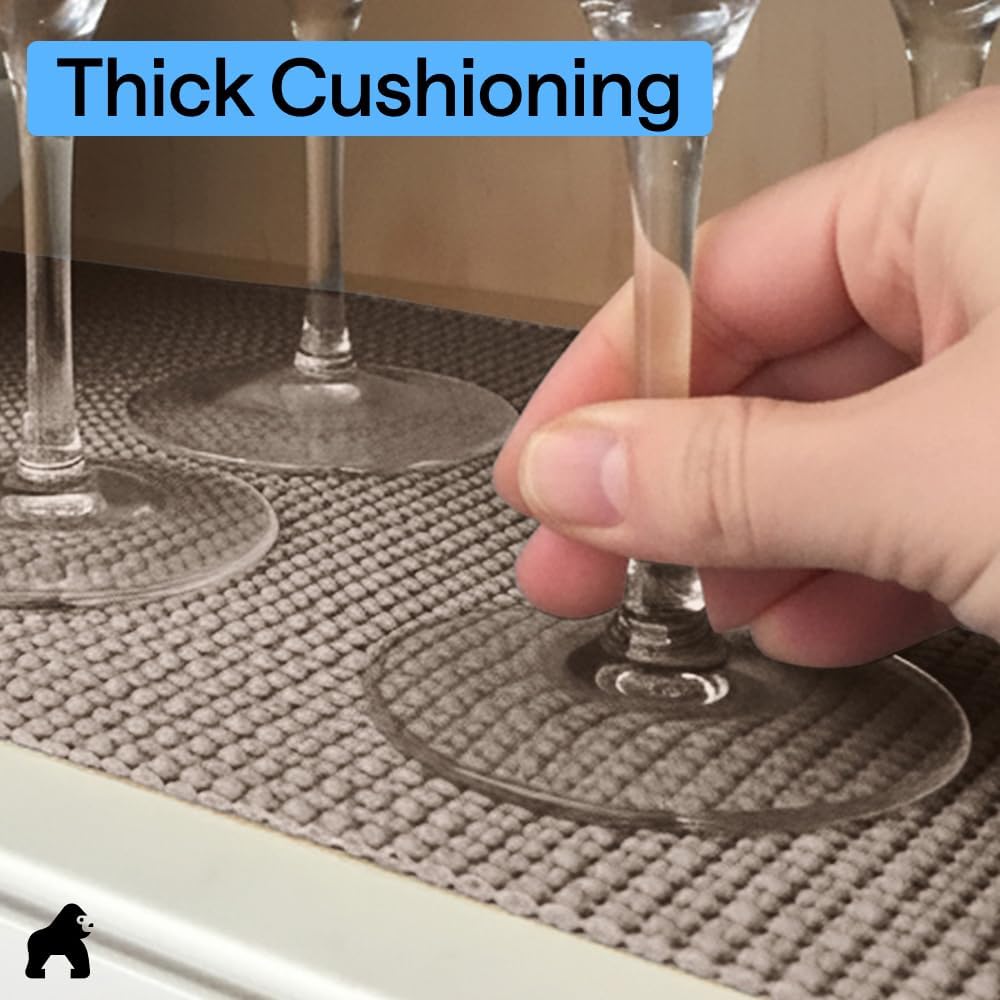
I know. A proper editor’s pick for kitchen knife storage is a magnetic strip or a block, and I have both. But I also have a shallow drawer where I keep a few utility knives, a bench scraper, and a pair of kitchen shears, and that drawer has always been a sliding, clattering mess. I lined it, arranged the tools, and opened the drawer the next morning half-expecting the usual chaos. Everything had stayed put overnight. The cushioned surface also keeps the blades from clattering against the drawer bottom, which is a secondary benefit I hadn’t anticipated but now appreciate every morning.
What Other People Are Saying
With nearly thirty-one thousand ratings averaging at 4.6 stars, the GORILLA GRIP powerGRIP cabinet liner review landscape is about as clear a consensus as you’ll find on any kitchen product. The pattern across reviews is consistent: people buy it for one specific problem, a slipping shelf, a chaotic drawer, a pantry that won’t cooperate, and then order more rolls. For additional context on how kitchen organizers and liners are evaluated, both America’s Test Kitchen’s equipment review methodology and Wirecutter’s kitchen picks coverage offer useful frameworks for thinking about what makes a utility product actually worth buying.
What the review volume tells me is that this is a product people replace and repurchase rather than return. That kind of loyalty from tens of thousands of home cooks is more meaningful than any single test I ran in my own kitchen.

Who Should Skip It
If your cabinets and drawers are already fitted with pull-out organizers, wire inserts, or other rigid systems that lock items in place, a flat liner adds very little. It’s also not the right tool if you’re hoping to protect shelves from moisture or spills in a significant way. The material is easy to wipe clean, but it’s not a waterproof barrier, and it won’t save a wood shelf from a genuine liquid leak. Anyone renting a place with laminate shelving who’s been warned against adhesive products will find this genuinely useful, but renters in furnished apartments with already-organized cabinetry can probably skip it. And if the cream color reads too warm against very white, modern cabinetry, it might feel slightly off aesthetically, though in practice it disappears once you load the shelf.
What It Replaces in My Kitchen
For years, I used folded paper towels as makeshift liners in drawers, which is embarrassing to admit but also extremely common. I’d double them up under the cast iron to protect the shelf, replace them every few weeks when they got damp or shredded, and never think too hard about it. The GORILLA GRIP liner replaced all of that with something that actually does the job and can be pulled out, rinsed under the faucet, and returned to the drawer in minutes. It also replaced a rubber shelf mat I’d had for a decade that had started to crumble at the edges and leave small black fragments on everything around it.
If you’re the kind of cook who prioritizes functional organization, you might also want to look at our everyday cookware set recommendations and nonstick pan picks, because a stable, lined shelf is only useful if what’s sitting on it is also working for you. The liner is the foundation. What you put on top of it matters just as much. You can also browse our gift ideas for cooks if you’re buying for someone who’s still using paper towels as shelf liner and needs a gentle nudge toward something better.
FAQ
Does the liner actually stay in place without adhesive?
Yes, in most cabinets and drawers, the weight and friction of the material are enough to keep it flat and in position. Cutting it to fit snugly against the sides of the shelf helps significantly, especially in deep cabinets where there’s room for it to shift.
How do you clean the GORILLA GRIP cabinet liner?
Pull it out, wipe it down with a damp cloth or rinse it under warm water, let it dry flat, and put it back. It takes about three minutes and can be done as often as needed without affecting the grip surface.
Is the liner safe for all shelf types, including wood and laminate?
Yes. Because it’s non-adhesive, it won’t damage wood finishes, painted surfaces, laminate, wire shelves, or glass. It’s one of the few liner options that works across all of those materials without any prep or adhesive residue risk.
Does the build quality match the brand’s reputation for grip products?
For what it is, yes. The material feels durable and consistent, the grip surface holds up through repeated cleaning cycles, and the liner doesn’t thin out or stretch with use the way cheaper versions do. It’s a workhorse product that behaves like one.
Does the liner come with any warranty or replacement guarantee?
GORILLA GRIP typically backs its home products with a satisfaction guarantee, and the liner’s durability means most people replace it by choice rather than necessity. Check the current product listing for the most up-to-date terms.

The Verdict
Six weeks in, I have the GORILLA GRIP powerGRIP liner in four cabinets, three drawers, and the pantry shelf, and I have thought about it almost zero times since installing it, which is the entire point. The best drawer and shelf liner for everyday cooking and hosting is the one you cut, lay down, and then completely forget about because everything is simply staying where you put it. It won’t transform your kitchen or change how you cook. What it will do is remove a small but persistent friction from your daily routine, and those small frictions are the ones that quietly drain you over time. For anyone building out a more organized, functional kitchen, this is the kind of foundational piece worth picking up for your cabinet liner and shelf organization setup before anything else. For broader kitchen tool guidance, Bon Appétit’s test kitchen favorites and Food and Wine’s cooking technique resources are worth keeping in your rotation alongside practical organization choices like this one. Unglamorous, purposeful, and completely worth it.
Every Angle
The product as photographed for Amazon — front, side, back, detail.
As an Amazon Associate I earn from qualifying purchases.